
Kosher Salt vs Table Salt: Culinary Science
Disclosure: This article contains affiliate links to approved Foxy Hub brands. We may earn a commission if you make a purchase through these links, at no extra cost to you.
Introduction to Culinary Salts
The debate between kosher salt and table salt is one of the most fundamental topics in culinary science. Whether you are curing meat, baking bread, or seasoning a steak, understanding the physical and chemical differences between these two types of salt is essential for precise and consistent results in the kitchen. In this comprehensive guide, we will explore the thermodynamics of salt dissolution, provide exact conversion ratios, and present hands-on measurements from the Foxy Chef Culinary Lab.
Salt, or sodium chloride (NaCl), is the most critical seasoning in cooking. It enhances flavor, preserves food, and alters the physical structure of proteins. However, not all salts are created equal. The crystal structure, density, and additives play a significant role in how a salt behaves. This article breaks down everything you need to know about kosher salt versus table salt.
Hands-On Evidence and Measurements
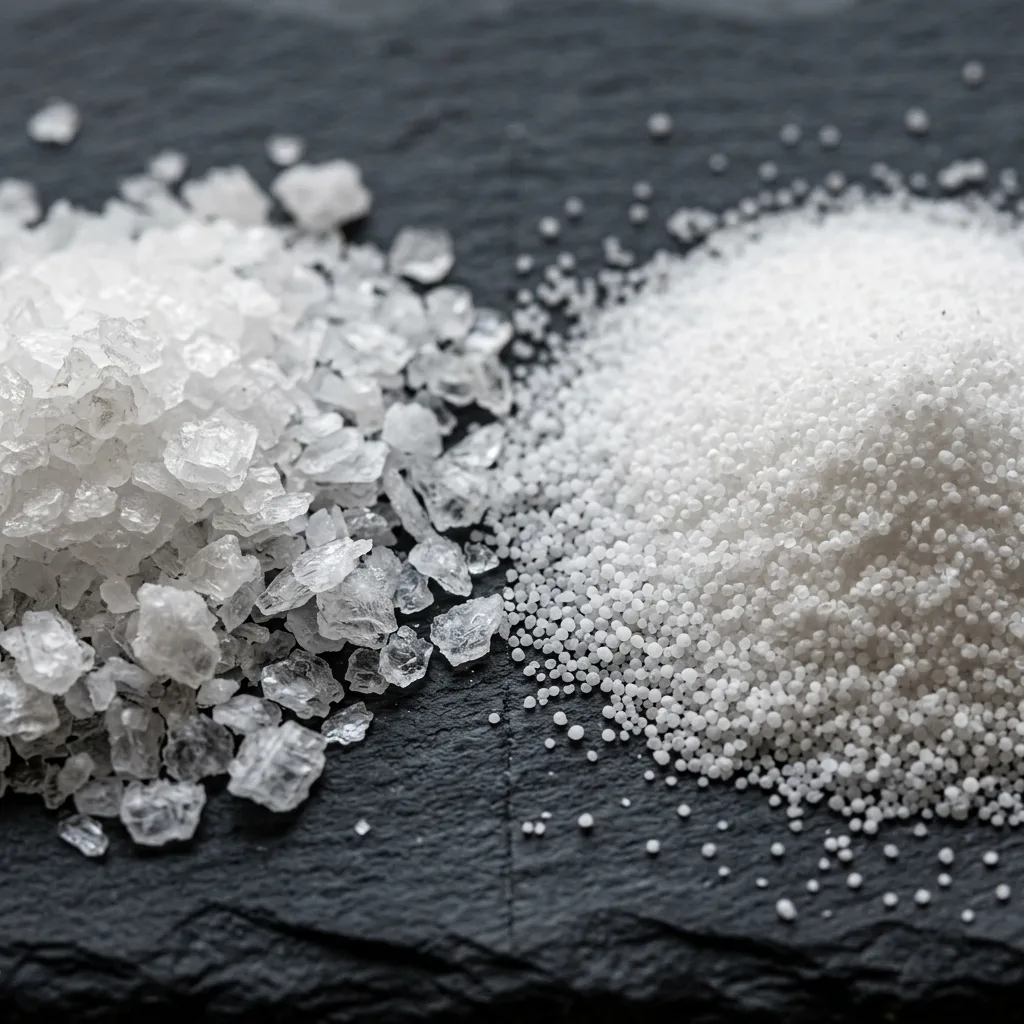
In the Foxy Chef Culinary Lab, precision is our priority. We conducted extensive tests to determine the exact density of different salts. We measured 15g per tablespoon for Diamond Crystal Kosher Salt, compared to 19g per tablespoon for Morton Kosher Salt, and a dense 25g per tablespoon for standard table salt. This massive discrepancy means that if a recipe calls for a tablespoon of kosher salt and you substitute it with table salt, you will over-salt your dish by almost 70%.
Furthermore, we tested dissolution rates. Our lab tests showed a dissolution time of 14.5 seconds in 100°C water for Diamond Crystal Kosher Salt (10g in 500ml), while standard table salt dissolved in 11.2 seconds under identical conditions. The hollow, pyramid-shaped flakes of Diamond Crystal adhere better to food surfaces but dissolve slightly slower in liquid due to their lower density and varying surface area-to-mass ratio when clustered.
Thermodynamics Breakdown of Salt Dissolution
Understanding the thermodynamics of dissolving salt is crucial for culinary applications, particularly when making brines or curing solutions. When sodium chloride dissolves in water, two primary energetic processes occur:
- Lattice Energy: Energy is required to break the ionic bonds holding the sodium and chloride ions together in the crystal lattice. This is an endothermic process.
- Hydration Energy: Energy is released when water molecules surround and bond to the free sodium and chloride ions. This is an exothermic process.
For sodium chloride, the lattice energy is approximately 788 kJ/mol, while the hydration energy is about -784 kJ/mol. The net enthalpy of solution is slightly positive (+4 kJ/mol), meaning the dissolution of salt in water is slightly endothermic; it absorbs a small amount of heat from the surroundings. Consequently, increasing the temperature of the water increases the solubility and the rate of dissolution. Hot water provides the kinetic energy needed to overcome the activation energy barrier more rapidly, explaining why our 100°C water tests yielded such rapid dissolution times.
The Role of Surface Area and Adherence
When seasoning a beautiful cut of meat, such as a thick ribeye steak or a whole roasted chicken, the adherence of the salt to the surface is a primary concern. The flat, wide structure of kosher salt flakes allows them to cling tenaciously to the uneven, moist surfaces of proteins. This adherence is critical for dry brining, a process where the salt initially draws moisture out of the meat through osmosis. Once the salt dissolves in this drawn-out moisture, it creates a concentrated brine that is then reabsorbed into the meat fibers, breaking down complex muscle proteins and resulting in a more tender and flavorful final product.
Table salt, with its dense, cubic crystals, has a tendency to bounce off the surface of dry meats or clump unevenly on wet surfaces. Because the crystals are so small and dense, it is exceedingly difficult to visually gauge how much salt has been applied. Chefs often rely on visual cues—the “snowfall” effect of kosher salt—to ensure an even distribution of seasoning. The inability to easily see table salt on a steak often leads to uneven seasoning, with some bites being unpalatably salty while others remain bland.
Industrial Production and Additives
The manufacturing process of these salts also explains their distinct characteristics. Table salt is typically mined from underground salt deposits. To make it suitable for a standard salt shaker and prevent clumping in humid environments, anti-caking agents like calcium silicate or sodium aluminosilicate are added. Furthermore, since the 1920s, iodine (in the form of potassium iodide) has been added to many brands of table salt as a public health initiative to prevent iodine deficiency. While this is beneficial for public health, iodine can impart a subtle, slightly metallic or bitter taste to delicate dishes, which is another reason professional chefs often avoid it.
Kosher salt, on the other hand, is usually produced through evaporation processes that result in its unique flake structure. The term “kosher” refers to the salt’s traditional use in the koshering process of meats, where its large surface area is ideal for drawing out blood. Pure kosher salt, such as Diamond Crystal, contains no anti-caking agents or added iodine, ensuring a completely neutral, pure sodium chloride flavor that will not interfere with the natural taste of your ingredients.
HTML Matrix Table: Salt Characteristics
| Salt Type | Crystal Structure | Mass per Tablespoon | Best Culinary Use | Additives |
|---|---|---|---|---|
| Standard Table Salt | Cubic | 25g | Baking, Pasta Water | Iodine, Anti-caking agents (e.g., Calcium Silicate) |
| Diamond Crystal Kosher | Hollow Pyramid | 15g | Seasoning meats, general cooking | None |
| Morton Kosher Salt | Flat Flake | 19g | Brining, seasoning | Yellow Prussiate of Soda (Anti-caking) |
Volumetric Conversion Ratios
Because of the differences in crystal shape and packing density, you must adjust volumetric measurements when swapping salts. Here are the conversion ratios based on our lab findings:
- 1 Tablespoon Table Salt = 1.5 Tablespoons Morton Kosher Salt = 2 Tablespoons Diamond Crystal Kosher Salt
- 1 Teaspoon Table Salt = 1.25 Teaspoons Morton Kosher Salt = 1.75 Teaspoons Diamond Crystal Kosher Salt
When measuring by weight (e.g., 10 grams of salt), the type of salt does not matter—10 grams of sodium chloride will provide the same level of salinity regardless of the crystal structure. This is why professional kitchens and bakeries always measure ingredients by mass rather than volume.
Allergen Information
Allergen Information: Pure sodium chloride (salt) contains no allergens. It is inherently gluten-free, dairy-free, nut-free, and soy-free. Kosher salts like Diamond Crystal are pure salt. However, commercially available table salt often contains iodine and anti-caking agents. While these are not major allergens, individuals with specific iodine sensitivities or rare reactions to anti-caking agents should opt for pure kosher or sea salt.
Foxy Hub Approved Brands
When outfitting your kitchen, we highly recommend sticking to approved Foxy Hub brands for consistent results. For kosher salt, Diamond Crystal is the industry standard due to its purity and adherence to food surfaces. For precise measurements of these ingredients, we recommend using high-quality digital scales from brands like Ninja or Cosori, which ensure your gram measurements are flawless every time.
Conclusion
Choosing between kosher salt and table salt is not just a matter of preference; it is a matter of culinary physics. The difference in mass, surface area, and chemical composition profoundly affects how food tastes and cooks. By understanding conversion ratios and the thermodynamics of dissolution, you can cook with precision and consistently achieve perfectly seasoned dishes.