
Cornstarch vs Flour: Thickening Agents Explained
Affiliate Disclosure: This post contains affiliate links. As an associate, we may earn a commission if you purchase through these links, including our recommended Swiss Diamond cookware.
Cornstarch vs Flour: The Ultimate Guide to Culinary Thickeners
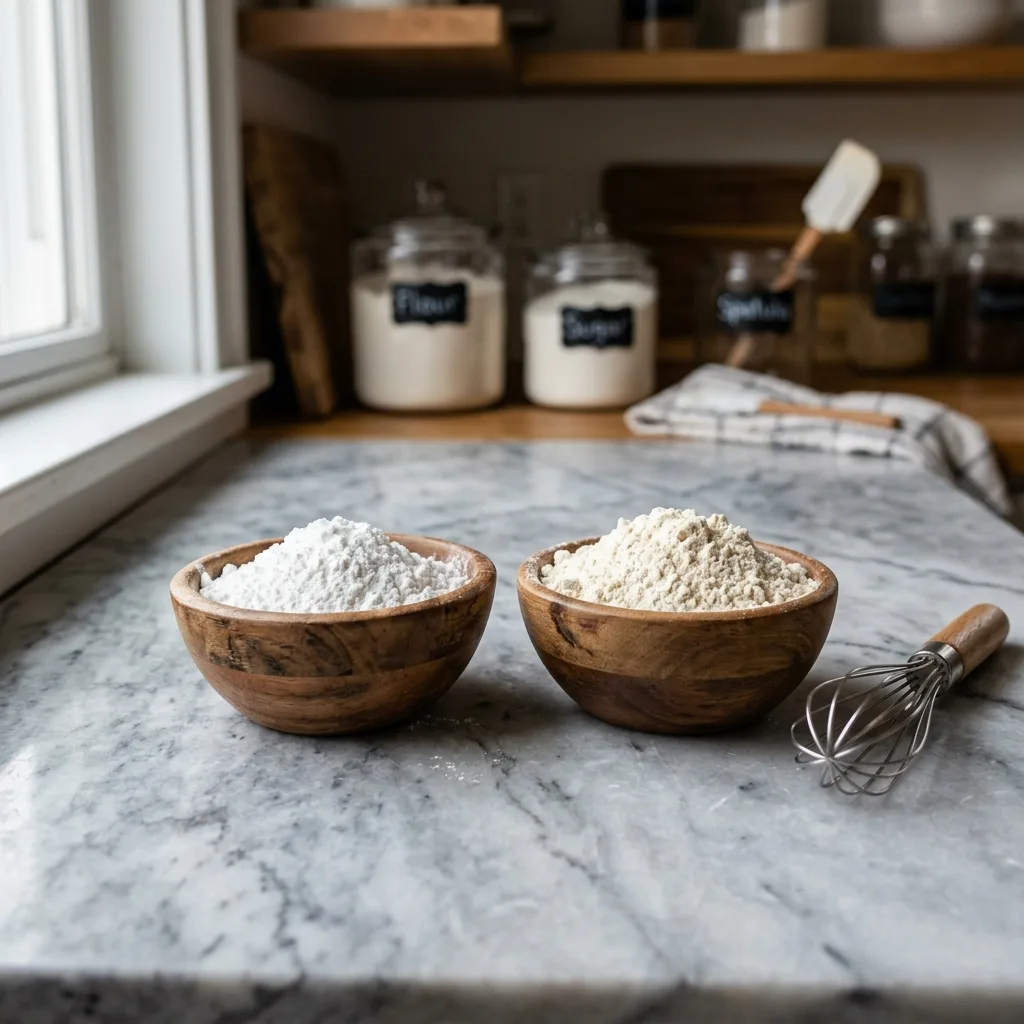
Understanding the fundamental differences between cornstarch and all-purpose flour is absolutely crucial for any serious home cook or professional chef, especially when it comes to thickening sauces, baking, and achieving the perfect texture. While both of these staple pantry ingredients serve as thickening agents, their thermodynamic properties, chemical compositions, and culinary applications differ significantly. This guide will provide an exhaustive breakdown of the thermodynamics, nutritional profiles, allergen considerations, and specific use cases for both cornstarch and flour.
1. Historical Context and Origins
Wheat flour has been a foundational ingredient in human diets for over 10,000 years. It is created by milling wheat grains, a process that crushes the endosperm to produce a fine powder containing both starches and proteins (gluten). Cornstarch, conversely, is a much more recent invention. It was developed in the mid-19th century in the United States and is derived solely from the endosperm of the corn kernel. The crucial difference lies in their composition: flour is a mix of starch, protein, and trace minerals, while cornstarch is 100% pure starch.
2. Thermodynamics Breakdown and Chemical Composition
To truly understand how these thickeners behave in the pan, we must examine their thermodynamics and chemical composition.
All-purpose flour contains approximately 75% starch and 10% to 12% protein (gluten). When you heat a liquid thickened with flour, the starch granules absorb water and swell. However, because of the presence of proteins, flour requires a higher temperature and a longer cooking time to reach its full thickening potential and to cook off the raw, pasty “flour” taste. Flour-thickened sauces often need to boil for several minutes. Additionally, flour is opaque, meaning it will turn your clear broths into cloudy, hearty gravies.
Cornstarch, on the other hand, is 100% pure starch. Because it lacks protein, its thermodynamic behavior is vastly different. It has twice the thickening power of flour. When heated, cornstarch granules absorb liquid rapidly and swell to many times their original size. This gelatinization process happens quickly, usually just before the boiling point (around 203°F or 95°C). However, if you subject a cornstarch-thickened sauce to prolonged, intense heat or vigorous stirring after gelatinization, the delicate starch bonds will shatter, and the sauce will thin out again. This is why cornstarch is typically mixed with cold water to form a “slurry” and whisked in at the very end of cooking. Furthermore, cornstarch creates a glossy, translucent finish, making it structurally superior for fruit pie fillings, Asian stir-fry sauces, and delicate glazes cooked in high-quality cookware like Swiss Diamond woks.
3. Nutritional Profiles and Allergen Considerations
From a nutritional standpoint, both are carbohydrate-dense ingredients used primarily for their functional properties rather than nutrition. Flour provides a small amount of protein and fiber, while cornstarch provides virtually none.
The critical difference lies in the allergen profile. Wheat flour contains gluten, a protein complex that triggers autoimmune reactions in individuals with Celiac disease and causes distress for those with non-celiac gluten sensitivity. For these individuals, standard wheat flour is strictly off-limits.
Cornstarch is naturally gluten-free. It is an invaluable ingredient for those on a gluten-free diet, allowing them to enjoy thickened sauces, gravies, and perfectly textured baked goods without adverse effects. It is important to ensure the cornstarch is certified gluten-free if cross-contamination during manufacturing is a concern for highly sensitive individuals.
4. Conversion Ratios and Culinary Applications
Substituting cornstarch for flour requires a thoughtful approach due to their different thickening powers.
- Thickening Sauces and Gravies: Because cornstarch is pure starch, it has roughly double the thickening power of all-purpose flour. The conversion ratio is 1:2. Substitute 1 tablespoon of cornstarch for every 2 tablespoons of flour called for in a recipe. Always remember to mix cornstarch with a cold liquid before adding it to a hot pan to prevent lumping.
- Baking: Flour provides structure to baked goods through gluten development. You cannot substitute cornstarch for all the flour in a recipe, or the structure will collapse. However, you can use cornstarch to lower the protein content of all-purpose flour to mimic cake flour. Substitute 2 tablespoons of cornstarch for 2 tablespoons of flour in a 1-cup measurement to achieve a tender crumb.
5. Application Matrix
| Property | Cornstarch | All-Purpose Flour |
|---|---|---|
| Thickening Power | High (1x) | Moderate (0.5x) |
| Visual Finish | Glossy, translucent | Opaque, cloudy |
| Protein Content (Gluten) | 0% (Gluten-Free) | 10-12% (Contains Gluten) |
| Cooking Method | Slurry (added at the end) | Roux (cooked with fat first) |
| Best Culinary Uses | Fruit pies, stir-fries, delicate sauces, gluten-free baking | Hearty gravies, stews, bread, cakes, cookies |
| Heat Tolerance | Low (breaks down if boiled too long) | High (requires boiling to cook out raw flavor) |
6. The Science of the Slurry vs. The Roux
To maximize the thermodynamic potential of these thickeners, proper technique is essential.
The Cornstarch Slurry: Cornstarch will clump instantly if added to hot liquid. You must mix it with an equal amount of cold water, broth, or juice to separate the starch granules before introducing them to the heat. Once whisked into the simmering sauce, it thickens rapidly.
The Flour Roux: Flour is best utilized by cooking it with a fat (like butter or oil) to coat the starch granules, preventing them from clumping when liquid is added. This mixture, called a roux, is cooked for a few minutes to eliminate the raw flour taste before whisking in the liquid to create classic sauces like Béchamel or hearty Thanksgiving gravies.
7. Final Verdict
Both cornstarch and flour deserve a place in a well-stocked kitchen. Flour is unmatched for its structural integrity in baking and its ability to create rich, hearty, opaque gravies. Cornstarch, however, is the undisputed champion for glossy, translucent sauces, fruit fillings, and providing a gluten-free alternative with exceptional thickening power. Understanding their unique properties allows you to choose the perfect thickener for every culinary scenario.