
Classic White Bean Vegetable Minestrone with Fresh Herb Pesto
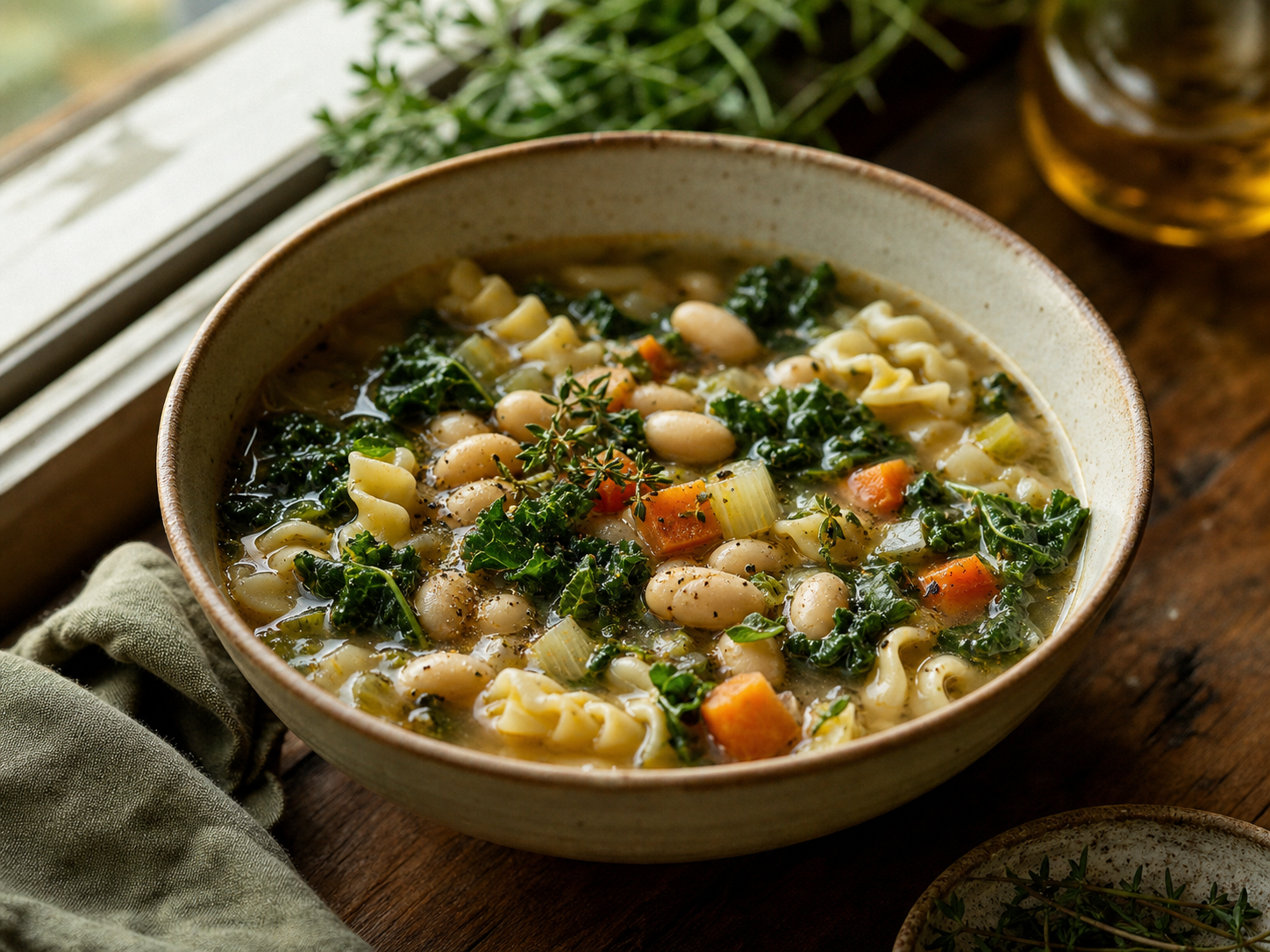
Instructions
Classic Mediterranean vegetable minestrone represents a triumph of culinary plant physics and molecular balance. Far from a casual assortment of boiled garden scraps, achieving a crystal-clear, deeply savory broth studded with vegetables that remain tender yet geometrically intact demands mastery over four thermodynamic and biochemical variables: sequential soffritto caramelization kinetics, cellular pectin stability at a calibrated 190 °F (88 °C) sub-simmer, multi-clad thermal conduction to prevent starch scorching, free glutamate umami synergy, and volatile terpene retention in cold-emulsified herb pesto.
Sequential Thermal Extraction and Soffritto Kinetics
The flavor architecture of authentic minestrone is anchored by the classical Italian soffritto: finely minced yellow onion, carrot, and celery gently sweated in extra virgin olive oil. Each botanical element possesses unique thermal decomposition thresholds, meaning simultaneous high-heat sautéing burns the delicate onion sugars before the fibrous carrot cellulose softens.
A rigorous culinary approach requires a staged, low-temperature sweat between 230 °F and 255 °F (110 °C to 125 °C). Yellow onions are sweated first; their complex fructooligosaccharides thermally cleave into simple reducing monosaccharides (glucose and fructose). These sugars react with amino acid precursors to form savory pyrazines and sweet aromatic furans without scorched bitterness. Next, diced carrots are introduced, allowing nonpolar lipophilic pigments (alpha- and beta-carotene) to dissolve directly into the warm oleic acid lipid medium.
Finally, finely sliced celery is stirred in, releasing characteristic phthalides (such as sedanolide and ligustilide). By maintaining cooking temperatures strictly below 265 °F (130 °C), the heat-sensitive polyphenols in extra virgin olive oil remain completely intact, creating a deeply aromatic lipid vehicle that distributes fat-soluble flavor compounds seamlessly throughout the vegetable stock.
Cellular Pectin Integrity at a Calibrated 190 °F (88 °C) Sub-Simmer
A frequent defect in home-cooked vegetable soups is a vigorous, turbulent rolling boil at 212 °F (100 °C). The structural integrity of zucchini, tender green beans, carrots, and potatoes depends upon the middle lamella that cements adjacent cell walls. This structural glue is formed primarily of calcium pectate and polygalacturonic acid polymers.
When exposed to turbulent cavitation and excessive heat, the ionic calcium cross-links holding the pectin network dissolve abruptly. The plant cell walls collapse, cellular vacuole contents bleed uncontrollably into the water, and the vegetables disintegrate into mush. To retain vibrant textural definition—where each bite yields with clean resistance rather than mushy collapse—the soup liquid must be held steadily at 190 °F (88 °C).
At this controlled sub-boiling temperature, endogenous pectin methylesterase (PME) enzymes become active before heat denaturation occurs. PME removes methyl ester groups from the pectin chains, exposing carboxyl groups that readily bind with free calcium ions present in the broth. This enzymatic calcification reinforces the middle lamella, enabling the vegetables to absorb seasoned liquid while preserving their crisp architectural boundaries over 40 minutes of gentle cooking.
Thermodynamic Conduction and Hotspot Prevention
Because minestrone incorporates both free bean starches and reducing vegetable sugars, cooking vessels with thin or stamped bottoms present an acute operational hazard. Concentrated heat inputs directly over gas burners or high-output induction elements create localized thermal spikes exceeding 250 °F (121 °C) on the interior metal surface.
Heavy tri-ply stainless steel cookware with an encapsulated aluminum core provides superior thermal diffusivity. Aluminum conducts heat roughly fifteen times faster than stainless steel alone, instantly spreading heat laterally across the entire pan geometry. This lateral thermal dispersion eliminates hot spots, drives gentle, laminar convective liquid currents that keep suspended starches in perpetual motion, and prevents un-dissolved starches from sticking and scorching to the pot floor.
Natural Free Glutamate Synergy and Umami Amplification
The savory depth of a superior minestrone requires neither artificial bouillon cubes nor animal stocks. Instead, it leverages natural synergistic umami chemistry. Ripe Italian plum tomatoes (particularly slow-simmered San Marzano varieties) contain among the highest natural concentrations of free L-glutamic acid in the plant kingdom, often exceeding 140 mg per 100 grams.
When combined with Cannellini bean cooking liquor—abundant in soluble legume polypeptides and peptides—along with the sulfurous sweetness of slow-cooked leeks, a potent biochemical phenomenon occurs. Free glutamates and ribonucleotides bind cooperatively to human oral T1R1/T1R3 taste receptors. This synergistic binding induces a pronounced kokumi sensation: a perception of roundness, lingering depth, and velvety continuity that coats the palate without animal fats.
Volatile Monoterpene Protection via Fresh Basil Pesto Emulsion
The sensory crowning glory of classic minestrone is a vibrant spoonful of fresh basil and pine nut pesto dolloped directly into each serving bowl at the moment of plating. Fresh sweet basil (Ocimum basilicum) is rich in volatile aromatic monoterpenes and phenylpropanoids, notably linalool, eugenol, and 1,8-cineole. Because these compounds possess extreme thermal volatility, stirring pesto directly into a simmering pot causes immediate atmospheric loss through steam distillation in under two minutes.
By grinding fresh basil cold with toasted pine nuts, sea salt, and extra virgin olive oil, these volatile aromatics remain shielded within suspended lipid droplets. When spooned over the soup surface at a serving temperature of roughly 160 °F (70 °C), the ambient heat gently flashes the terpenes into the immediate headspace above the bowl. The diner experiences an explosive olfactory bouquet of fresh floral herbs preceding the rich, comforting depth of the broth below.
Estimated Nutritional Breakdown per Serving
| Nutritional Parameter | Amount per Serving (14 oz / 400 ml) |
|---|---|
| Calories | 290 kcal |
| Plant-Based Complete Protein | 14 g |
| Heart-Healthy Monounsaturated Fat | 8 g |
| Complex Digestible Carbohydrates | 42 g |
| Total Dietary Fiber | 12 g (48% DV) |
| Active Antioxidant Vitamin C | 38 mg (42% DV) |
Chef-Grade Induction Cookware: Alva Tri-Ply Multi-Clad
Professional sauce reduction and searing demand flawless thermal response. Alva Cookware combines a fast-heating aluminum core with heavy-gauge 18/10 stainless steel for zero-hotspot culinary control.
Discover Alva Cookware →Editorial Disclosure & Affiliate Notice: FoxyChef evaluates culinary gear and cooking methods under strict kitchen laboratory standards. Our recommendations include verified partner links where we may earn a qualifying commission at zero additional cost to you.
Chef-Grade Induction Cookware: Alva Tri-Ply Multi-Clad
Professional sauce reduction and searing demand flawless thermal response. Alva Cookware combines a fast-heating aluminum core with heavy-gauge 18/10 stainless steel for zero-hotspot culinary control.
Discover Alva Cookware →