
Best Egg Substitutes for Baking
Looking to bake without eggs? Learn how to use flaxseed, applesauce, or aquafaba to perfectly replace eggs for binding, moisture, and leavening.
Why Do We Use Eggs in Baking?
Before you can effectively substitute an egg in a recipe, you must understand what role it plays. Eggs are the ultimate multitaskers in baking. They act as a binder, holding all the ingredients together so your cookies don’t crumble into dust. They provide moisture, contributing to a rich and tender crumb in cakes and brownies. Finally, they act as a leavening agent; when beaten, they trap air that expands in the oven, giving soufflés and sponge cakes their impressive height. The best substitute depends entirely on which of these three functions the egg is performing in your specific recipe.
The Best Binder: The Flax Egg
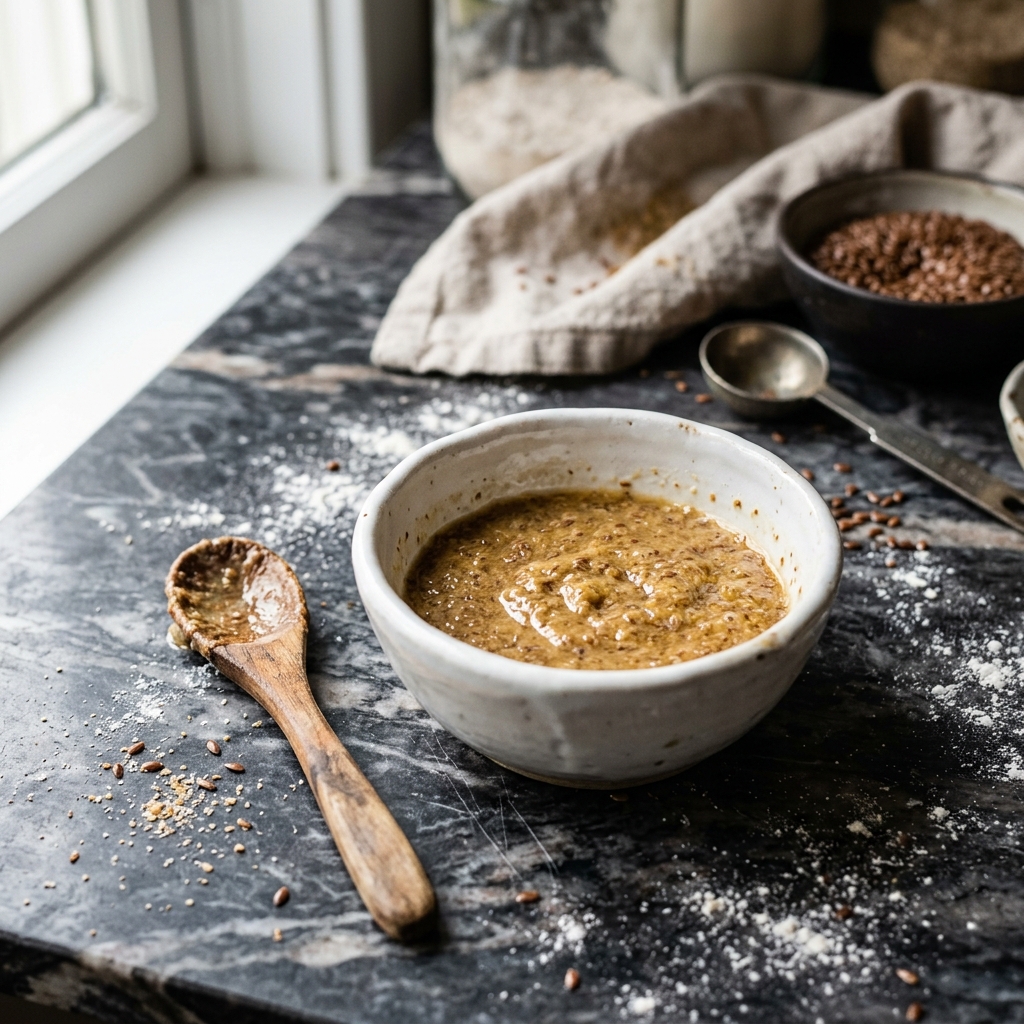
If you’re making cookies, muffins, or hearty breads where the egg’s primary job is to hold things together, the ‘flax egg’ is your best friend. Ground flaxseed is rich in soluble fiber, which forms a thick, gelatinous gel when mixed with water—mimicking the viscosity of an egg white almost perfectly. To replace one egg, mix 1 tablespoon of ground flaxseed with 3 tablespoons of water. Let it sit for about 5 to 10 minutes until it thickens. Chia seeds can be used in the exact same ratio, though they will add a slight crunch to the final product. Note that flax eggs add a mild, nutty flavor, which pairs wonderfully with whole grain baking, oatmeal cookies, and banana bread.
For Moisture and Density: Applesauce and Mashed Banana
In recipes where density and moisture are key—such as brownies, pound cakes, and dense muffins—fruit purées are exceptional substitutes. Unsweetened applesauce adds incredible moisture without drastically altering the flavor profile. Substitute 1/4 cup of applesauce for every egg. If you prefer a natural sweetness and don’t mind a fruity undertone, 1/4 cup of mashed ripe banana works just as well. Keep in mind that fruit purées do not provide any lift. If your recipe relies heavily on eggs to rise, using applesauce might result in a somewhat gummy or dense texture unless you add an extra pinch of baking powder to compensate.
The Miracle Leavener: Aquafaba
For delicate recipes that require whipped egg whites—like meringues, macarons, or light sponge cakes—there is only one true plant-based alternative: aquafaba. Aquafaba is simply the viscous liquid leftover from cooking legumes, most commonly the water drained from a can of chickpeas. It contains a unique mix of starches and proteins that allow it to whip into stiff, glossy peaks just like egg whites. To replace one whole egg, use 3 tablespoons of aquafaba. To replace one egg white, use 2 tablespoons. For the best results, whip it with a hand mixer and a pinch of cream of tartar to stabilize the foam.
Commercial Egg Replacers
If you bake egg-free frequently, it might be worth investing in a commercial egg replacer (such as Bob’s Red Mill or Ener-G). These powders are typically made from a blend of potato starch, tapioca starch, and a leavening agent. They are flavorless, versatile, and work incredibly well in a wide variety of baked goods. Simply mix the powder with water according to the package directions. They are best used in recipes that call for 1 to 3 eggs; replacing more than 3 eggs with a commercial powder can sometimes yield a chalky texture.
Conclusion
Baking without eggs is entirely possible once you know the science behind the swaps. Evaluate your recipe: if you need structure, reach for flaxseed. If you need moisture, grab the applesauce. And if you need an airy lift, whip up some aquafaba. With these alternatives in your pantry, you can adapt almost any recipe to fit a vegan diet or an allergy restriction without sacrificing taste or texture.