
Chicken Breast vs Thighs: Which Should You Cook?
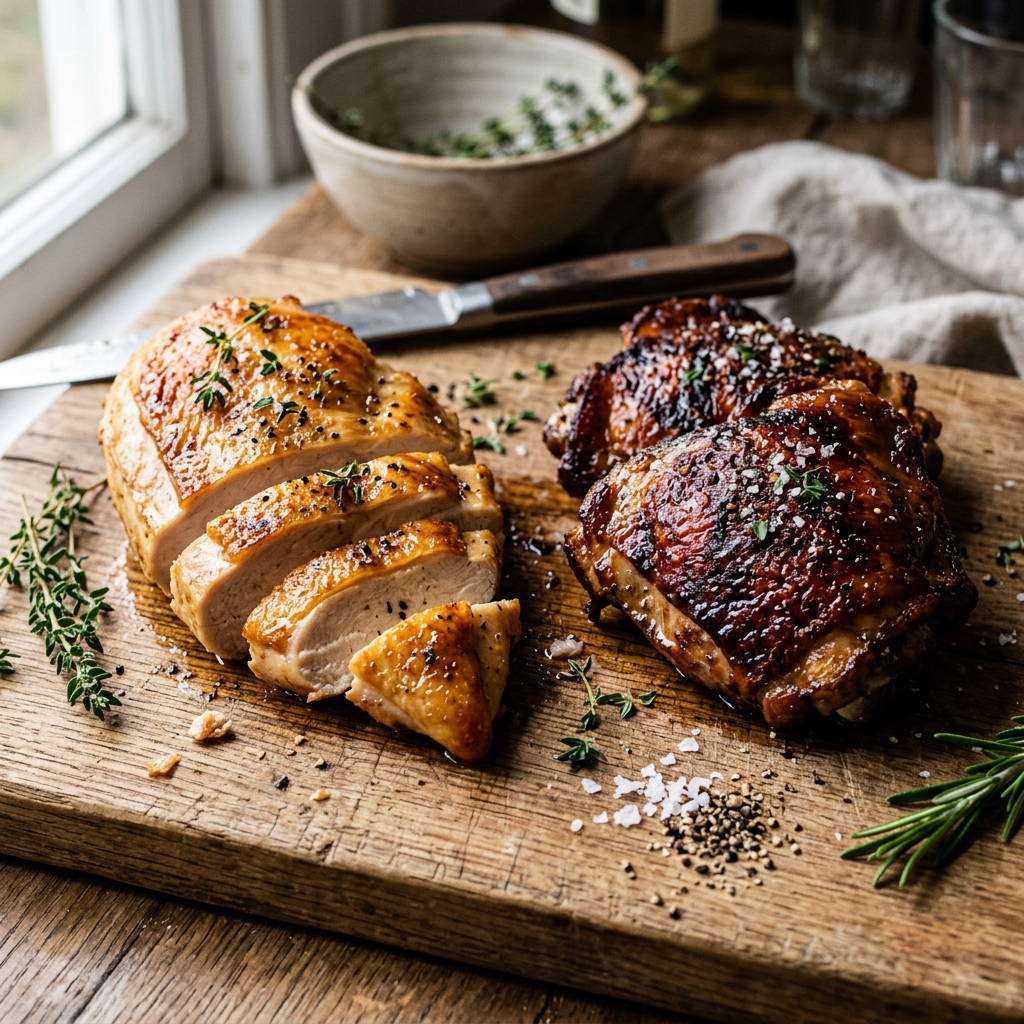
Torn between white and dark meat? Compare the fat content, calories, and best cooking methods for chicken breasts and chicken thighs.
| Cut | Fat / 100g | Calories / 100g | Best Cooking Method |
|---|---|---|---|
| Breast (Skinless) | 3.6 g | 165 kcal | Quick pan-searing, poaching, grilling |
| Thighs (Skinless) | 8.3 g | 209 kcal | Braising, slow-roasting, stews |
Kitchen reference values and estimates by FoxyChef.
White Meat vs. Dark Meat
Choosing between chicken breasts and thighs isn’t just about personal preference; they are structurally different meats that require completely different cooking techniques to shine. Cooking a breast like a thigh will result in dry, stringy meat, while cooking a thigh like a breast will leave it rubbery.
Chicken Breast (White Meat): Lean and Fast
Chicken breasts are lean muscle. Because they contain very little fat and connective tissue, they cook very quickly. However, this lack of fat means they dry out rapidly if overcooked even slightly. They are best suited for quick, high-heat cooking methods like pan-searing, grilling, or poaching. They are the healthiest option for low-calorie diets.
Chicken Thighs (Dark Meat): Rich and Forgiving
Chicken thighs are heavily worked muscles, meaning they contain more fat, myoglobin (which makes them dark), and connective tissue. This fat makes them incredibly flavorful and “forgiving”—it is very difficult to dry out a chicken thigh. To break down their tough connective tissue, they benefit from slightly longer cooking times. They are perfect for braising, slow-roasting, and stews.