
Nuts Compared: Almonds vs Walnuts vs Pecans
Compare fat profiles, omega-3 ALA content, toasting temperatures, and baking performance for almonds, walnuts, and pecans.
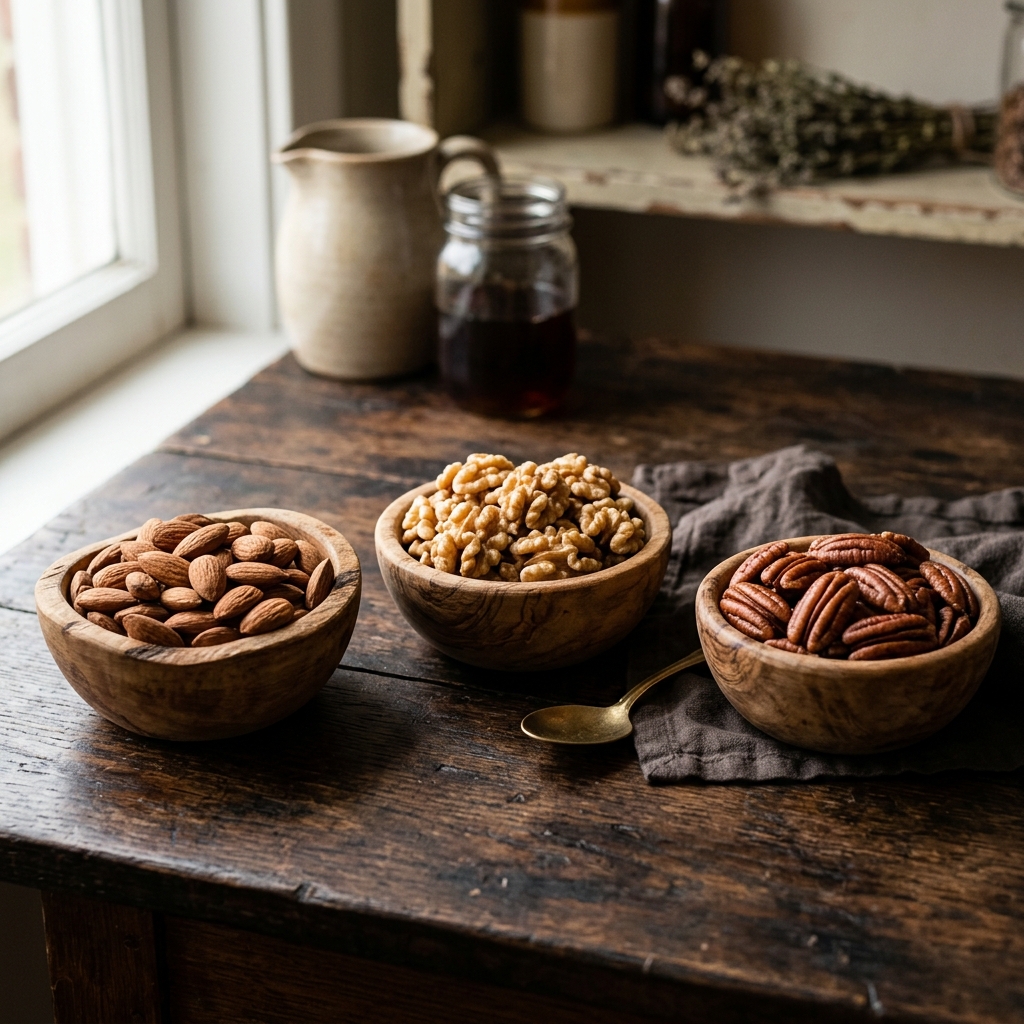
| Nut Type | Serving Size (1 oz / 28g) | Calories (kcal) | Protein (g) | Total Fat (g) | Sat. Fat (g) | Net Carbs (g) | Fiber (g) | Sugars (g) | Omega-3 ALA (g) | Toasting Temp & Time |
|---|---|---|---|---|---|---|---|---|---|---|
| Almonds | 28g (~23 nuts) | 164 kcal | 6.0g | 14.1g | 1.1g | 2.6g | 3.5g | 1.2g | 0.00g | 350°F (177°C) for 8–10 min |
| Walnuts | 28g (~14 halves) | 185 kcal | 4.3g | 18.5g | 1.7g | 2.0g | 1.9g | 0.7g | 2.57g | 325°F (163°C) for 6–8 min |
| Pecans | 28g (~19 halves) | 196 kcal | 2.6g | 20.4g | 1.8g | 1.2g | 2.7g | 1.1g | 0.28g | 325°F (163°C) for 7–9 min |
Kitchen swaps: Walnuts and pecans swap 1:1 in cookies and banana bread. Never swap whole almonds 1:1 into soft cakes; use sliced/slivered almonds at 1:1 weight with 1 tbsp melted butter.
Editorial Disclosure: FoxyChef is an independent culinary research and testing portal. All nutritional analyses, roasting tests, and baking trials are conducted in our studio test kitchen. When you buy recommended kitchen equipment through our links, we may earn an affiliate commission at no extra cost to you.
The Chemistry of Nuts in the Kitchen
While almonds, walnuts, and pecans are frequently grouped together in snacking mixes, their chemical architecture in culinary applications diverges substantially. A nut’s fat composition, moisture percentage, cellular density, and skin tannin profile determine how it behaves in pastry doughs, cake batters, and hot ovens. Substituting one nut for another without adjusting fat, sugar, or physical preparation can compromise crumb structure, leading to dense, oily, or unpleasantly hard baked goods.
Every nut variety carries a distinct lipid profile: almonds are dominated by stable monounsaturated oleic acids; walnuts are rich in delicate polyunsaturated alpha-linolenic acid (ALA omega-3s); and pecans carry extraordinary concentrations of monounsaturated fats that deliver melt-in-the-mouth tenderness. Mastering these structural differences ensures consistent success across savory roasts and sweet bakery recipes.
Empirical 28g (1 oz) Nutritional & Toasting Benchmark Table
The following empirical data table provides USDA FoodData Central metrics for standard 1-ounce (28-gram) portions of raw, unsalted nuts alongside precise dry-heat oven toasting parameters.
Detailed Flavor Profiles & Culinary Texture Roles
Almonds: Density and Clean Structural Crunch
Almonds possess dense cellular walls and high protein (6.0g per ounce), resulting in a firm, audible snap when chewed. Their flavor is subtly sweet and floral, with gentle benzaldehyde (marzipan) aromatic notes. In pastry kitchens, whole almonds are rarely added directly to soft sponge cakes because their rigid hardness disrupts delicate fork slicing. Instead, almonds excel when blanched and ground into fine flour for French macarons, slivered as a crisp topping for green beans, or sliced into crunchy biscotti doughs that require prolonged twice-baked stability.
Walnuts: Earthy Tannins and Omega-3 Balancing Power
Walnuts have a tender, crumbly kernel structure enclosed by a thin, paper-like pellicle skin. This skin contains high concentrations of polyphenolic tannins, which impart a sharp, pleasant astringency. This natural bitterness acts as an indispensable balancing agent in rich, sugar-heavy American desserts: it cuts through the cloying sweetness of fudge brownies, chocolate chip cookies, and spiced banana bread. Furthermore, walnuts provide 2.57g of essential ALA omega-3 fatty acids per ounce—more than any other culinary nut.
Pecans: Rich Butterfat and Natural Caramel Sweetness
Pecans are the richest of the three, with an astonishing 20.4g of fat per ounce (73% fat by weight). Unlike walnuts, pecan pellicle skins contain minimal astringent tannins, producing a naturally mellow, buttery flavor with deep notes of vanilla and maple syrup. When heated, pecans exude aromatic oils that tenderize surrounding doughs. They are the defining ingredient of classic Southern pecan pies, praline candies, and caramelized streusels for holiday sweet potato casseroles.
Thermal Toasting Science & Oxidation Control
Toasting raw nuts is not merely an aesthetic step—it triggers the Maillard reaction between reducing sugars and amino acids, generating complex volatile pyrazines that amplify nuttiness by tenfold. However, toasting parameters must be tailored to fatty acid stability:
- Almond Toasting (350°F / 177°C for 8–10 min): Almonds’ high monounsaturated fat content tolerates moderate heat. Toast on a rimmed sheet pan until fragrant and light golden inside when sliced in half.
- Walnut Toasting (325°F / 163°C for 6–8 min): Polyunsaturated ALA omega-3 fats oxidize and burn easily, turning rancid at high heat. Always roast walnuts at a lower temperature (325°F). After roasting, bundle hot walnuts in a clean kitchen towel and rub briskly to remove excess bitter papery skins.
- Pecan Toasting (325°F / 163°C for 7–9 min): Due to their high oil content, pecans transition from aromatic to scorched in seconds. Watch closely until the nuts release a warm, buttery aroma.
Culinary Limitations & Drawbacks (Cons)
- Rapid Oxidation and Rancidity in Walnuts: The delicate polyunsaturated ALA omega-3 fatty acids in walnuts oxidize quickly upon exposure to air and heat, turning bitter and rancid within six to eight weeks at room temperature.
- Physical Hardness Disrupting Tender Batters: Whole almonds possess dense cell walls that fail to yield when sliced with a fork, requiring blanching, slivering, or flour milling for soft cake crumb integration.
- Elevated Caloric and Lipid Density in Pecans: Pecans contain 20.4 grams of fat per ounce (73% fat by weight), easily exceeding daily caloric targets if added to baked goods without weighing portions.
Kitchen Substitution Formulas & Baking Behavior
1. Substituting Walnuts for Pecans (and Pecans for Walnuts)
Replacement Ratio: 1:1 direct volume or weight swap in quick breads, brownies, and cookies.
Flavor & Sugar Adjustment: When swapping sweeter pecans in place of walnuts in rich chocolate desserts, reduce recipe white sugar by 1 to 2 tablespoons to prevent cloying sweetness. When swapping walnuts in place of pecans in delicate tart crusts, roast the walnuts first and rub off the skins to temper astringency.
2. Substituting Almonds for Walnuts or Pecans
Never substitute whole almonds 1:1 into soft batters. Whole almonds remain hard and puncture soft cakes. Instead, use toasted sliced or slivered almonds at a 1:1 weight ratio (or ¾ cup slivered almonds per 1 cup chopped walnuts), and add 1 tablespoon of melted butter to match the oil release of pecans and walnuts.
Proper Storage Protocols: Preserving Delicate Nut Oils
Because walnuts and pecans contain substantial quantities of unsaturated fatty acids, exposure to room temperature oxygen and light triggers oxidative rancidity within 6 to 8 weeks. For peak culinary quality, store shelled nuts in airtight glass jars in the refrigerator for up to 6 months, or in the freezer at 0°F (-18°C) for up to 18 months. Nuts can be toasted directly from the freezer without thawing.