
Beef Cuts Compared: Ribeye vs Sirloin vs Tenderloin
Don't ruin an expensive steak! Compare the marbling, tenderness, and best cooking uses for Ribeye, Sirloin, and Tenderloin (Filet Mignon).
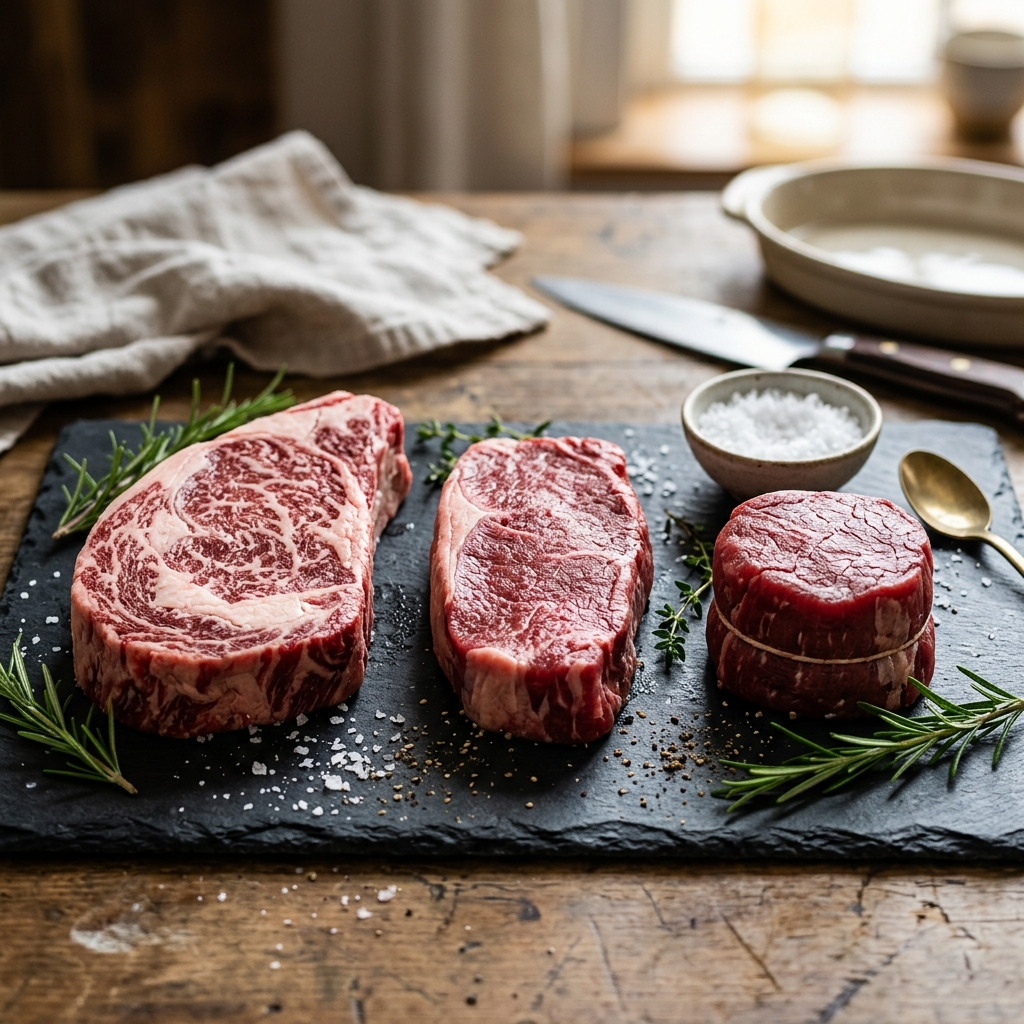
| Beef Cut | Marbling (Fat) | Tenderness | Price & Best Use |
|---|---|---|---|
| Ribeye | High | High | $$$ - Pan-searing, grilling |
| Sirloin | Low | Medium | $$ - Stir-fries, everyday dinners |
| Tenderloin (Filet) | Very Low | Highest | $$$$ - Quick searing, special occasions |
Kitchen reference values and estimates by FoxyChef.
Understanding Steak Cuts
Not all steaks are created equal. The price, flavor, and tenderness of a beef cut depend entirely on which part of the cow it comes from. Muscles that do a lot of work (like the shoulder or leg) are tough and flavorful, while muscles that do little work (like the back) are tender but milder.
Ribeye: The Flavor King
Cut from the rib section, the ribeye is famous for its massive amount of intramuscular fat (known as marbling). When cooked, this fat melts into the meat, basting it from the inside and creating an incredibly rich, beefy flavor. It is best cooked medium-rare to medium, allowing the fat time to render properly. It is perfect for pan-searing or grilling.
Tenderloin (Filet Mignon): The Melt-in-Your-Mouth Cut
The tenderloin is a non-weight-bearing muscle, making it the most tender cut on the entire cow. You can cut it with a butter knife. However, it is very lean and lacks marbling, meaning it has a much milder flavor than a ribeye. It is very expensive and best cooked very quickly over high heat to rare or medium-rare.
Sirloin: The Everyday Steak
Cut from the rear back, the sirloin is a “middle ground” steak. It has more flavor than a tenderloin and is much cheaper than a ribeye, but it is noticeably tougher than both. Because it is lean, it is excellent for everyday dinners, stir-fries, or slicing thin for fajitas.