
Broth vs Stock vs Bone Broth
They look similar, but they behave completely differently in the pan. Understand the culinary differences between broth, stock, and bone broth.
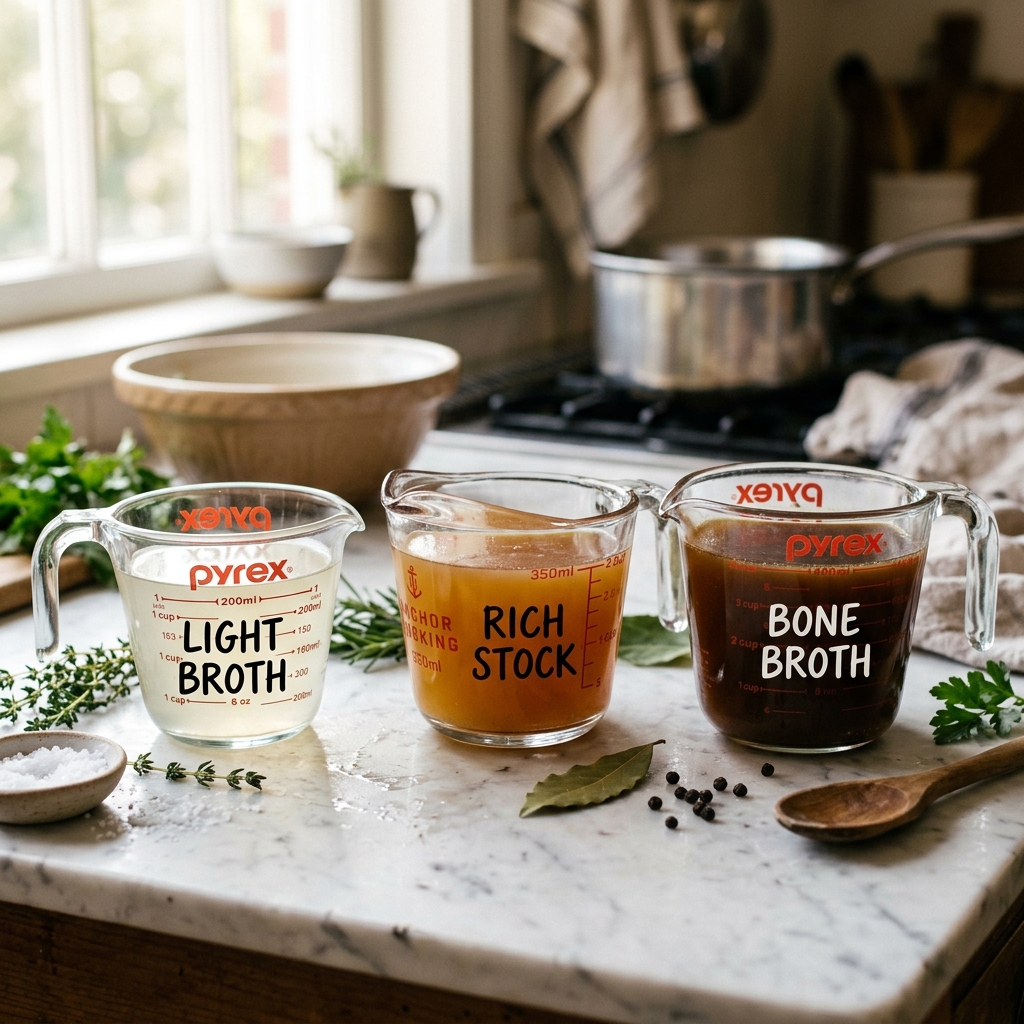
| Liquid Type | Primary Ingredient | Texture (Cold) | Best Culinary Uses |
|---|---|---|---|
| Broth | Meat (simmered 1-2 hours) | Liquid (watery) | Light soup bases (chicken noodle), drinking when sick |
| Stock | Bones (simmered 4-6 hours) | Gelatinous (jiggly) | Glossy pan sauces, gravy, rich stews, risotto |
| Bone Broth | Bones (simmered 12-24+ hrs) | Extremely thick gelatin | Drinking for health, ultra-rich ramen bases |
Kitchen reference values and estimates by FoxyChef.
The Secret of Collagen
The culinary difference between these three liquids comes down to one single protein: collagen. Collagen is found in animal bones and connective tissue. When simmered, it transforms into gelatin, giving the liquid a rich, luxurious, lip-smacking texture. The longer you boil bones, the more gelatin you extract.
Broth: The Light Foundation
Broth is made by simmering primarily meat (with some vegetables and aromatics) for a short period of time (usually 1-2 hours). Because it is made with meat rather than bones, it contains almost no gelatin. It remains completely liquid when cold. It is seasoned (often heavily salted) and is meant to be consumed as is. It is the perfect light base for chicken noodle soup or for drinking when you have a cold.
Stock: The Chef’s Secret Weapon
Stock is the backbone of restaurant cooking. It is made by simmering roasted bones (not meat) for 4 to 6 hours. This process extracts collagen, which turns into gelatin. A good stock will “jiggle” like Jell-O when cold. It is usually unseasoned so chefs can reduce it without it becoming too salty. The high gelatin content is what creates glossy pan sauces, rich gravies, and creamy risottos.
Bone Broth: The Extreme Extraction
Despite the confusing name, bone broth is actually an extreme version of stock. It is made by simmering bones for an incredibly long time—often 12 to 24+ hours (frequently with a splash of apple cider vinegar to help break down the bones). The goal is maximum extraction of minerals, collagen, and amino acids. It forms a very dense gel when cold and is incredibly rich. It is often consumed on its own for health benefits or used as the intense base for authentic ramen.