
Classical French Coq au Vin: Dutch Oven Braising Kinetics & Fond Physics
An engineered approach to Burgundy Coq au Vin: harness red wine polyphenol tenderization, lardons fond deglazing, and slow collagen breakdown in enameled cast iron.
Instructions
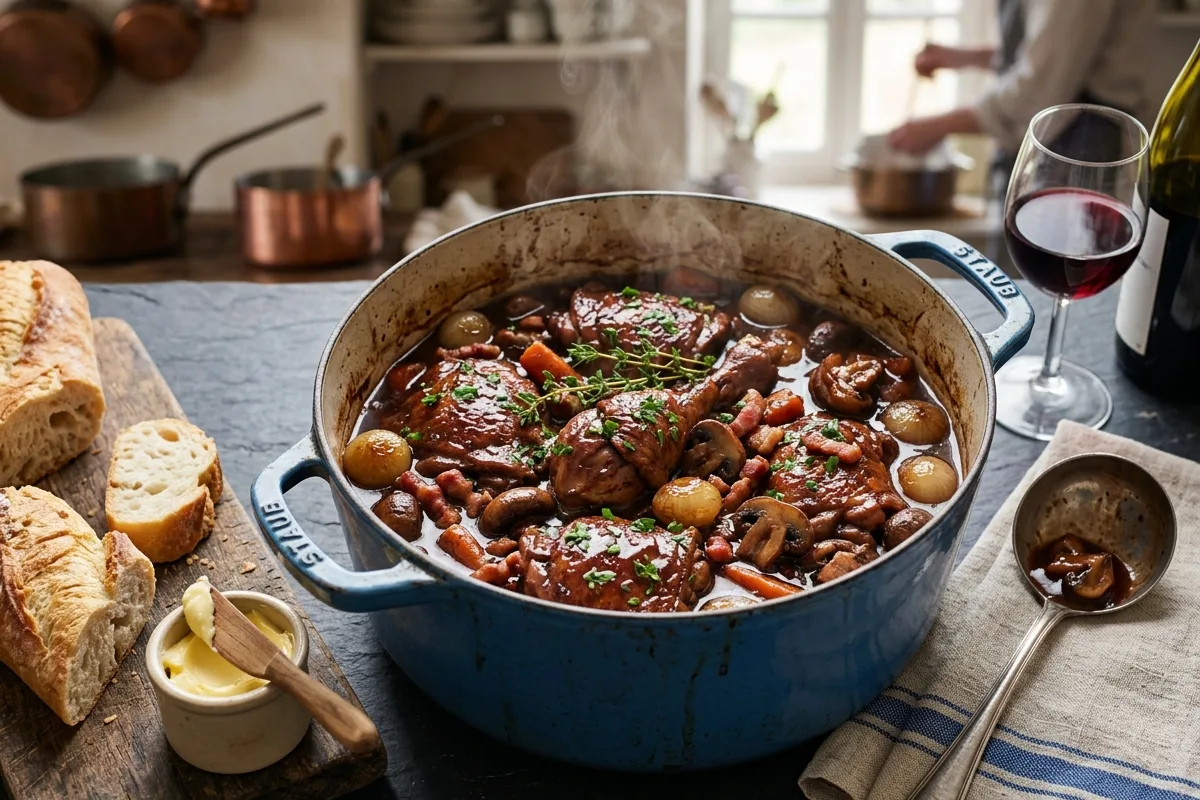
Coq au Vin represents the zenith of French braising thermodynamics. Rather than an ordinary stew, it is an engineered chemical convergence where the polyphenols and tartaric acid of fermented red wine dissolve muscle fiber tension, while slow convective heat in enameled cast iron hydrolyzes tough collagen into velvety gelatin.
The Chemistry of Wine-Acid Braising
In classical French gastronomy, tough old roosters (coq) were stewed in acidic red wine out of necessity. In modern culinary science, the technique remains extraordinary even when applied to pasture-raised chicken thighs and drumsticks. The process relies on wine chemistry and thermal kinetic rates:
Dry red wine (such as Pinot Noir or Côtes du Rhône) maintains a natural pH between 3.3 and 3.6, primarily composed of tartaric, malic, and succinic acids. When meat braises in an acidic bath below a boil, hydrogen ions penetrate the exterior muscle fibers, accelerating the denaturation of actomyosin and loosening myofibrillar proteins. Simultaneously, red wine polyphenols (specifically tannins and anthocyanins) cross-bind with surface proteins, promoting intense savory complexity while preventing meat fibers from becoming dry and stringy.
Boiling the wine for the initial 5 minutes before sealing the Dutch oven is chemically essential: it volatilizes harsh ethanol compounds (boiling point 78.37°C / 173°F) and reduces aggressive volatile sulfur compounds, leaving behind concentrated fruit acids and sugars.
Collagen-to-Gelatin Kinetics at 150°C (300°F)
Chicken thighs and drumsticks contain significant deposits of Type I and Type III collagen, the fibrous connective tissue that wraps muscle bundles. If cooked too quickly or boiled violently above 100°C (212°F), collagen fibers contract violently, squeezing out intercellular moisture and yielding tough meat.
However, when maintained inside a heavy enameled cast iron vessel at an ambient oven temperature of 150°C (300°F), the internal liquid temperature remains stable between 85°C and 90°C (185°F to 194°F). Within this optimal thermal window, the triple-helix structure of collagen undergoes hydrolytic cleavage, uncoiling into water-soluble gelatin molecules. Gelatin dramatically increases the viscosity and mouthfeel of the braising liquid, creating a natural sauce body without requiring cups of added cornstarch.
Enameled Cast Iron Thermal Mass by Alva
Gentle, uniform braising requires heavy thermal inertia. Alva Dutch ovens hold steady heat for hours without hot spots, ensuring tender collagen breakdown and zero burnt fond.
View Alva Dutch Ovens →Fond Physics: The Foundation of Flavor
The dark, glossy sheen of a proper Coq au Vin sauce stems from fond—the concentrated residue of browned meat proteins, amino acids, and reducing sugars adhering to the base of the Dutch oven after searing. Searing lardons first extracts rendered saturated pork fat with a smoke point near 190°C (374°F), creating a non-stick barrier for the chicken.
When the chicken skin is seared, the Maillard reaction produces hundreds of new flavor compounds, including pyrazines, furans, and thiophenes. Deglazing the hot pan with room-temperature red wine dissolves these water- and alcohol-soluble flavor molecules into the braising broth, establishing the bedrock of authentic Burgundian sauce complexity.
Critical Failure Modes & Chemistry Risks to Avoid
- Boiling the Stew on Direct High Heat: Rapid boiling on a stovetop burner causes protein fibers to seize and eject water, leaving the chicken dry even while submerged in liquid. Always braise in a preheated oven with a heavy, closed lid.
- Skipping the Ethanol Reduction: Adding raw wine directly without a vigorous 5-minute pre-reduction traps ethanol vapors under the lid, imparting a harsh, medicinal alcohol flavor to the braise.
- Using Sweet or Cooking Wine: Commercial “cooking wines” are loaded with sodium benzoate and artificial preservatives, while sweet wines unbalance the acidity. Use a dry, tannic table wine you would happily drink.
- Adding Mushrooms at the Beginning: Mushrooms contain 90% water. If simmered for 75 minutes, they become rubbery sponges that leach excess moisture. Sauté them separately in butter and fold them in during the final 10 minutes.
Nutritional & Biochemical Profile
One hearty serving (approx. 380 g chicken with rich sauce and vegetables) provides 540 kcal:
| Macronutrient | Quantity per Serving | Energy Contribution (%) | Biological Role |
|---|---|---|---|
| Protein | 46 g | 34% | Rich in glycine, proline, and hydroxyproline from gelatinized bone collagen |
| Fat | 24 g | 40% | Monounsaturated fats from chicken and saturated lipid carriers from lardons |
| Carbohydrates | 16 g | 12% | Derived from caramelized carrots, pearl onions, and natural wine reductions |
| Dietary Fiber | 3.5 g | — | Pectins and plant cellulose from slow-braised root vegetables |
| Sodium | 760 mg | — | Carefully balanced between bacon cure and homemade unsalted bone stock |
Frequently Asked Questions
Can I make Coq au Vin ahead of time?
Yes. In fact, Coq au Vin is chemically superior on day two. As the dish cools below 50°C, the gelatin sets, and the red wine polyphenols and aromatic compounds achieve chemical equilibrium throughout the meat fibers. Reheat gently over low heat for 15 minutes before serving.
What cut of chicken produces the best results?
Skin-on, bone-in chicken thighs and drumsticks are the absolute gold standard. White breast meat contains almost no collagen and will dry out completely over a 75-minute braise. Bone marrow in thighs also dissolves into the sauce, enriching the body.
How does beurre manié thicken the sauce without lumps?
Beurre manié (equal parts softened butter and flour kneaded into a paste) coats each microscopic flour starch granule in fat. When whisked into hot liquid, the fat melts gradually, releasing the starch grains individually so they hydrate and swell without clumping together.
Editorial Transparency & Affiliate Disclosure: FoxyChef evaluates culinary gear independently. Some links on this page route through verified partner programs such as /go/alva-cookware/ which may earn our kitchen lab a modest commission at zero additional cost to you.