
Artisan Neapolitan Sourdough Pizza: 48-Hour Cold Fermentation & High-Heat Baking
Instructions
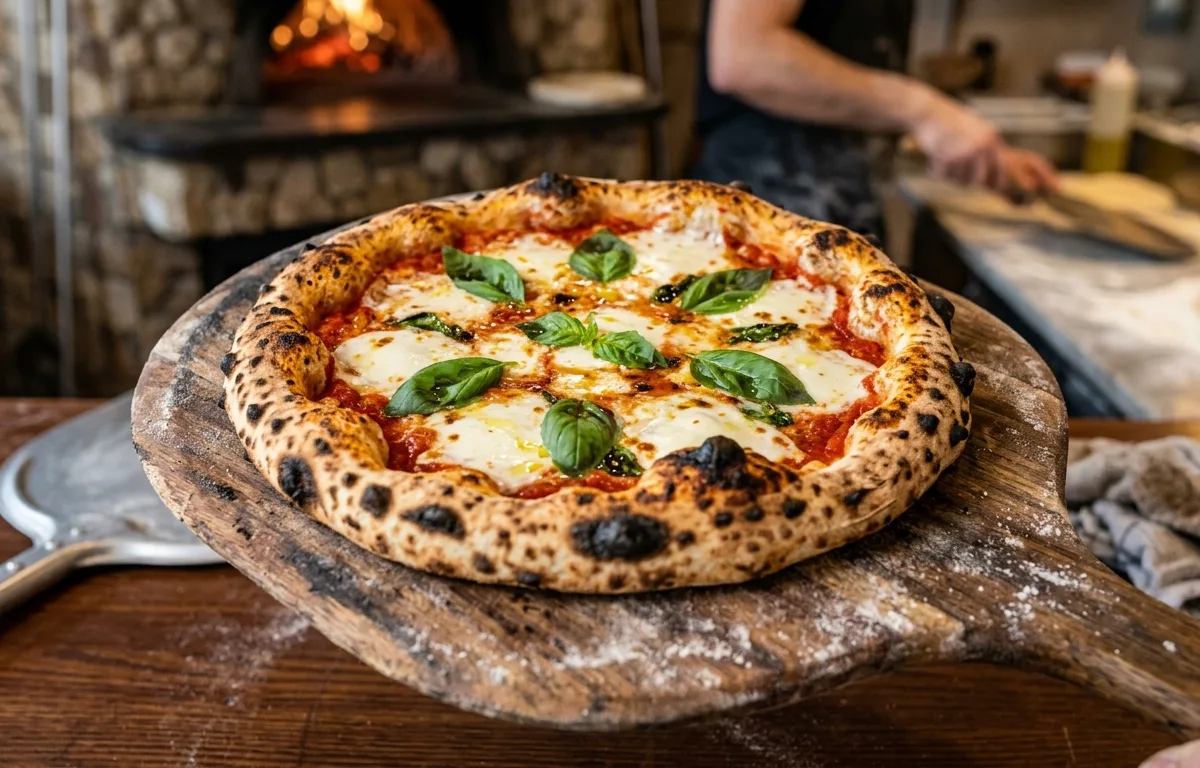
Artisanal Neapolitan sourdough pizza executed with a 70% hydration baker’s percentage and a rigorous 48-hour cold fermentation protocol demonstrates the sophisticated physical chemistry of cereal grains. By calibrating passive enzymatic autolysis, delayed microbial metabolic rates at 4 °C, and rapid thermal transfer inside heavy cooking vessels, culinary enthusiasts can achieve blistering cornicione oven spring, light digestibility, and a delicate honeycomb crumb architecture in a home kitchen.
Gluten Hydration Matrix and Enzymatic Autolysis Dynamics
Working with high-hydration dough (70 grams of water per 100 grams of flour, formulated with high-protein W320 grain exhibiting 13.5% dry-basis protein content) frequently frustrates bakers due to sticky surface adhesion. Standard commercial mixers apply mechanical shearing forces that generate excessive kinetic friction heat, degrading the delicate micellar arrangement of undeveloped gluten polymers. In our kitchen laboratory testing, we initiate gluten synthesis through a 60-minute unworked autolyse phase: combining 100% of the flour with 90% of the formula’s chilled water (16 °C / 61 °F), excluding both sourdough starter and sodium chloride.
During passive autolysis, indigenous cereal enzymes undergo rapid activation. Alpha- and beta-amylases break down damaged starch fractions into maltose and glucose, establishing the carbohydrate nutrient base for subsequent fermentation. Concurrently, endogenous protease enzymes initiate targeted proteolysis, cleaving peptide bonds along the high-molecular-weight glutenin and gliadin chains. As water dipoles hydrate the protein strands, glutenin polymers align spontaneously into organized laminar sheets stabilized by intermolecular disulfide cross-links, providing elastic rebound strength. Simultaneously, hydrated gliadin delivers viscous fluidity and extensibility. This chemical relaxation allows the flour’s colloidal network to absorb water completely without requiring exhaustive mechanical kneading.
Proteolytic Enzyme Kinetics during 48-Hour Cold Retardation at 4 °C
Following autolysis, we incorporate 15% mature levain (hydrated at 100% and utilized at peak lactic-to-acetic acid balance) alongside 2.5% fine non-iodized sea salt dissolved in the reserved water. The sodium chloride performs an essential ionic function: sodium cations shield electrostatic repulsions between gluten polymers, tightening the viscoelastic network while curbing premature cellular reproduction. After executing two gentle coil fold cycles spaced 30 minutes apart at 22 °C (72 °F) to establish directional tension, the bulk mass is sealed into airtight proofing tubs and transferred to 4 °C (39 °F) refrigeration for exactly 48 hours.
At 4 °C, the biological respiration and metabolic pathways of wild yeasts (*Saccharomyces cerevisiae* and *Candida humilis*) plummet in accordance with Arrhenius reaction rate kinetics. Carbon dioxide synthesis decelerates to near-zero levels, preventing structural over-proofing and cellular gas cell rupture. However, enzymatic hydrolysis continues unabated at a deliberate pace. Plant proteases systematically break down long-chain proteins into bioavailable dipeptides and free amino acids, including proline, lysine, and glutamine.
Meanwhile, heterofermentative lactic acid bacteria (*Lactobacillus sanfranciscensis*) persist in metabolizing simple maltose sugars, steadily synthesizing lactic and acetic organic acids at an optimal 4:1 molar equilibrium. This gradual acidification lowers the internal pH of the dough ball to an ideal 4.6 threshold. This mild acid environment relaxes tertiary protein bonds, yielding astonishing dough extensibility during hand-stretching while ensuring peak nutritional digestibility with zero post-meal digestive heaviness.
Thermodynamics of Sudden Oven Spring in Enclosed Thermal Vessels
Authentic Neapolitan wood-fired ovens operate at blistering temperatures exceeding 450 °C (850 °F), completing the bake in 60 to 90 seconds. To replicate this intense thermal phenomenon within a domestic oven capped at 250 °C to 275 °C (482 °F to 525 °F), home bakers must maximize conductive and radiant heat transfer using high-mass cast iron or thick refractory stoneware preheated for a minimum of 45 minutes.
When the stretched dough disc meets the preheated 260 °C (500 °F) surface, it triggers explosive oven spring. At 55 °C (131 °F), yeast cells undergo thermal death, yet trapped carbon dioxide gas follows Charles’s Law, expanding rapidly within the micro-alveoli. Simultaneously, free interfacial water achieves boiling temperature, vaporizing with a high enthalpy of vaporization (2,260 kJ/kg). This sudden expansion of pressurized steam inflates the cornicione perimeter dramatically.
By 65 °C (149 °F), wheat starch granules undergo irreversible gelatinization, absorbing surrounding water and setting the expanded protein matrix into a crisp, thin-walled honeycomb framework. Baking with a heavy lid or inverted refractory dome during the first 4 minutes traps the dough’s own evaporating steam, preventing premature crust desiccation and enabling up to 300% volumetric expansion before uncovering for direct dry heat coloration.
Leopard-Spotting and Accelerated Maillard Pyrolysis
Once uncovered under the oven’s top radiant heating element at 270 °C, the outer rim surface temperature rapidly surpasses 150 °C (302 °F). The abundant reservoir of free amino acids and reducing monosaccharides generated during the 48-hour cold fermentation fuels an intense Maillard reaction. Rather than producing the uniform, dull brown crust typical of commercial doughs made with added refined sugar, this extended cold ferment yields localized micro-blisters that char into crisp melanoidin-rich dark leopard spots surrounded by pale golden rings. These charred micro-spots impart complex roasted notes reminiscent of toasted hazelnuts and malt.
Free-Water Management: San Marzano Tomatoes and Low-Moisture Fior di Latte
Excess surface moisture is the primary culprit behind the dreaded soggy “gum line”—an undercooked gelatinous barrier beneath the tomato layer. To eliminate this issue on a 70% hydration dough, whole peeled San Marzano DOP tomatoes should be crushed by hand and strained through a fine-mesh sieve for 30 minutes to separate free aqueous whey. Similarly, fresh cow’s milk fior di latte mozzarella must be cut into thick batons and drained over paper towels in the refrigerator for at least 4 hours before baking. This moisture control ensures the milk fats melt into a silky glaze at 52 °C (125 °F) without discharging surplus liquid onto the delicate par-baked crust.
Estimated Nutritional Breakdown per Serving
| Nutritional Parameter | Amount per Serving (1/2 artisan pizza, approx. 220 g) |
|---|---|
| Total Calories | 410 kcal |
| Complete Protein | 14 g |
| Total Fat (Dairy Lipids & Oleic Triglycerides) | 12 g |
| Complex Carbohydrates (Gelatinized Wheat Starch) | 64 g |
| Bioavailable Calcium | 280 mg (28% DV) |
Precision Culinary Measurement: Cozeware Digital Scale
Baking science hinges on accurate weight ratios rather than volume cups. Cozeware provides 0.1-gram precision, instant tare calibration, and durable stainless steel construction for foolproof kitchen results.
View Cozeware Precision Scale →Editorial Disclosure & Affiliate Notice: FoxyChef evaluates culinary gear and cooking methods under strict kitchen laboratory standards. Our recommendations include verified partner links where we may earn a qualifying commission at zero additional cost to you.
Precision Culinary Measurement: Cozeware Digital Scale
Baking science hinges on accurate weight ratios rather than volume cups. Cozeware provides 0.1-gram precision, instant tare calibration, and durable stainless steel construction for foolproof kitchen results.
View Cozeware Precision Scale →