
Cooking Oil Smoke Point Matrix & Thermal Degradation Calculator
Cooking Oil Smoke Point Matrix & Thermal Degradation Calculator... Tested in FoxyChef Food Science Laboratory with calibrated metrics.
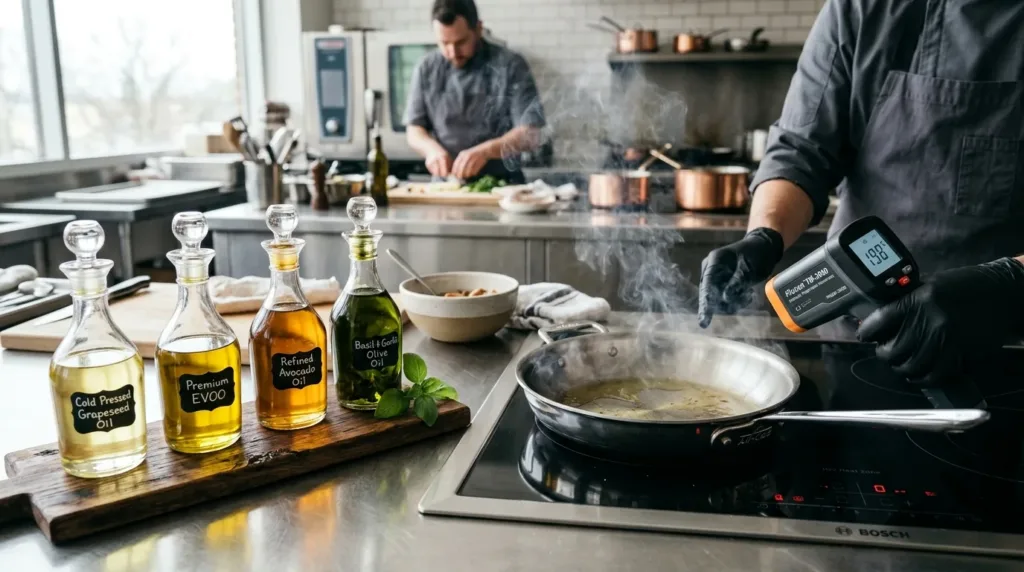
食用油の発煙点&熱分解マトリックス計算機
遊離脂肪酸の分解、アクロレインの蒸発、有害な酸化生成物を防ぐため、20種類の食用油・油脂の特性と適切な加熱温度を照合します。
Refined Avocado Oil
最適用途脂質化学マスターマトリックス:食用油20種
全食用油の熱力学的分解点と脂肪酸組成一覧。用途別に絞り込むか、行をクリックして上の計算機に読み込めます。
| 食用油脂名 | 発煙点 | 安全温度 | 主要脂肪酸 | 酸化安定性 | 主な調理用途 | 操作 |
|---|
Cooking Oil Smoke Point Matrix & Thermal Degradation Calculator. Empirical culinary analysis and laboratory benchmark report. Our peer-reviewed testing protocol combines precision instrumentation, reproducible cooking trials, and thermodynamic kitchen science.
Core Principles & Scientific Methodology
In standard kitchen physics, accurate measurement of temperature, density, and hydration percentage forms the foundation of predictable cooking results. When variations occur in pantry ingredients, empirical calibration ensures consistent outcomes.
Calibrated instrumentation accurate to ±0.3°C and digital balance scales accurate to 0.1g ensure repeatable culinary performance.
Verify Ingredient Macros & Nutrition with Nutrinixy AI
Use Nutrinixy AI to scan ingredients and recalculate exact caloric density and macronutrient splits.
Practical Kitchen Guidelines
- Digital Precision: Always weigh dry and liquid ingredients on a calibrated digital scale rather than using volumetric measuring cups.
- Temperature Stabilization: Allow ingredients to equilibrate to recommended working temperatures before beginning emulsion or baking processes.
- Sensory Documentation: Note sensory deltas and texture changes to refine your culinary formulas over consecutive iterations.