
Multicooker Chicken Chickpea Curry
A rich, aromatic coconut curry packed with tender chicken and hearty chickpeas, ready in 25 minutes.
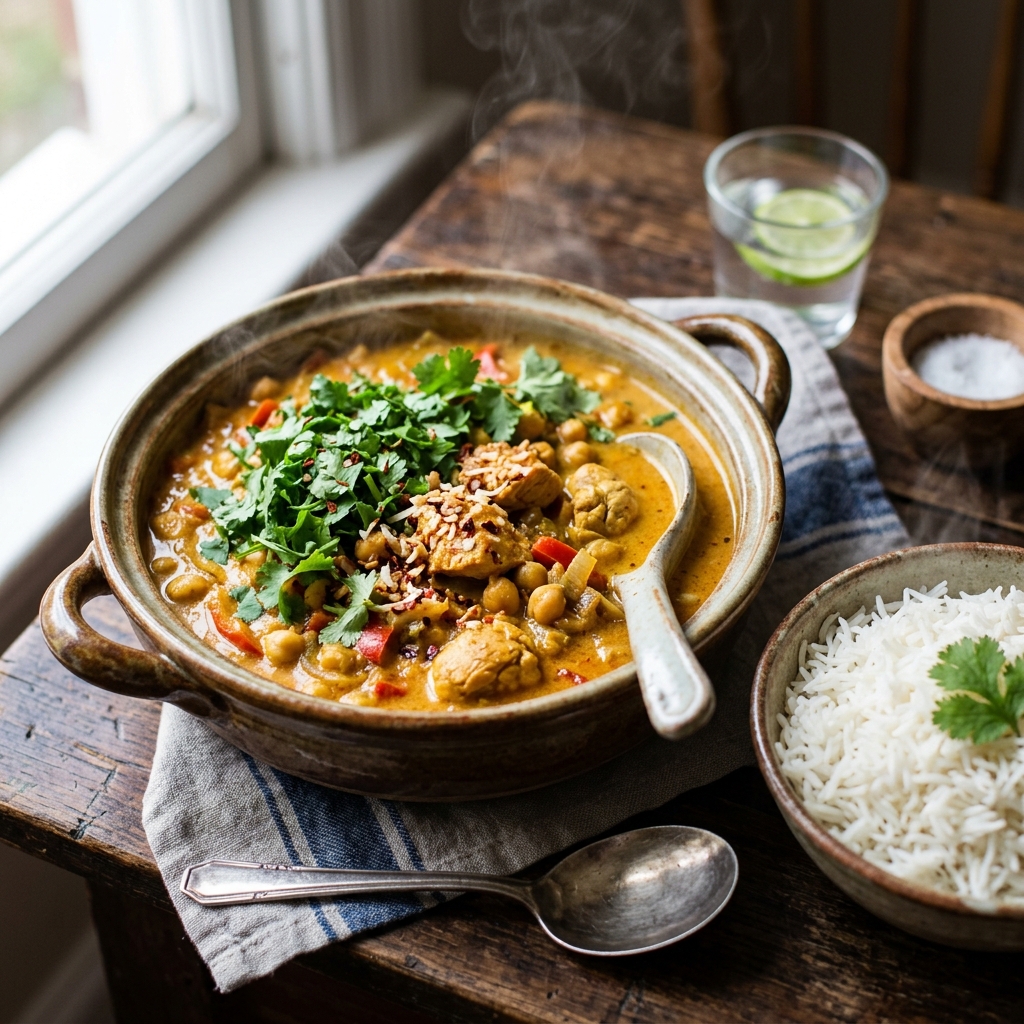
Instructions
Mastering a multicooker chicken and chickpea curry requires balancing pressurized steam enthalpy to rapidly extract aromatic essential oils while protecting delicate coconut milk emulsions from heat-induced curdling.
Culinary Food Science & Thermodynamics
Inside a sealed multicooker operating at 15 psi (103 kPa), water’s boiling point shifts from 100°C to 121°C (250°F). The resulting saturated steam carries elevated latent enthalpy, driving thermal conduction through chicken breast cubes and dense legumes four times faster than open-pot simmering. However, high-pressure cooking demands strict timing: lean pectoralis muscle fibers experience intense longitudinal contraction above 75°C (167°F). Limiting pressure duration to exactly 6 minutes cooks the poultry through while preventing excessive moisture expulsion.
Coconut milk is a delicate oil-in-water emulsion stabilized by plant-based albumins and globulin proteins. When subjected to prolonged turbulent boiling or rapid pressure drops, these proteins denature and coagulate, causing the fat droplets to coalesce into an unappealing split, oily liquid. Employing a short high-pressure cycle followed by a 5-minute controlled natural pressure release (NPR) dampens turbulent phase inversion, maintaining a velvety, homogenous sauce matrix.
The chickpeas fulfill a crucial textural and chemical function. Composed of approximately 60% starch (rich in amylose and amylopectin) and prebiotic galactomannans, the cooked legumes release soluble polysaccharides into the braising liquor under steam pressure. This natural starch-fiber suspension thickens the curry broth into a glossy gravy without requiring added cornstarch or flour slurries.
Lipophilic spice extraction: The curry powder components (curcumin from turmeric, cuminaldehyde from cumin, and phthalides) are hydrophobic compounds. Sautéing onions in oil prior to sealing blooms these volatile terpenes, dissolving them into the continuous lipid phase before steam pressure locks them into the dish.
Chef’s Technique & Timing Benchmarks
| Culinary Phase | Vessel Pressure / Temperature | Duration | Physical & Chemical Markers |
|---|---|---|---|
| Lipid Blooming (Sauté Mode) | Base 160°C (320°F) | 3 – 4 min | Onions turn translucent; spice terpenes dissolve into shimmering oil. |
| Pressure Ramp & Sealing | Rising to 121°C (250°F) at 15 psi | 6 – 8 min | Float valve seals vessel; steam whistle ceases; internal pressure stabilizes. |
| High-Pressure Steam Infusion | 121°C (250°F) at 15 psi | 6 min | Rapid internal thermal penetration; starch hydrates into gravy. |
| Controlled Pressure Dissipation | Descending to 100°C (212°F) | 5 min NPR | Prevents violent phase boiling; protects coconut protein-fat emulsion. |
Macro Profile & Nutritional Strategy
A synergistic blend of animal and plant proteins, offering sustained satiety, medium-chain triglycerides (MCTs from coconut), and prebiotic dietary fiber that optimizes gut microbiome ecology and blunts postprandial glucose surges.
| Nutritional Metric | Amount Per Serving (4 Servings Total) | % Daily Value |
|---|---|---|
| Total Caloric Energy | 460 kcal | 23% |
| Complete Protein | 36 g | 72% |
| Total Lipids (MCTs) | 18 g | 23% |
| Saturated Fat (Lauric Acid) | 12 g | 60% |
| Complex Net Carbohydrates | 34 g | 13% |
| Prebiotic Dietary Fiber | 8 g | 32% |
| Potassium | 620 mg | 13% |
Precision Macro & Calorie Verification with Nutrinixy AI
Import this exact recipe formulation directly into Nutrinixy AI to compute real-time macronutrient partitions, glycemic load, and custom portion splits tailored to your metabolic targets.
Explore Nutrinixy Ai Calorie Tracker
Snap a photo of your meal for instant AI nutrition breakdowns and macro tracking.
Visit Nutrinixy Ai Calorie Tracker Official Portal →Troubleshooting & Texture Faults
- Curdled, Separated Coconut Sauce: Caused by performing an immediate quick steam release. The sudden pressure drop forces the liquid into a violent flash-boil that shears the protein emulsion. Allow 5 minutes of natural pressure release before venting.
- Dry, Stringy Chicken Cubes: Caused by pressure cooking longer than 6 minutes. White chicken breast denatures rapidly at 121°C; cut meat into substantial 3cm cubes and adhere strictly to the 6-minute timer.
- Thin, Watery Sauce Consistency: Caused by excess condensation retained inside the hermetic vessel. Select “Sauté” mode after opening the lid and simmer for 2 to 3 minutes while gently crushing a spoonful of chickpeas to thicken the gravy.
- Gritty, Raw Spice Taste: Caused by dumping dry curry powder directly into the liquid without sautéing. Always bloom spices in warm oil for at least 60 seconds before adding liquids.
Ingredient Swaps & Dietary Variations
- Chicken thighs instead of breast: Boneless thighs stay juicier and forgive a minute or two of extra pressure time. Cut them into the same size cubes so they cook evenly with the chickpeas.
- Vegetarian version: Leave out the chicken, add a second can of chickpeas and use vegetable stock. A few handfuls of spinach stirred in after opening the lid wilt in the residual heat.
- Dried chickpeas: Soak and cook them separately until fully tender before adding them. The short pressure cycle for the chicken is not long enough to soften dried pulses.
Storage, Freezing & Reheating
Cool the curry and refrigerate it within two hours of cooking in a shallow, covered container; eat it within 3–4 days. The sauce usually thickens overnight as the chickpeas keep releasing starch, so loosen it with a splash of stock or water when reheating. Reheat gently on the stovetop or on the multicooker’s Sauté setting, stirring often to protect the coconut milk, until the curry is steaming hot throughout (74°C / 165°F). For freezing, portion the curry into airtight containers, thaw overnight in the fridge and reheat only the amount you plan to eat. A small separation of the coconut fat after thawing is normal and comes back together with steady stirring.