
Canned Tomatoes: Diced vs Crushed vs Whole Peeled
Don't ruin your pasta sauce! Discover why diced tomatoes never break down, and when to use crushed or whole peeled tomatoes.
Culinary Advantages & Lab Performance
- Continuous multi-layer tri-ply aluminum core guarantees rapid thermal response and eliminates scorching hot spots.
- High-grade 18/10 stainless cooking surface resists corrosion from acidic tomato and wine deglazing liquids.
- Hollow stay-cool cast stainless handles provide secure ergonomic balance when maneuvering hot pans.
Cons & Kitchen Limitations
- Substantial heavy commercial body weight requires two hands when lifting full braising vessels.
- Requires proper oil seasoning and heat modulation technique to prevent protein sticking during searing.
Cookware Cladding & Thermal Response Matrix
| Specification | Alva Tri-Ply (Top Pick) | Standard Disc-Bottom | Ceramic Coated Non-Stick |
|---|---|---|---|
| Thermal Conductivity | Edge-to-Edge 3-Ply Core | Base Plate Only | Moderate Single-Layer |
| Fond Development | Superior (18/10 Stainless) | Inconsistent (Hotspots) | Zero Fond (Coated) |
| Oven Safe Limit | Up to 500°F (260°C) | Up to 400°F | Up to 350°F |
The Canning Aisle Confusion
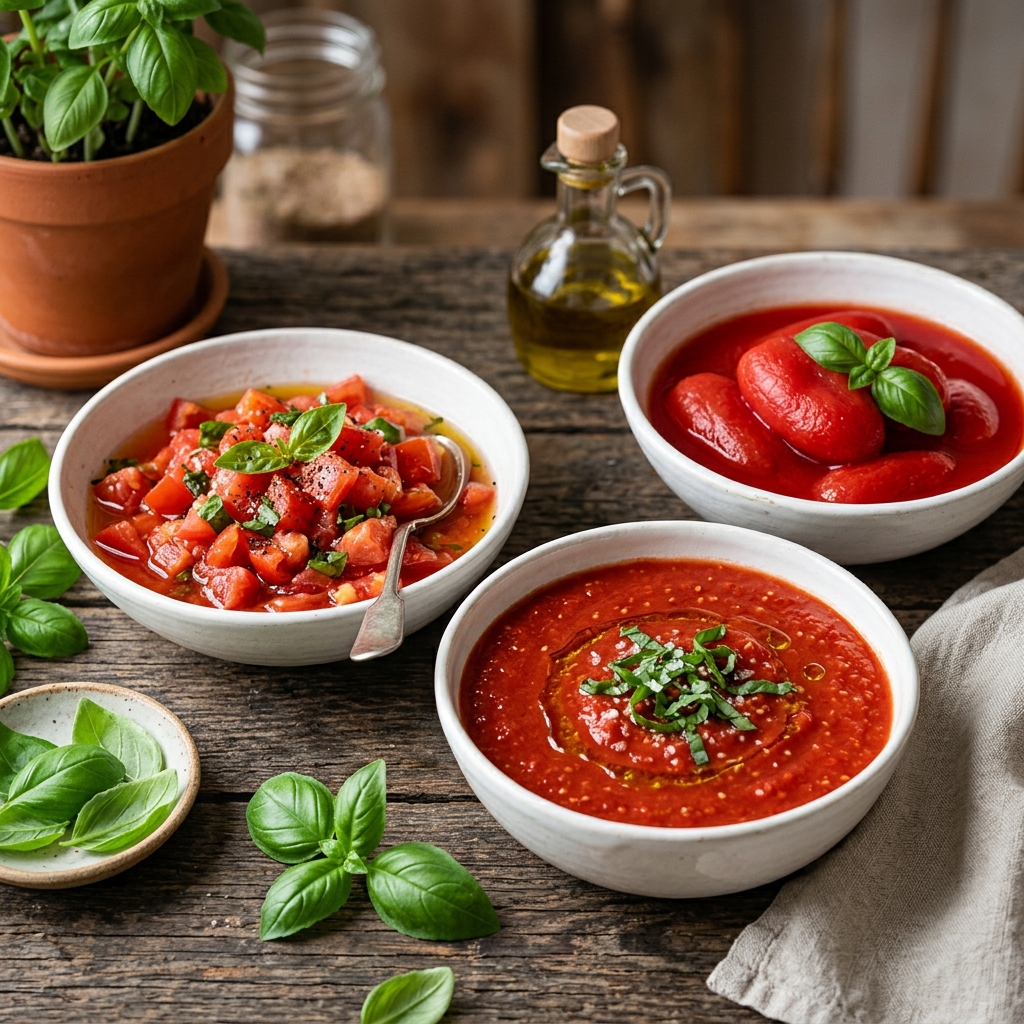
It’s easy to assume that diced, crushed, and whole canned tomatoes are completely interchangeable—they’re just tomatoes in different shapes, right? Wrong. The way they are processed chemically alters how they behave in the pot. Choosing the wrong can will drastically change the texture of your final dish.
Diced Tomatoes: The Stubborn Chunks
Diced tomatoes are chopped prior to canning. However, to prevent them from turning to mush in the can, manufacturers treat them with calcium chloride. This chemical firms up the cellular structure of the tomato. Because of this, diced tomatoes will never break down into a smooth sauce, no matter how many hours you simmer them. They are designed to hold their shape perfectly. Use them only when you want distinct chunks: chili, minestrone soup, or chunky salsas.
Crushed Tomatoes: The Quick Base
Crushed tomatoes are exactly what they sound like, but they are often mixed with a heavy tomato purée or paste. They pour out of the can as a thick, slightly textured liquid. They offer a fantastic shortcut because they are already broken down. They are the ideal choice for quick weeknight pasta sauces, easy pizza sauce, or layering into lasagna where you want a thick, uniform texture fast.
Whole Peeled Tomatoes: The Premium Standard
Usually made from high-quality plum or San Marzano tomatoes, these are peeled and packed whole in their own juice. Crucially, they are rarely treated with calcium chloride. Because their structure is unaltered, they break down beautifully when simmered, melting into a luxurious, velvety sauce. They are the absolute gold standard for authentic Sunday gravy, slow-simmered marinara, or any recipe where you want to control the final texture (you can crush them by hand!).