
Cocoa Powder: Dutch-Processed vs Natural
Don't ruin your chocolate cake! Learn the critical chemical differences between Dutch-processed and natural cocoa powder.
Culinary Advantages & Lab Performance
- Continuous multi-layer tri-ply aluminum core guarantees rapid thermal response and eliminates scorching hot spots.
- High-grade 18/10 stainless cooking surface resists corrosion from acidic tomato and wine deglazing liquids.
- Hollow stay-cool cast stainless handles provide secure ergonomic balance when maneuvering hot pans.
Cons & Kitchen Limitations
- Substantial heavy commercial body weight requires two hands when lifting full braising vessels.
- Requires proper oil seasoning and heat modulation technique to prevent protein sticking during searing.
Cookware Cladding & Thermal Response Matrix
| Specification | Alva Tri-Ply (Top Pick) | Standard Disc-Bottom | Ceramic Coated Non-Stick |
|---|---|---|---|
| Thermal Conductivity | Edge-to-Edge 3-Ply Core | Base Plate Only | Moderate Single-Layer |
| Fond Development | Superior (18/10 Stainless) | Inconsistent (Hotspots) | Zero Fond (Coated) |
| Oven Safe Limit | Up to 500°F (260°C) | Up to 400°F | Up to 350°F |
The Chemistry of Cocoa
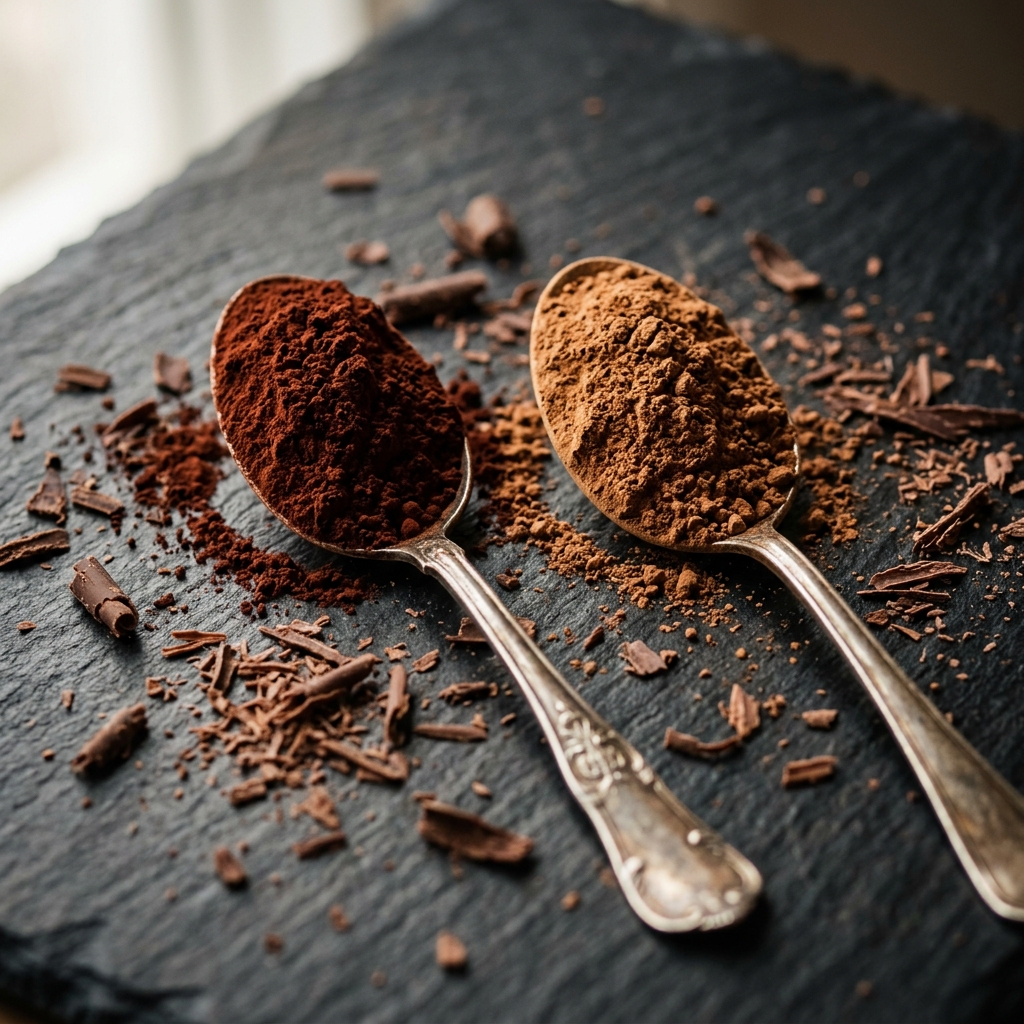
If a recipe specifically calls for Dutch-processed cocoa and you use natural cocoa instead, your cake might fail to rise or taste soapy. The difference between these two powders isn’t just about flavor—it’s about basic chemistry and pH levels.
Natural Cocoa Powder: Sharp and Acidic
Natural cocoa powder is simply roasted cocoa beans ground into a powder. It is light brown, very concentrated, and naturally acidic (pH between 5 and 6). Because of this acidity, recipes using natural cocoa almost always rely on Baking Soda for leavening. The acid in the cocoa reacts with the alkaline baking soda to create bubbles, making your baked goods rise.
Dutch-Processed Cocoa: Smooth and Dark
Dutch-processed (or alkalized) cocoa has been washed with a potassium carbonate solution that neutralizes its natural acidity (bringing its pH to around 7). This process darkens the powder significantly and mellows the flavor, creating a smooth, earthy, “Oreo-like” chocolate taste. Because it is no longer acidic, it will NOT react with baking soda. Therefore, recipes using Dutch-processed cocoa rely on Baking Powder (which has its own built-in acid) for leavening.