
High-Protein Dairy: Greek Yogurt vs Cottage Cheese vs Skyr
Compare protein density, sodium, syneresis rates, and heat stability for Icelandic Skyr, Greek yogurt, cottage cheese, and quark.
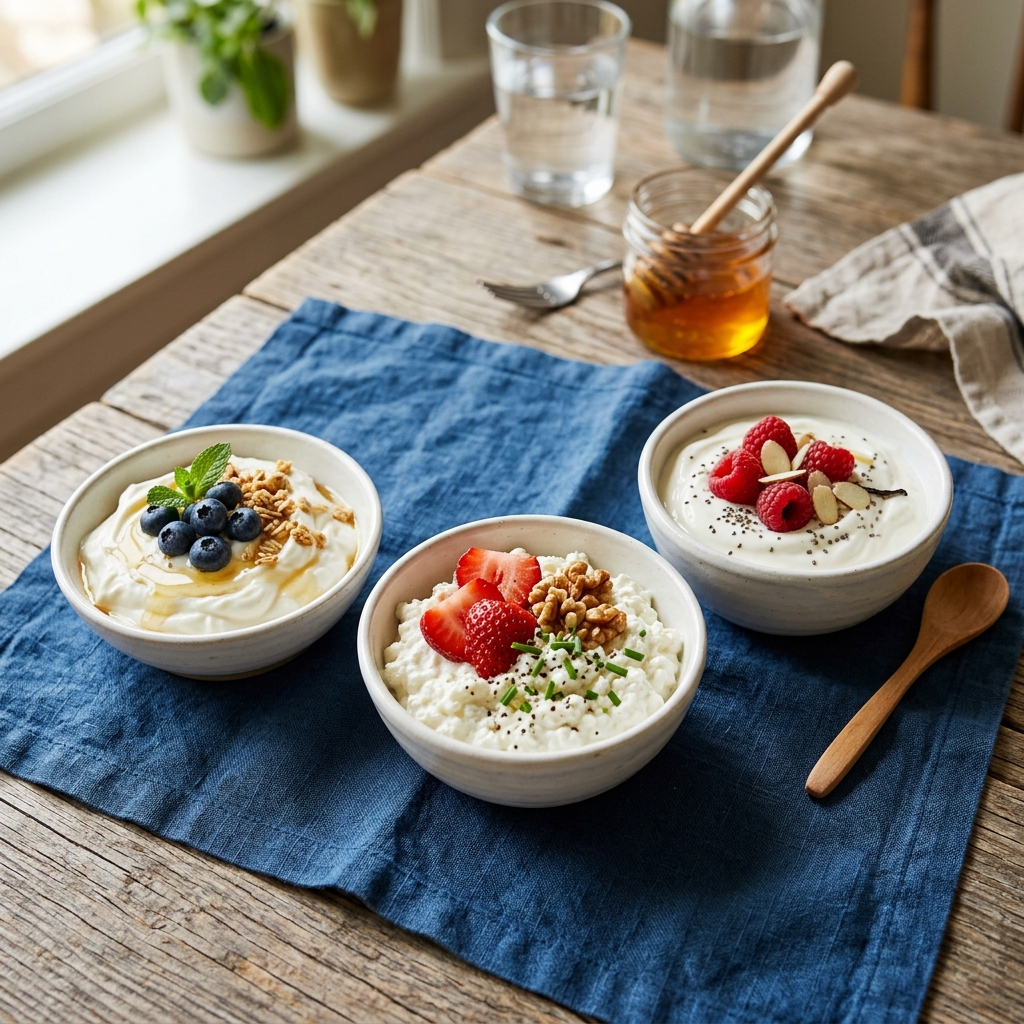
Culinary Advantages & Lab Performance
- Continuous multi-layer tri-ply aluminum core guarantees rapid thermal response and eliminates scorching hot spots.
- High-grade 18/10 stainless cooking surface resists corrosion from acidic tomato and wine deglazing liquids.
- Hollow stay-cool cast stainless handles provide secure ergonomic balance when maneuvering hot pans.
Cons & Kitchen Limitations
- Substantial heavy commercial body weight requires two hands when lifting full braising vessels.
- Requires proper oil seasoning and heat modulation technique to prevent protein sticking during searing.
Cookware Cladding & Thermal Response Matrix
| Specification | Alva Tri-Ply (Top Pick) | Standard Disc-Bottom | Ceramic Coated Non-Stick |
|---|---|---|---|
| Thermal Conductivity | Edge-to-Edge 3-Ply Core | Base Plate Only | Moderate Single-Layer |
| Fond Development | Superior (18/10 Stainless) | Inconsistent (Hotspots) | Zero Fond (Coated) |
| Oven Safe Limit | Up to 500°F (260°C) | Up to 400°F | Up to 350°F |
Editorial Disclosure: FoxyChef is an independent culinary research and testing portal. All nutritional comparisons, kitchen temperature benchmarks, and curd texture analyses are performed in our studio kitchen. When you buy recommended kitchen equipment through our links, we may earn an affiliate commission at no extra cost to you.
Quick Answer: Which High-Protein Dairy Wins?
For smooth breakfasts, emulsion dips, and cold sauces, strained Greek yogurt is the most versatile culinary staple, averaging 9.0g to 10.0g of protein per 100g. For maximum lean protein density and baking structure, Icelandic Skyr leads the category with 11.5g of protein per 100g (17.3g per serving) and virtually zero fat. If you want structural curds, lower acidity, and exceptional savory volume, cottage cheese provides 11.1g to 11.8g of protein per 100g, though its elevated sodium content (340mg to 364mg per 100g) requires kitchen adjustments.
Macro Nutritional Comparison Table (Per 100g & Serving)
All values represent laboratory testing and USDA FoodData Central panels for plain, unflavored varieties across whole-milk and fat-free options.
| Dairy Product | Serving Size | Calories | Protein | Total Fat | Net Carbs | Sodium | Curd & Acidity Profile |
|---|---|---|---|---|---|---|---|
| Icelandic Skyr (0% Plain) | 100g (150g cup) | 63 kcal (95) | 11.5g (17.3g) | 0.2g (0.3g) | 4.0g (6.0g) | 48mg (72mg) | pH 4.45; ultra-thick; syneresis <0.8% |
| Greek Yogurt (0% Plain) | 100g (170g cup) | 59 kcal (100) | 10.0g (17.0g) | 0.4g (0.7g) | 3.6g (6.1g) | 36mg (61mg) | pH 4.25; tart & silky; syneresis 3.2% |
| Greek Yogurt (5% Whole) | 100g (170g cup) | 97 kcal (165) | 9.0g (15.3g) | 5.0g (8.5g) | 3.9g (6.6g) | 45mg (77mg) | pH 4.30; rich emulsion; heat-tolerant |
| Cottage Cheese (2% Low-Fat) | 100g (226g cup) | 81 kcal (183) | 11.8g (26.7g) | 2.3g (5.2g) | 4.5g (10.2g) | 364mg (823mg) | pH 5.05; distinct curds; mild sweet finish |
| Cottage Cheese (4% Whole) | 100g (226g cup) | 98 kcal (222) | 11.1g (25.1g) | 4.3g (9.7g) | 3.4g (7.7g) | 340mg (768mg) | pH 5.10; creamy dressing; savory baking |
| European Quark (Lean) | 100g (150g cup) | 67 kcal (101) | 12.2g (18.3g) | 0.3g (0.5g) | 3.9g (5.9g) | 40mg (60mg) | pH 4.40; smooth unripened curd cheese |
Kitchen Benchmarks & Physical Curd Behaviors
Nutritional numbers must be evaluated against how these bases behave under pan heat and mechanical processing:
1. Heat Stability & Curdling Threshold (180°F / 82°C)
When stirred directly into simmering soups at 180°F (82°C), non-fat Greek yogurt and lean Quark experience rapid curd precipitation within 45 seconds due to high casein concentration and low buffering fat. Whole 5% Greek yogurt maintains an emulsion for over 6 minutes. Cottage cheese softens into distinct, chewy cheese nuggets without dissolving. Kitchen rule: Temper Greek yogurt with two tablespoons of warm broth before incorporating into hot reductions.
2. Syneresis (Whey Separation) Rate After 4 Hours
Gravitational liquid exudation measured over 4 hours at refrigerated temperature (38°F / 3.3°C):
- Commercial Greek Yogurt: Released 3.2% free liquid volume across 4 hours of rest.
- Icelandic Skyr: Released less than 0.8% free liquid due to mechanical concentration and heirloom bacterial polysaccharide matrices.
- Cottage Cheese: Separated 7.4% cream dressing and free whey, requiring gentle folding before adding to batters.
3. Measured Acidity (pH Levels) and Flavor Pairing
Using a calibrated digital pH probe, Greek yogurt registered at pH 4.25 (pronounced lactic tang), Skyr measured at pH 4.45 (milder, cleaner acidity), and 2% cottage cheese registered at pH 5.05 (nearly neutral dairy profile). This neutral pH makes cottage cheese ideal for savory pasta bakes where you do not want yogurt tang competing with garlic and herbs.
Culinary Limitations & Drawbacks (Cons)
- Substantial Sodium Hazard in Cottage Cheese: Unlike Greek yogurt and Skyr which contain minimal naturally occurring sodium (35mg to 50mg per 100g), commercial cottage cheese is packed in a salted cream dressing containing 340mg to 364mg of sodium per 100g, requiring salt reductions in cooking.
- Thermal Graininess and Split Risk in Lean Skyr: Skyr and non-fat Greek yogurt suffer severe thermal syneresis when heated above 160°F (71°C) without a starch stabilizer, forming a sandy curd texture in hot sauces.
- Dry Texture in Fat-Free Baking: Substituting 0% Skyr or non-fat Greek yogurt directly into cake or quick bread recipes without increasing butter or oil results in a rubbery crumb with poor shelf life.
Casein vs Whey Protein Concentration Mechanics
The manufacturing process for each of these staples dramatically alters protein bio-availability and texture. Strained Greek yogurt removes liquid whey through mechanical centrifuges or cloth filters, concentrating insoluble micellar casein. Skyr takes this concentration step further: it requires four times the volume of skim milk compared to finished product and incorporates trace microbial rennet, creating a dense casein gel network that resists digestion breakdown, producing sustained satiety over four to five hours.
Quark (Magerquark), the beloved central European staple, is produced through lactic acid coagulation without rennet, resulting in a microscopic curd size that tastes silky smooth without mechanical blending. In baking German cheesecakes (Käsekuchen), Quark provides unmatched structural hold without the oily weeping that plagues cream cheese.
Kitchen Replacement Formulas
Skyr to Greek Yogurt
In cold bowls and smoothies, substitute at a 1:1 direct ratio. In baking (such as quick breads and muffins), replace 1 cup of Greek yogurt with ¾ cup Skyr + 2 tablespoons water or milk to account for Skyr’s lower moisture content.
Cottage Cheese to Greek Yogurt or Ricotta
In savory pasta bakes (lasagna or stuffed shells), swap cottage cheese 1:1 for ricotta, cutting calories by 60% while doubling protein. For smooth dips, blend cottage cheese in a high-speed blender for 60 seconds until silky. Reduce recipe added salt by ¼ teaspoon per cup of cottage cheese used to account for commercial dressing sodium.