
Lentils Compared: Red vs Green vs Brown
Don't turn your salad into mush! Compare the cook times, textures, and best culinary uses for red, green, and brown lentils.
Culinary Advantages & Lab Performance
- Continuous multi-layer tri-ply aluminum core guarantees rapid thermal response and eliminates scorching hot spots.
- High-grade 18/10 stainless cooking surface resists corrosion from acidic tomato and wine deglazing liquids.
- Hollow stay-cool cast stainless handles provide secure ergonomic balance when maneuvering hot pans.
Cons & Kitchen Limitations
- Substantial heavy commercial body weight requires two hands when lifting full braising vessels.
- Requires proper oil seasoning and heat modulation technique to prevent protein sticking during searing.
Cookware Cladding & Thermal Response Matrix
| Specification | Alva Tri-Ply (Top Pick) | Standard Disc-Bottom | Ceramic Coated Non-Stick |
|---|---|---|---|
| Thermal Conductivity | Edge-to-Edge 3-Ply Core | Base Plate Only | Moderate Single-Layer |
| Fond Development | Superior (18/10 Stainless) | Inconsistent (Hotspots) | Zero Fond (Coated) |
| Oven Safe Limit | Up to 500°F (260°C) | Up to 400°F | Up to 350°F |
The Quick-Cooking Legume
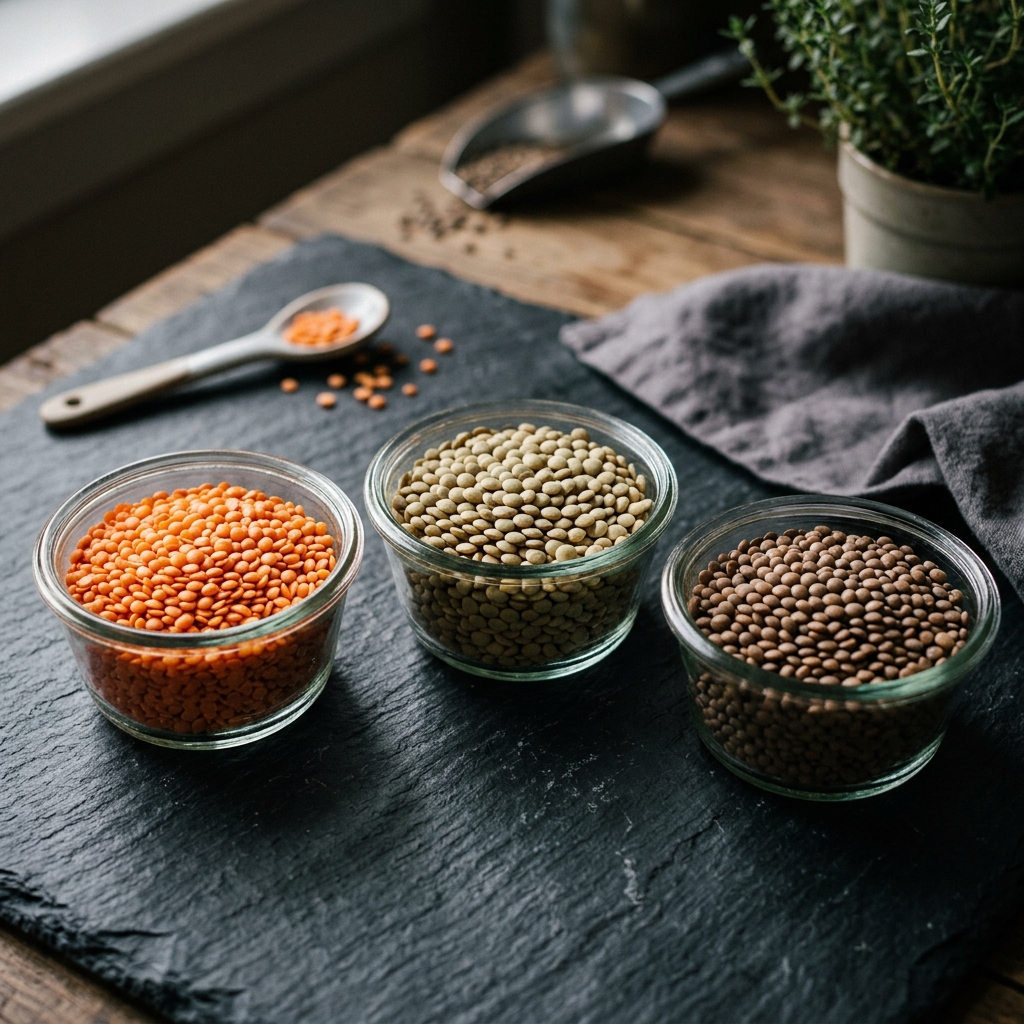
Unlike beans, lentils do not require overnight soaking, making them the ultimate fast-food legume. However, choosing the right color is critical: some lentils are meant to dissolve into a thick puree, while others are prized for keeping their firm shape.
Red Lentils: The Thickener
Red (or yellow) lentils have had their seed coat removed and are split in half. Because of this, they cook incredibly fast (15-20 minutes). They do not hold their shape; they quickly break down into a thick, mushy puree. They have a sweet, nutty flavor and are the traditional base for Indian dals, thick Middle Eastern soups, and curries.
Brown Lentils: The Everyday Staple
Brown lentils are the most common variety found in grocery stores. They cook in about 25-30 minutes. They have a mild, earthy flavor and a “middle-ground” texture: they hold their shape if cooked carefully but will turn mushy if overcooked. They are great for everyday stews, “meatless loaf” recipes, and warm salads.
Green Lentils (French Puy): The Firm Elite
Green lentils (especially the prized French Lentilles du Puy) have a thick exterior and take the longest to cook (40-45 minutes). They have a robust, peppery flavor and an incredibly firm texture. They refuse to break down or get mushy, making them the absolute best choice for elegant salads or as a bed for roasted fish or meats.