
Onions Compared: Yellow vs White vs Red vs Sweet
Stop crying over the wrong onion! Compare the flavor profiles, water content, and best culinary uses for yellow, white, red, and sweet onions.
Culinary Advantages & Lab Performance
- Continuous multi-layer tri-ply aluminum core guarantees rapid thermal response and eliminates scorching hot spots.
- High-grade 18/10 stainless cooking surface resists corrosion from acidic tomato and wine deglazing liquids.
- Hollow stay-cool cast stainless handles provide secure ergonomic balance when maneuvering hot pans.
Cons & Kitchen Limitations
- Substantial heavy commercial body weight requires two hands when lifting full braising vessels.
- Requires proper oil seasoning and heat modulation technique to prevent protein sticking during searing.
Cookware Cladding & Thermal Response Matrix
| Specification | Alva Tri-Ply (Top Pick) | Standard Disc-Bottom | Ceramic Coated Non-Stick |
|---|---|---|---|
| Thermal Conductivity | Edge-to-Edge 3-Ply Core | Base Plate Only | Moderate Single-Layer |
| Fond Development | Superior (18/10 Stainless) | Inconsistent (Hotspots) | Zero Fond (Coated) |
| Oven Safe Limit | Up to 500°F (260°C) | Up to 400°F | Up to 350°F |
Choosing the Right Allium
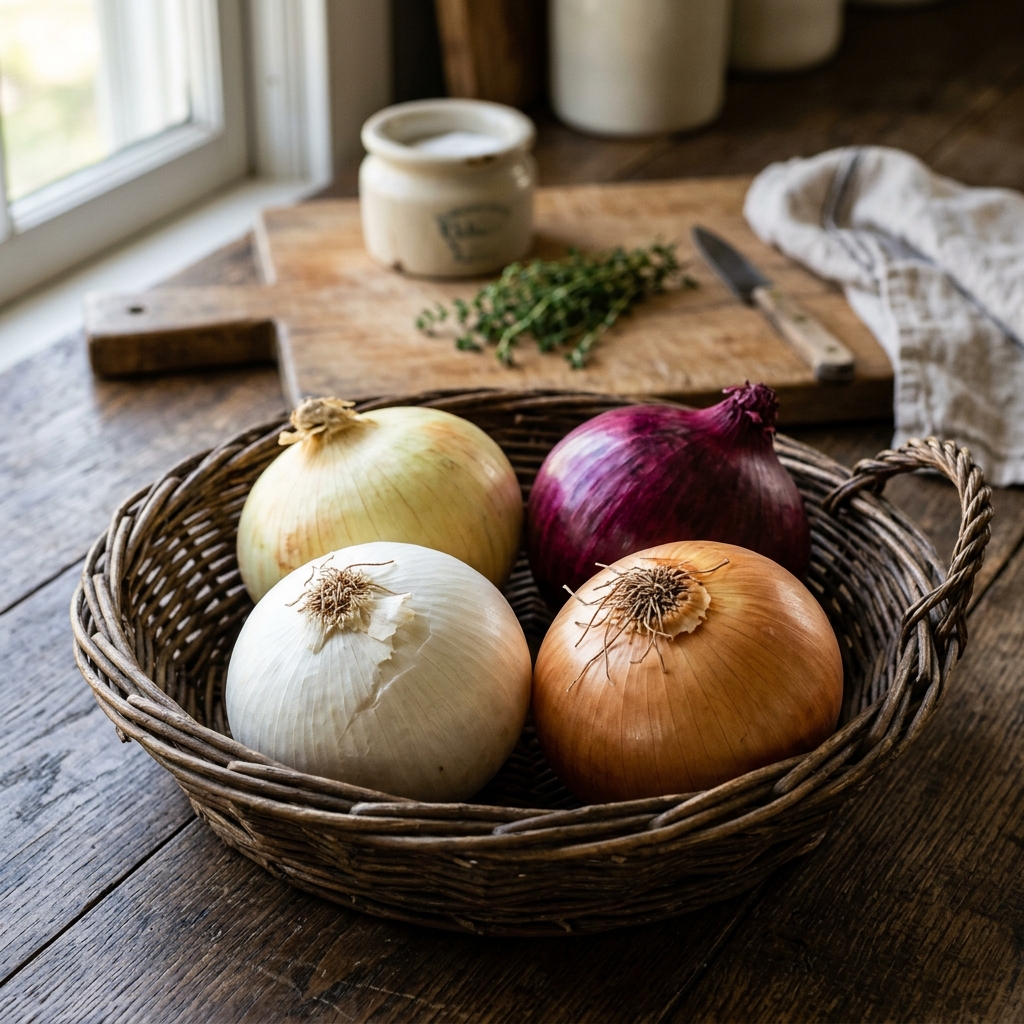
While you can generally substitute one onion for another in a pinch, understanding their subtle differences in sugar, water, and pungency will elevate your cooking from good to great. Some are meant to be eaten raw, while others need low and slow heat to shine.
Yellow Onions: The Workhorse
If a recipe just says “1 onion,” assume it means yellow. They have a strong, complex flavor and a high sulfur content (which makes you cry). However, when cooked, their natural sugars caramelize beautifully, turning them deep brown and intensely sweet. They are the absolute best choice for French onion soup, stews, and roasting.
White Onions: Sharp and Crisp
White onions have a sharper, more pungent flavor and a thinner, more papery skin. They have a high water content, which gives them a fantastic crunch. They are the staple onion of Mexican cuisine, perfect for salsas, guacamole, or scattered raw over tacos and enchiladas.
Red Onions: The Raw Specialist
Red onions are mild, slightly peppery, and incredibly vibrant. Their color makes them visually appealing, and their milder flavor makes them perfect for eating raw. They are the best choice for salads, sandwiches, burgers, and pickling. Cooking them can sometimes turn their beautiful purple color a murky gray.
Sweet Onions: The Gentle Giant
Varieties like Vidalia or Walla Walla look like large, pale yellow onions but have a very high water and sugar content, and almost no sulfur (so no crying!). They are so mild you can eat them like an apple. They are incredible for making onion rings or roasting whole.