
Sugar Substitutes: Stevia vs Erythritol vs Monk Fruit
Looking for the perfect zero-calorie sweetener? Compare the taste, glycemic index, and baking performance of Stevia, Erythritol, and Monk Fruit.
Culinary Advantages & Lab Performance
- Continuous multi-layer tri-ply aluminum core guarantees rapid thermal response and eliminates scorching hot spots.
- High-grade 18/10 stainless cooking surface resists corrosion from acidic tomato and wine deglazing liquids.
- Hollow stay-cool cast stainless handles provide secure ergonomic balance when maneuvering hot pans.
Cons & Kitchen Limitations
- Substantial heavy commercial body weight requires two hands when lifting full braising vessels.
- Requires proper oil seasoning and heat modulation technique to prevent protein sticking during searing.
Cookware Cladding & Thermal Response Matrix
| Specification | Alva Tri-Ply (Top Pick) | Standard Disc-Bottom | Ceramic Coated Non-Stick |
|---|---|---|---|
| Thermal Conductivity | Edge-to-Edge 3-Ply Core | Base Plate Only | Moderate Single-Layer |
| Fond Development | Superior (18/10 Stainless) | Inconsistent (Hotspots) | Zero Fond (Coated) |
| Oven Safe Limit | Up to 500°F (260°C) | Up to 400°F | Up to 350°F |
Navigating Zero-Calorie Sweeteners
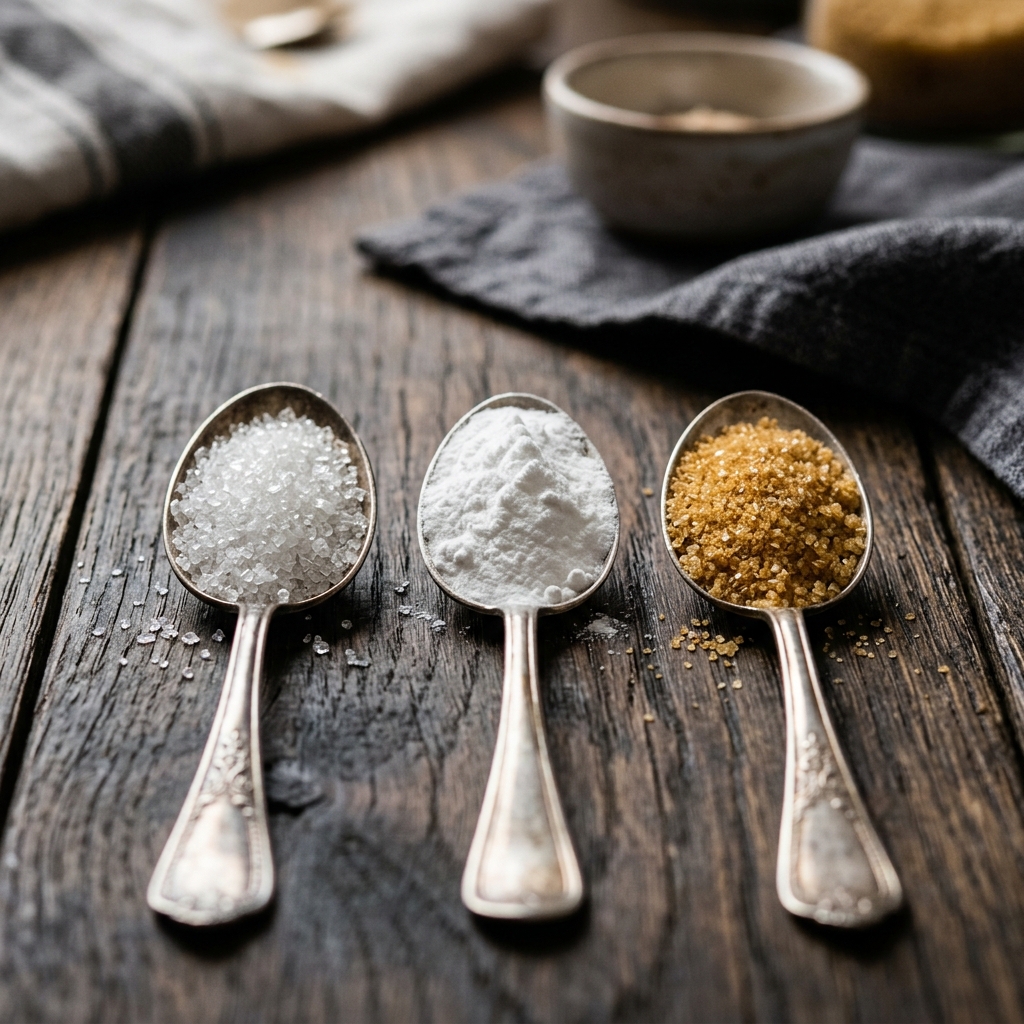
Replacing sugar isn’t just about cutting calories; it’s about replicating sugar’s volume, browning capability, and clean taste. The three most popular natural zero-calorie sweeteners—Stevia, Erythritol, and Monk Fruit—each have unique properties that make them suitable for different uses.
Erythritol: The Volume King
Erythritol is a sugar alcohol. It looks and feels exactly like granulated sugar, making it excellent for baking where sugar provides physical volume (like creaming with butter). It is about 70% as sweet as sugar. Its main drawback is a noticeable “cooling sensation” on the tongue, similar to mint, which can be off-putting in large amounts.
Stevia: The Concentrated Leaf
Stevia is extracted from a plant and is 200-300 times sweeter than sugar. Because it’s so concentrated, you can’t use pure stevia to replace sugar in baking (you’d be missing cups of volume). It’s best used in drinks or liquids. Many people detect a slightly bitter, licorice-like aftertaste.
Monk Fruit: The Cleanest Taste
Like stevia, monk fruit extract is 150-200 times sweeter than sugar. However, it is widely considered to have the cleanest, most sugar-like taste with zero bitter aftertaste. Because pure monk fruit is too potent to bake with, it is almost always sold blended with erythritol to provide the necessary volume for baking.