
Vanilla: Pure Extract vs Imitation vs Vanilla Bean Paste
Are you wasting your expensive vanilla? Compare when to use pure vanilla extract, imitation vanilla, and vanilla bean paste.
Culinary Advantages & Lab Performance
- Continuous multi-layer tri-ply aluminum core guarantees rapid thermal response and eliminates scorching hot spots.
- High-grade 18/10 stainless cooking surface resists corrosion from acidic tomato and wine deglazing liquids.
- Hollow stay-cool cast stainless handles provide secure ergonomic balance when maneuvering hot pans.
Cons & Kitchen Limitations
- Substantial heavy commercial body weight requires two hands when lifting full braising vessels.
- Requires proper oil seasoning and heat modulation technique to prevent protein sticking during searing.
Cookware Cladding & Thermal Response Matrix
| Specification | Alva Tri-Ply (Top Pick) | Standard Disc-Bottom | Ceramic Coated Non-Stick |
|---|---|---|---|
| Thermal Conductivity | Edge-to-Edge 3-Ply Core | Base Plate Only | Moderate Single-Layer |
| Fond Development | Superior (18/10 Stainless) | Inconsistent (Hotspots) | Zero Fond (Coated) |
| Oven Safe Limit | Up to 500°F (260°C) | Up to 400°F | Up to 350°F |
The Price of Flavor
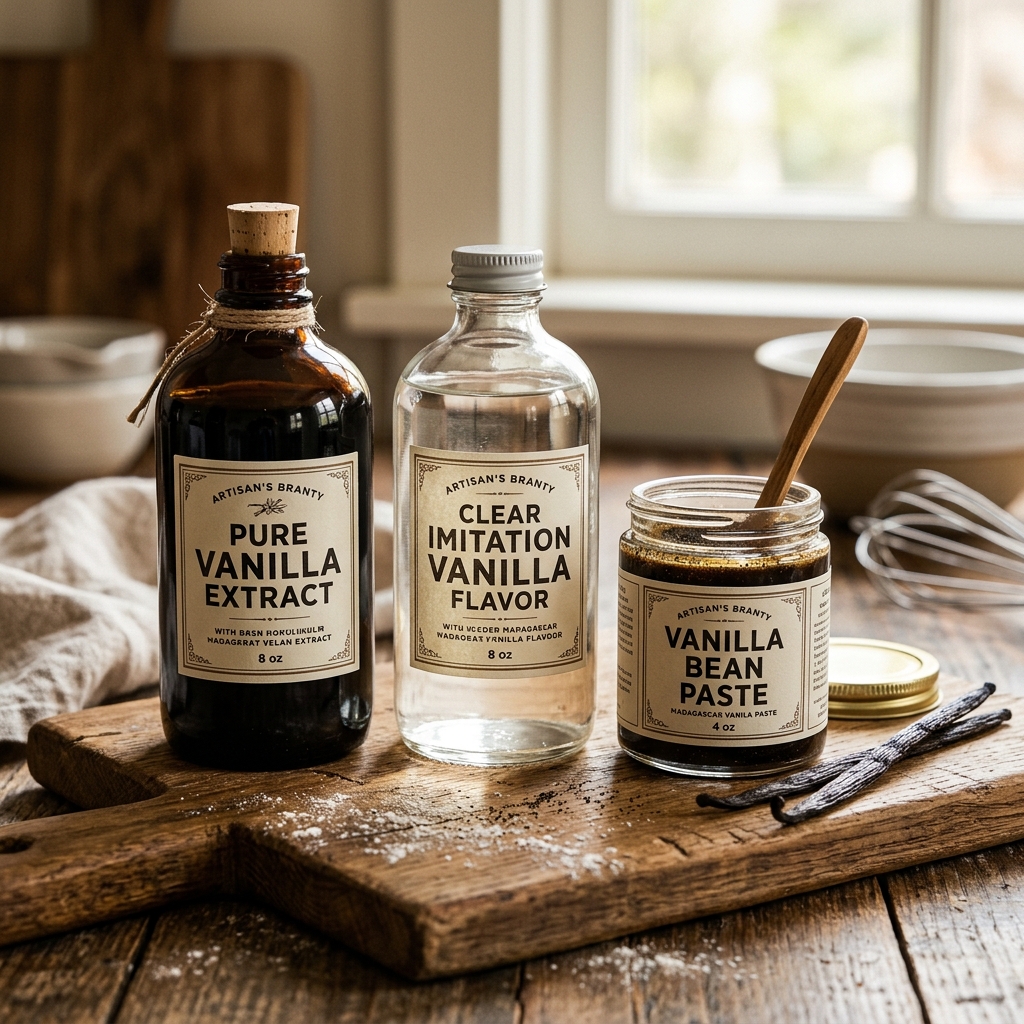
Vanilla is the second most expensive spice in the world (after saffron). While pure vanilla extract is highly prized, blind taste tests consistently show that in certain applications, cheap imitation vanilla actually performs better. Knowing when to use which will save you money and improve your desserts.
Imitation Vanilla: The Baking Champion
Imitation vanilla is made from synthetic vanillin (the primary flavor compound in real vanilla). It lacks the 200+ complex flavor compounds found in real vanilla beans. However, when you bake cookies or cakes at 350°F, those delicate, expensive floral notes in pure vanilla evaporate completely. Imitation vanilla is actually more robust under high heat. Save your money: use imitation vanilla for baked goods like chocolate chip cookies and layer cakes.
Pure Vanilla Extract: The Delicate Nuance
Pure extract is made by macerating real vanilla pods in alcohol and water. It boasts an incredibly complex, floral, and woody flavor profile. Because heat destroys these nuances, pure vanilla extract should be strictly reserved for unbaked or gently heated items: puddings, custards, whipped cream, buttercreams, and ice creams.
Vanilla Bean Paste: The Visual Flex
Vanilla bean paste is a thick syrup made from pure extract, sugar, and the scraped seeds (specks) of the vanilla bean. It provides the same complex flavor as pure extract but adds the beautiful, rustic visual appeal of black vanilla specks running through your dessert. It is used as a 1:1 substitute for extract and is the ultimate choice for crème brûlée, premium ice cream, and wedding cake frostings where appearance matters.