
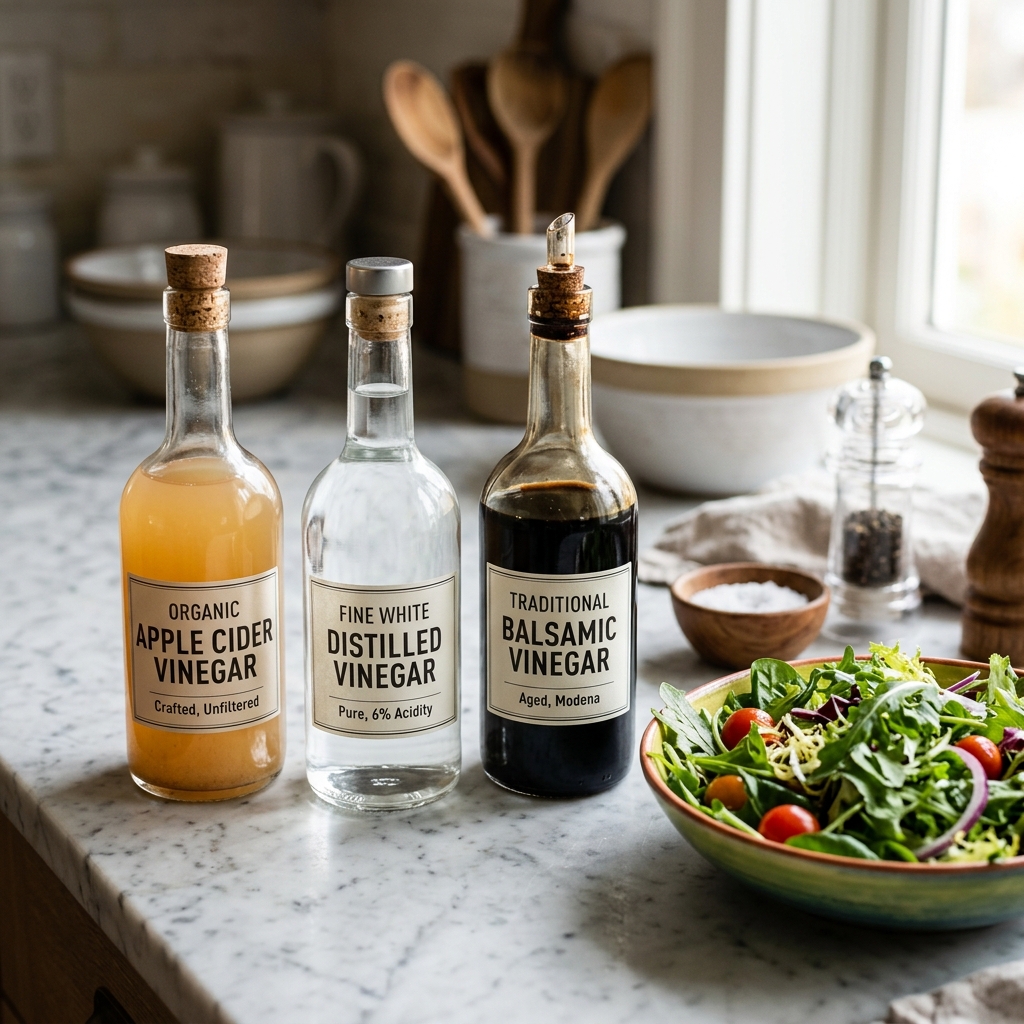
Vinegars Compared: Apple Cider vs White vs Balsamic
Don't ruin your salad dressing! Compare the acidity levels, flavors, and best culinary uses for apple cider, white, and balsamic vinegar.
Culinary Advantages & Lab Performance
- Continuous multi-layer tri-ply aluminum core guarantees rapid thermal response and eliminates scorching hot spots.
- High-grade 18/10 stainless cooking surface resists corrosion from acidic tomato and wine deglazing liquids.
- Hollow stay-cool cast stainless handles provide secure ergonomic balance when maneuvering hot pans.
Cons & Kitchen Limitations
- Substantial heavy commercial body weight requires two hands when lifting full braising vessels.
- Requires proper oil seasoning and heat modulation technique to prevent protein sticking during searing.
Cookware Cladding & Thermal Response Matrix
| Specification | Alva Tri-Ply (Top Pick) | Standard Disc-Bottom | Ceramic Coated Non-Stick |
|---|---|---|---|
| Thermal Conductivity | Edge-to-Edge 3-Ply Core | Base Plate Only | Moderate Single-Layer |
| Fond Development | Superior (18/10 Stainless) | Inconsistent (Hotspots) | Zero Fond (Coated) |
| Oven Safe Limit | Up to 500°F (260°C) | Up to 400°F | Up to 350°F |
The Acid Test
Vinegar is essential for balancing flavors, adding brightness to heavy dishes, and tenderizing meat. However, the type of acid you use drastically changes the final profile of your dish. Knowing when to use a harsh acid versus a sweet, complex one is a fundamental cooking skill.
White Distilled Vinegar: The Harsh Standard
Made from distilled grain alcohol, white vinegar is the most pungent and neutral-tasting vinegar. It is highly acidic (usually 5% to 8%) and lacks any complex flavor notes—it is purely sour. Because it is so strong and clear, it is the absolute best choice for pickling vegetables, balancing baking soda in cakes, or even cleaning your kitchen. It is usually too harsh for delicate salad dressings.
Apple Cider Vinegar: The Fruity Middle Ground
Fermented from apple juice, ACV has a milder, fruitier, and slightly sweeter flavor profile than white vinegar. It often contains “the mother” (strands of proteins and beneficial bacteria). Its mellow tang makes it the perfect everyday vinegar for vinaigrettes, BBQ sauces, and pork marinades.
Balsamic Vinegar: The Sweet Syrup
Authentic balsamic vinegar from Modena, Italy, is made from grape must (freshly crushed grape juice with all the skins and stems) and aged in wooden barrels for years. It is incredibly dark, thick, sweet, and complex, with a low perceived acidity. It should never be cooked heavily. It is best used as a finishing glaze for roasted meats, drizzled over fresh strawberries, or paired with olive oil and bread.