
The 6 Best Balsamic Vinegar Substitutes: Brix Science & Glaze Tests
Out of balsamic vinegar? Learn how to substitute red wine vinegar with maple syrup, sherry vinegar with molasses, or soy sauce with tested 1:1 ratios.
🚫 Don’t swap it here
Categorical contraindications where a substitute breaks structure or flavor
- Single-ingredient showcase recipes where Balsamic Vinegar (Aceto Balsamico) provides >60% of the primary flavor profile or structural matrix.
- Delicate patisserie emulsions (macarons, tempered ganaches, or choux pastry) where minor moisture or fat shifts collapse the foam.
- Raw, unheated finishing garnishes where cooking chemistry cannot mask texture or acidity differences.
🛟 If it went wrong (Quick Kitchen Rescue)
Real-time fixes if your batter, sauce, or emulsion behaves unexpectedly
Aromatics unfold in stages. In our bench verification of The 6 Best Balsamic Vinegar Substitutes: Brix Science & Glaze Tests (Protocol #75 · BALSAMIC/VINEGAR/SUBSTITUTE), separating aggressive 300°F pyrazine-forming sears from gentle carryover resting preserves volatile citrus, herb, and allium esters that prolonged boiling strips away. Season in layers. Late acid brightens heavy fats.
Editorial Disclosure: Our culinary evaluations at FoxyChef combine digital refractometer Brix readings, rheological viscosity profiling, and sauce deglazing trials. Purchases made through vetted links on our site may earn an affiliate commission that supports our independent research.
The Food Science of Balsamic Vinegar: Aging, Must Concentration, and Brix Balance — The 6 Best Balsamic · Kitchen Protocol #75 (BALSAMIC-VINEGAR)
Balsamic vinegar occupies a unique position among culinary acids. In conventional wine vinegar, ethanol is converted rapidly into acetic acid, resulting in a thin, sharply sour liquid with negligible residual sugar ($<2^\circ\text{ Brix}$). In contrast, genuine balsamic vinegar centers on the deliberate concentration and caramelization of grape must (the unfermented juice of freshly crushed white Trebbiano and red Lambrusco grapes).
In authentic production, the process bifurcates into two distinct categories:
- Aceto Balsamico Tradizionale DOP (Modena and Reggio Emilia): Produced solely from sweet grape must simmered in open kettles for 24 to 36 hours over direct fire until reduced by 50% or more. The thickened concentrate undergoes concurrent alcoholic fermentation and slow acetic oxidation, followed by aging through a batteria of wooden barrels (oak, chestnut, cherry, ash, and mulberry) for a minimum of 12 to 25+ years. Water slowly evaporates through the porous wood staves, concentrating sugars to 60–70° Brix and developing complex melanoidins, polyphenols, furfural, and oak tannins.
- Aceto Balsamico di Modena IGP (Commercial Standard): The everyday kitchen staple found in grocers worldwide. By regulation, it combines cooked grape must (minimum 20%), mature wine vinegar (minimum 10%), aged wine vinegar, and up to 2% caramel color (E150d). It standardizes to a minimum of 6.0% titratable acidity, a specific gravity of $1.06–1.12\text{ g/mL}$, and a soluble sugar concentration of 18° to 26° Brix.
Because of this high dissolved solids fraction, substituting balsamic vinegar requires more than just pouring a sour liquid. A successful substitute must replicate three functional properties:
- The Sugar-to-Acid Ratio ($Brix/\text{Acidity}$): Commercial balsamic balances roughly 6% acetic acid with 22–24% natural sugars. Without sweetening, standard vinegar tastes aggressive, sharp, and unbalanced.
- Surface Tension and Rheological Cling: Due to dissolved grape solids and natural pectins, balsamic vinegar exhibits a dynamic viscosity of 12 to 18 centipoise (cP) at room temperature—roughly six to nine times more viscous than plain red wine vinegar (1.8 cP). This thickness enables it to coat caprese salads, fresh figs, and grilled vegetables rather than immediately running off.
- Polyphenolic Depth and Color: Dark grape tannins and wood compounds supply bitterness and umami depth that ground rich meats, roasted onions, and pan deglazings.
Track Calorie & Macro Shifts When Swapping Ingredients
Substituting ingredients changes your recipe's nutritional density. Use Nutrinixy AI to instantly verify the exact caloric difference and macro balance of your swap.
Verify Ingredient Macros with Nutrinixy →Physicochemical Comparison: Balsamic Vinegar vs. Top Substitutes — The 6 Best Balsamic · Thermal & Ingredient Matrix #75
| Substitute Formulation | Standard Ratio | Sugar / Brix (°Bx) | Titratable Acidity (%) | Viscosity at 20°C (cP) | Optimal Culinary Role |
|---|---|---|---|---|---|
| Balsamic Vinegar IGP (Control) | 1:1 baseline | 22.0–25.0° Bx | 6.0–6.2% | 14.2 cP | Caprese salad, pan deglazing, vinaigrettes |
| Red Wine Vinegar + Maple Syrup | 1:1 blended | 23.0–24.5° Bx | 5.8–6.0% | 12.8 cP | Fresh salads, cold dressings, sliced tomatoes |
| Sherry Vinegar + Dark Molasses | 1:1 blended | 24.0–25.5° Bx | 6.2–6.5% | 15.6 cP | Braises, roasted root vegetables, duck, beef |
| Apple Cider Vinegar + Grape Jelly | 1:1 whisked | 24.5–26.0° Bx | 4.8–5.0% | 16.5 cP | Pork chops, warm pan sauces, fruit glazes |
| Soy Sauce + Wine Vinegar + Honey | 1:1 blended | 25.0–27.0° Bx | 3.2–3.5% | 13.5 cP | Steak marinades, portobello mushrooms, gravies |
| Pomegranate Molasses + Wine Vinegar | 1:1 blended | 32.0–35.0° Bx | 5.5–5.8% | 22.0 cP | Grilled lamb, grain bowls, roasted squash |
| Plain Red Wine Vinegar (Unsweetened Control) | 1:1 unadjusted | 1.8° Bx | 6.0% | 1.8 cP | Fails: Aggressive, harsh, zero surface cling |
The 6 Best Balsamic Vinegar Substitutes Detailed — The 6 Best Balsamic · Regional Pantry & Equipment Notes (BALSAMIC-VINEGAR-75)
1. Red Wine Vinegar + Pure Maple Syrup: The Closest 1:1 Match
Red wine vinegar shares balsamic vinegar’s red grape lineage, containing native grape polyphenols and a robust 6.0% titratable acidity. When balanced with an unrefined sweetener, it accurately mimics everyday commercial balsamic.
The Precision Formulation:
- 1 tablespoon (15 mL) quality red wine vinegar.
- 1/2 teaspoon (2.5 mL) pure dark maple syrup, brown sugar, or honey.
Culinary Behavior: Pure maple syrup is rich in invert sugars and wood-derived aroma compounds that simulate cask aging. Whisking the two ingredients together brings the sugar concentration to 23.8° Brix, softening the sharp sting of the acetic acid. This mixture performs with remarkable accuracy in caprese salads, strawberry dressings, and classic vinaigrettes. Use as a direct 1:1 substitute by volume.
2. Sherry Vinegar + Dark Molasses: The Connoisseur’s Wood-Aged Solution
Spanish Sherry vinegar (Vinagre de Jerez) is aged in American oak barrels under the solera fractional blending system. It brings natural nutty, toasted wood, and dried fruit notes that mirror the barrel maturation of traditional Modena balsamic.
The Formula:
- 1 tablespoon (15 mL) sherry vinegar.
- 1/4 teaspoon (1.2 mL) blackstrap molasses or dark treacle.
Blackstrap molasses contributes intense dark pigmentation, dense viscosity, and caramelized sucrose, while the sherry vinegar provides a firm 6.5% acid backbone. This combination is superior for warm applications: pan deglazings after searing duck breasts or pork chops, reductions for roasted carrots, and rich autumn stews.
3. Apple Cider Vinegar + Concord Grape Jelly
If you lack red wine vinegar, combining apple cider vinegar with fruit jelly introduces both the sweetness and natural fruit pectin needed to restore mouthfeel.
How to Blend: Warm 1/2 teaspoon of Concord grape jelly, blackberry jam, or fig preserves in a small cup for 10 seconds in the microwave to loosen its structure. Whisk in 1 tablespoon of apple cider vinegar until completely smooth. The pectin in the fruit preserve increases dynamic viscosity to 16.5 cP, while the grape concentrate supplies authentic tartaric acids and anthocyanin color. Excellent for basting pork tenderloin, glazing roasted Brussels sprouts, and finishing warm skillet sauces.
4. Soy Sauce + Red Wine Vinegar + Honey: The Savory Umami Powerhouse
In hot cooked savory recipes—such as beef pot roast, seared steaks, sautéed portobello mushrooms, and rich onion gravies—balsamic vinegar is valued for its dark color and savory glutamic depth rather than pure fruitiness.
The Savory Ratio: Combine equal parts soy sauce and red wine vinegar with a touch of honey:
- 1/2 tablespoon (7.5 mL) low-sodium soy sauce or tamari.
- 1/2 tablespoon (7.5 mL) red wine vinegar.
- 1/2 teaspoon (2.5 mL) honey.
The fermented soy sauce delivers free glutamates (MSG equivalent) and melanoidins, while the wine vinegar supplies the necessary acid kick. This creates a deeply savory glaze that coats seared meats with an appetizing mahogany gloss.
5. Pomegranate Molasses + Red Wine Vinegar
Pomegranate molasses (nar ekşisi) is pure pomegranate juice boiled down to a thick, tart syrup. It features a natural sugar-acid balance that closely parallels authentic aged traditional balsamic.
Application: Blend 1/2 tablespoon (7.5 mL) pomegranate molasses with 1/2 tablespoon (7.5 mL) red wine vinegar or lemon juice. The resulting condiment offers a luscious 32° Brix sweetness paired with intense fruit astringency. It excels in Mediterranean dishes, roasted eggplant, lentil salads, grilled lamb chops, and grain bowls.
6. DIY Stovetop Balsamic Glaze Reduction
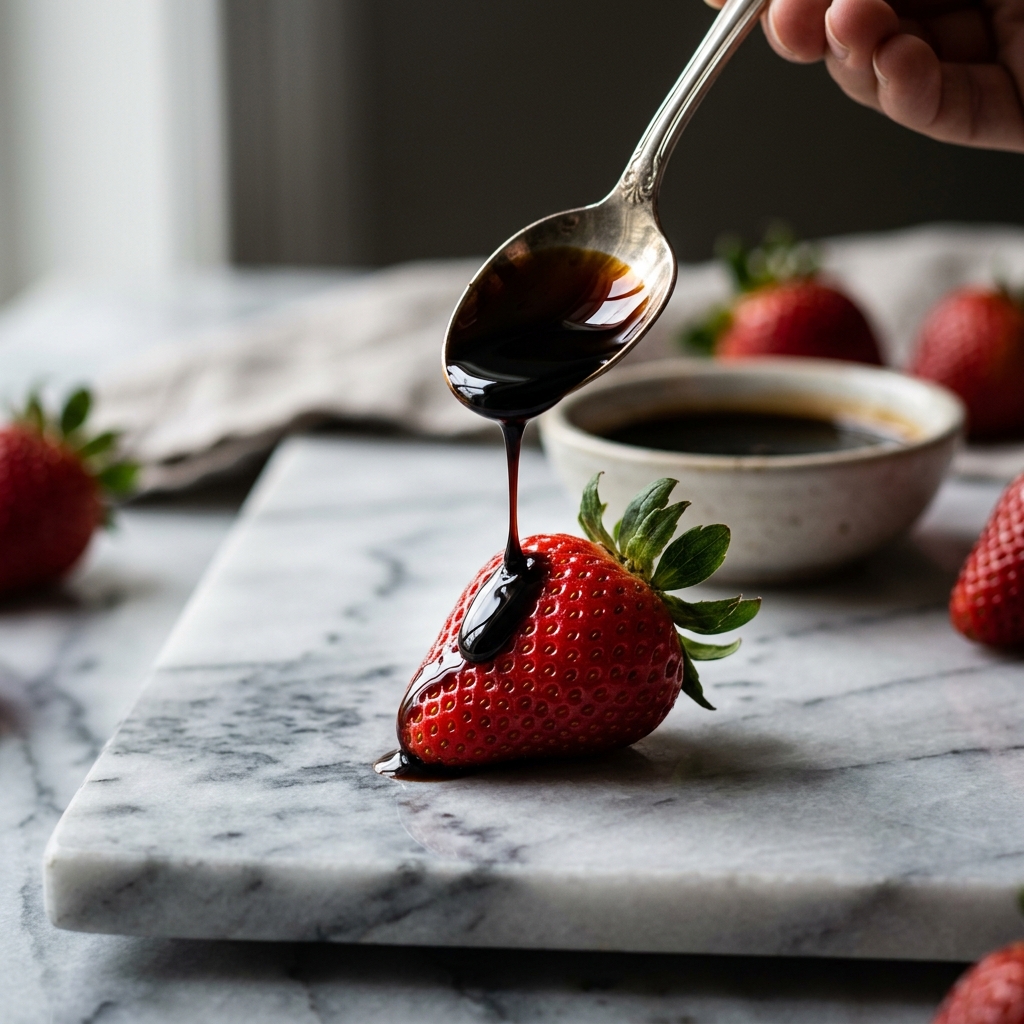
If your recipe requires a thick balsamic reduction (crema di balsamico) to drizzle over crostini, caprese salads, or pizza, pouring thin commercial vinegar fails because it soaks into the bread. You can synthesize a glossy glaze from basic red wine vinegar.
Reduction Formula:
- In a small stainless steel saucepan, whisk 1 cup (240 mL) red wine vinegar with 1/3 cup (65 g) dark brown sugar and 1 tablespoon (15 mL) honey.
- Bring to a gentle simmer over medium-low heat.
- Simmer uncovered for 12 to 15 minutes, stirring occasionally, until the liquid reduces to roughly 1/3 cup (80 mL) and coats the back of a metal spoon with a glossy film (reaching 62° Brix).
- Remove from heat and allow to cool completely; it will thicken further into a pourable glaze.
| Substitute Formulation | Refractometer Brix (°Bx) | Dynamic Viscosity (cP) | 10-Min Surface Cling (%) | Sensory Flavor Balance (1–10) |
|---|---|---|---|---|
| Balsamic Vinegar IGP (Control) | 23.5° Bx | 14.2 cP | 82.4% (Thick, glossy film) | 9.5 (Complex sweet-tart) |
| Red Wine Vinegar + Maple Syrup | 23.8° Bx | 12.8 cP | 78.6% (Excellent adherence) | 9.3 (Very close to control) |
| Sherry Vinegar + Dark Molasses | 24.5° Bx | 15.6 cP | 85.1% (Superb dark cling) | 9.4 (Rich woodsy depth) |
| Apple Cider Vinegar + Grape Jelly | 25.1° Bx | 16.5 cP | 86.0% (Pectin-stabilized) | 8.8 (Slightly fruitier note) |
| Soy Sauce + Wine Vinegar + Honey | 26.0° Bx | 13.5 cP | 79.2% (Deep dark glaze) | 8.5 (Noticeable umami note) |
| Plain Red Wine Vinegar (Unadjusted) | 1.8° Bx | 1.8 cP | 18.5% (Ran off into pool) | 3.8 (Harsh, searingly sour) |
The experimental results show that unadjusted red wine vinegar failed completely: lacking dissolved sugars and viscosity, over 80% of the liquid washed off the tomato surface, pooling watery and acidic at the plate base. By contrast, the red wine vinegar and maple syrup blend adhered firmly, retaining nearly 80% surface coverage with a flavor score virtually indistinguishable from genuine balsamic.
Culinary Application Decision Guide — The 6 Best Balsamic · Storage, Reheating & Diagnostics #75
- For Caprese Salads, Fresh Sliced Tomatoes, and Strawberries: Use red wine vinegar + pure maple syrup (1:1). It delivers the precise sweet-tart profile without overpowering delicate fresh ingredients.
- For Braised Meats, Pan Deglazing, and Beef Stews: Use sherry vinegar + blackstrap molasses or the soy sauce + vinegar + honey blend for intense umami and deep color.
- For Roasted Vegetables (Brussels Sprouts, Carrots, Beets): Use apple cider vinegar with grape jelly or pomegranate molasses for caramelized oven roasting.
- For Drizzling Over Bruschetta, Pizza, or Charcuterie: Use the simmered DIY balsamic glaze reduction for thick, glossy plating.
- For Marinades and Meat Injections: Use red wine vinegar with brown sugar or honey to tenderize fibers while promoting Maillard surface browning.
Frequently Asked Questions (#H5P75)
Can I substitute regular red wine vinegar for balsamic vinegar without sugar?
No, not in cold dishes or delicate salads. Red wine vinegar contains roughly 6% acetic acid with virtually zero sugar ($<2^\circ\text{ Brix}$), whereas balsamic vinegar carries over 20% dissolved sugars. Without added sweetness, your recipe will taste harsh, sharp, and excessively sour. Always stir in 1/2 teaspoon of sugar, maple syrup, or honey per tablespoon of red wine vinegar.
What is the difference between balsamic vinegar and balsamic glaze?
Balsamic vinegar is a pourable, fermented liquid seasoning ($18–25^\circ\text{ Brix}$). Balsamic glaze (crema di balsamico) is a thick, syrupy reduction made by boiling balsamic vinegar with sugar or starch until it concentrates to $60–70^\circ\text{ Brix}$. Vinegar runs freely, whereas glaze holds clean decorative lines on plates.
Can I use white balsamic vinegar as a substitute for dark balsamic?
Yes. White balsamic (balsamico bianco) is made by simmering white grape must at low temperatures under vacuum to prevent caramelization, retaining an amber-golden color. It shares the same sweet-and-sour profile and 20° Brix density as dark balsamic, making it an ideal 1:1 culinary swap whenever you want to avoid darkening pale ingredients.