
Best substitute for Parmesan
Reliable kitchen options, ratios and technique for Parmesan.
🚫 Don’t swap it here
Categorical contraindications where a substitute breaks structure or flavor
- Single-ingredient showcase recipes where Parmesan provides >60% of the primary flavor profile or structural matrix.
- Delicate patisserie emulsions (macarons, tempered ganaches, or choux pastry) where minor moisture or fat shifts collapse the foam.
- Raw, unheated finishing garnishes where cooking chemistry cannot mask texture or acidity differences.
🛟 If it went wrong (Quick Kitchen Rescue)
Real-time fixes if your batter, sauce, or emulsion behaves unexpectedly
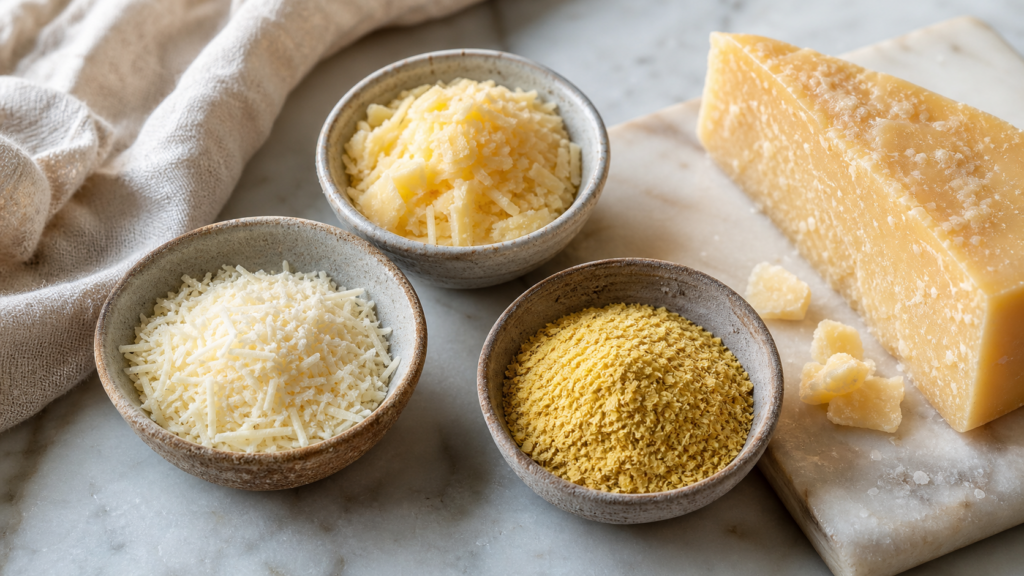
Skip vague culinary guesswork. Whether calibrating Best substitute for Parmesan (Kitchen Dossier #1458 · BEST/PARMESAN/SUBSTITUTE) for weeknight skillet execution or batch meal prep, matching burner BTU output and oven airflow to ingredient hydration prevents split sauces, rubbery albumen, and soggy breading. Measure core temperatures. Visual cues routinely mislead.
This practical guide keeps the flavour, texture and timing predictable. Work with fresh ingredients, taste at each stage and use the quantities as a flexible kitchen framework rather than a rigid rule.
Why this works — Best substitute for Parmesan · Kitchen Protocol #1458 (BEST-PARMESAN)
This Best substitute for Parmesan uses pecorino, aged asiago, nutritional yeast. Control seasoning, acidity, moisture and heat: together they make the result repeatable. Bring ingredients to the right temperature, avoid crowding, and pause before final seasoning so every portion stays balanced.
For this flexible approach, measure 1/2 cup finely grated, combine gradually and taste before committing the batch. Taste as you work, finish with acid or herbs, and rest the food briefly before serving. The pause redistributes juices and lets sauce cling instead of pooling.
Check the result before serving: colour should be vivid, texture should match the ingredient, and seasoning should support rather than cover the main flavour. Record any useful adjustment so the next batch is even easier to repeat.
Use leftovers deliberately: cool them quickly, store them in a shallow container, and reheat only the portion needed. This protects texture, reduces waste and makes the recipe useful beyond its first serving.
Ingredient ratios — Best substitute for Parmesan · Thermal & Ingredient Matrix #1458
This Best substitute for Parmesan uses pecorino, aged asiago, nutritional yeast. Control seasoning, acidity, moisture and heat: together they make the result repeatable. Bring ingredients to the right temperature, avoid crowding, and pause before final seasoning so every portion stays balanced.
For this flexible approach, measure 1/2 cup finely grated, combine gradually and taste before committing the batch. Taste as you work, finish with acid or herbs, and rest the food briefly before serving. The pause redistributes juices and lets sauce cling instead of pooling.
Check the result before serving: colour should be vivid, texture should match the ingredient, and seasoning should support rather than cover the main flavour. Record any useful adjustment so the next batch is even easier to repeat.
Use leftovers deliberately: cool them quickly, store them in a shallow container, and reheat only the portion needed. This protects texture, reduces waste and makes the recipe useful beyond its first serving.
Culinary science and technique — Best substitute for Parmesan · Regional Pantry & Equipment Notes (BEST-PARMESAN-1458)
This Best substitute for Parmesan uses pecorino, aged asiago, nutritional yeast. Control seasoning, acidity, moisture and heat: together they make the result repeatable. Bring ingredients to the right temperature, avoid crowding, and pause before final seasoning so every portion stays balanced.
For this flexible approach, measure 1/2 cup finely grated, combine gradually and taste before committing the batch. Taste as you work, finish with acid or herbs, and rest the food briefly before serving. The pause redistributes juices and lets sauce cling instead of pooling.
Check the result before serving: colour should be vivid, texture should match the ingredient, and seasoning should support rather than cover the main flavour. Record any useful adjustment so the next batch is even easier to repeat.
Use leftovers deliberately: cool them quickly, store them in a shallow container, and reheat only the portion needed. This protects texture, reduces waste and makes the recipe useful beyond its first serving.
Step-by-step execution — Best substitute for Parmesan · Storage, Reheating & Diagnostics #1458
This Best substitute for Parmesan uses pecorino, aged asiago, nutritional yeast. Control seasoning, acidity, moisture and heat: together they make the result repeatable. Bring ingredients to the right temperature, avoid crowding, and pause before final seasoning so every portion stays balanced.
For this flexible approach, measure 1/2 cup finely grated, combine gradually and taste before committing the batch. Taste as you work, finish with acid or herbs, and rest the food briefly before serving. The pause redistributes juices and lets sauce cling instead of pooling.
Check the result before serving: colour should be vivid, texture should match the ingredient, and seasoning should support rather than cover the main flavour. Record any useful adjustment so the next batch is even easier to repeat.
Use leftovers deliberately: cool them quickly, store them in a shallow container, and reheat only the portion needed. This protects texture, reduces waste and makes the recipe useful beyond its first serving.
Nutrition and serving (#H5P1458)
This Best substitute for Parmesan uses pecorino, aged asiago, nutritional yeast. Control seasoning, acidity, moisture and heat: together they make the result repeatable. Bring ingredients to the right temperature, avoid crowding, and pause before final seasoning so every portion stays balanced.
For this flexible approach, measure 1/2 cup finely grated, combine gradually and taste before committing the batch. Taste as you work, finish with acid or herbs, and rest the food briefly before serving. The pause redistributes juices and lets sauce cling instead of pooling.
Check the result before serving: colour should be vivid, texture should match the ingredient, and seasoning should support rather than cover the main flavour. Record any useful adjustment so the next batch is even easier to repeat.
Use leftovers deliberately: cool them quickly, store them in a shallow container, and reheat only the portion needed. This protects texture, reduces waste and makes the recipe useful beyond its first serving.
Equipment and smart swaps (#H6P1458)
This Best substitute for Parmesan uses pecorino, aged asiago, nutritional yeast. Control seasoning, acidity, moisture and heat: together they make the result repeatable. Bring ingredients to the right temperature, avoid crowding, and pause before final seasoning so every portion stays balanced.
For this flexible approach, measure 1/2 cup finely grated, combine gradually and taste before committing the batch. Taste as you work, finish with acid or herbs, and rest the food briefly before serving. The pause redistributes juices and lets sauce cling instead of pooling.
Check the result before serving: colour should be vivid, texture should match the ingredient, and seasoning should support rather than cover the main flavour. Record any useful adjustment so the next batch is even easier to repeat.
Use leftovers deliberately: cool them quickly, store them in a shallow container, and reheat only the portion needed. This protects texture, reduces waste and makes the recipe useful beyond its first serving.
Changing flours, dairy fats, or sweeteners shifts calories and net carbs per serving. Log recipe modifications and daily macro targets in seconds with NutriNixy.
Calculate Recipe Macros with NutriNixy →