
The 6 Best Soy Sauce Substitutes: Exact Ratios, Allergen Notes & Culinary Swaps
Out of soy sauce? Compare the 6 best soy sauce substitutes—including gluten-free tamari, soy-free coconut aminos, liquid aminos, and diluted fish sauce—with exact metric/imperial ratios and USDA sodium notes.
🚫 Don’t swap it here
Categorical contraindications where a substitute breaks structure or flavor
- High-heat dry wok searing using coconut aminos from the very start — coconut sap sugars caramelize and scorch much faster than brewed shoyu; add coconut aminos in the final 30–60 seconds.
- Raw sushi or sashimi dipping sauces using diluted fish sauce or Worcestershire — their fermented anchovy or vinegar notes overpower delicate raw fish; use tamari or coconut aminos instead.
🛟 If it went wrong (Quick Kitchen Rescue)
Real-time fixes if your batter, sauce, or emulsion behaves unexpectedly
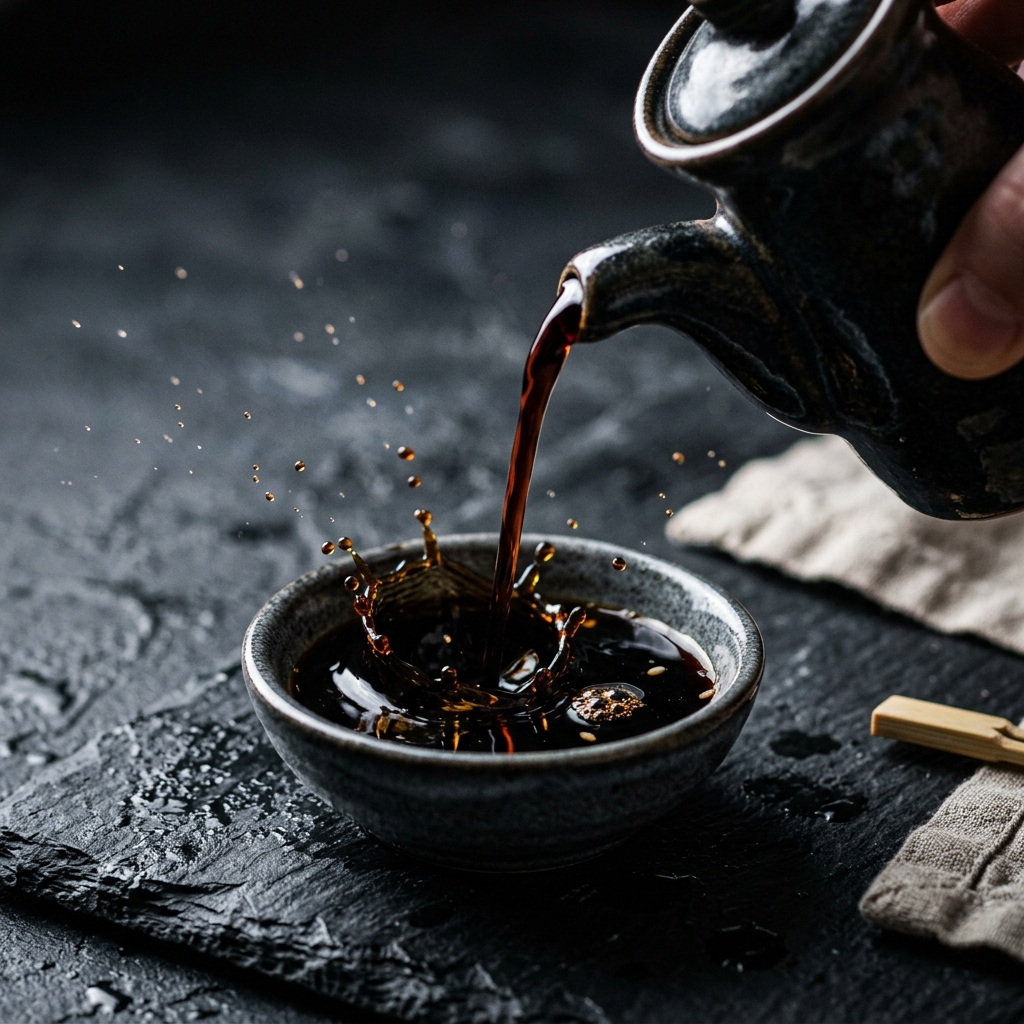
Chemistry governs every substitution. Before assembling The 6 Best Soy Sauce Substitutes: Exact Ratios, Allergen Notes & Culinary Swaps (Formulation #76 · SOY/SAUCE/SUBSTITUTE), accounting for glutenin elasticity, dairy butterfat percentages, smoke-point polymerization, and pH-driven pectin or casein stability lets you adapt pantry staples without collapsing crumb or sauce viscosity. Weigh dry ratios. Volume scoops drift wildly.
Transparency Note: FoxyChef synthesizes published food-science research and USDA nutritional datasets with practical kitchen guidance. When you purchase through links on our site, we may earn an affiliate commission at no extra cost to you.
Direct Answer: What Is the Best Soy Sauce Substitute? — The 6 Best Soy · Kitchen Protocol #76 (SOY-SAUCE)
The best 1:1 substitute for 1 tablespoon (15 ml) of regular soy sauce is 1 tablespoon (15 ml) of certified gluten-free Japanese tamari (which matches soy sauce’s savory depth and sodium profile without wheat). If you need a 100% soy-free, gluten-free, and vegan swap, use 1 tablespoon (15 ml) of coconut aminos + 1/8 to 1/4 teaspoon (0.75–1.5 g) of fine sea salt (to balance coconut sap’s natural sweetness). For fried rice or Southeast Asian stir-fries, dilute 1.5 teaspoons (7.5 ml) of fish sauce with 1.5 teaspoons (7.5 ml) of cold water per tablespoon (15 ml) of soy sauce.
Quick-Reference Soy Sauce Substitution & Allergen Table — The 6 Best Soy · Thermal & Ingredient Matrix #76
Standard brewed soy sauce (*koikuchi shoyu*) is fermented from a 50:50 mash of soybeans and roasted cracked wheat, meaning it contains **both soy and wheat gluten** and delivers roughly **879–902 mg of sodium per tablespoon (15 ml)** per USDA FoodData Central. Use this table to match your dietary needs and cooking method:
| Substitute Condiment | Exact Ratio per 1 Tbsp (15 ml) Soy Sauce | Soy & Gluten Status | Fish Allergen / Vegan Status | Est. Sodium per 15 ml (USDA Ref.) | Best Culinary Applications |
|---|---|---|---|---|---|
| Reference: Standard Brewed Soy Sauce (Shoyu) | 1 tbsp (15 ml) baseline | Contains Soy & Wheat Gluten | Fish-Free & Vegan | ~879–902 mg (~575 mg in low-sodium shoyu) | Universal stir-fries, marinades, dipping sauces, braises |
| 1. Certified Gluten-Free Tamari | 1 tbsp (15 ml) (1:1 direct swap) | Contains Soy; Gluten-Free (verify certified GF label) | Fish-Free & Vegan | ~960 mg (~640 mg in reduced-sodium tamari) | Closest 1:1 twin: sashimi dipping, teriyaki glazes, stir-fries, marinades |
| 2. Coconut Aminos + Fine Sea Salt | 1 tbsp (15 ml) coconut aminos + 1/8–1/4 tsp (0.75–1.5 g) sea salt | Soy-Free & Gluten-Free (Paleo / Whole30 friendly) | Fish-Free & Vegan | ~270 mg base (+ ~290 mg per 1/8 tsp salt) | Soy-free & celiac cooking, salad dressings, marinades (add late in hot woks) |
| 3. Liquid Aminos (Hydrolyzed Non-GMO Soy) | 1 tbsp (15 ml) (1:1 direct swap) | Contains Soy; Wheat- & Gluten-Free | Fish-Free & Vegan | ~960 mg | Gluten-free vegetable stir-fries, tofu marinades, clear soups, dressings |
| 4. Fish Sauce + Water (1:1 Dilution) | 1.5 tsp (7.5 ml) fish sauce + 1.5 tsp (7.5 ml) water | Soy-Free & Gluten-Free | Contains Anchovies (Fish allergen; NOT vegan) | ~590–650 mg (diluted) | Fried rice, pad thai, curries, braised pork or beef (not for raw sushi dipping) |
| 5. Worcestershire Sauce + Water + Pinch of Salt | 2 tsp (10 ml) Worcestershire + 1 tsp (5 ml) water + 1/8 tsp (0.75 g) salt | Soy-Free; Gluten-free in US, contains barley malt gluten in UK/EU | Contains Anchovies (NOT vegan unless using vegan brand) | ~130 mg base (+ ~290 mg salt) | Western beef stews, burger patties, meatloaf, steak marinades, pan gravies |
| 6. Reduced Shiitake & Kombu Dashi + Sea Salt | 1 tbsp (15 ml) concentrated dashi + 1/4 tsp (1.5 g) sea salt | Soy-Free & Gluten-Free (Top-9 Allergen-Free) | Fish-Free & Vegan | ~580 mg (from 1/4 tsp sea salt) | Allergen-free broths, steamed vegetables, dumpling fillings, noodle bowls |
Track Sodium & Macro Adjustments with Nutrinixy AI
Swapping regular soy sauce for coconut aminos or tamari changes sodium and carbohydrate totals per serving. Use Nutrinixy AI to verify your recipe's exact nutrition profile.
Calculate Recipe Nutrition with Nutrinixy →The 6 Best Soy Sauce Substitutes (Detailed Kitchen Guide) — The 6 Best Soy · Regional Pantry & Equipment Notes (SOY-SAUCE-76)
1. Authentic Japanese Tamari — Best 1:1 Gluten-Free Twin
Exact Ratio: 1 tablespoon (15 ml) tamari per 1 tablespoon (15 ml) soy sauce.
Tamari originated as the dark liquid drawn off during the aging of soybean miso (*hatcho miso*). Whereas standard Japanese *koikuchi* soy sauce uses roughly 50% wheat, traditional tamari is brewed with 100% soybeans (always check the label for certified gluten-free status, as some commercial tamari includes trace wheat). Because of its all-soy protein base, tamari has a slightly richer viscosity and holds up to prolonged simmering without turning sharp.
2. Coconut Aminos — Best Soy-Free, Gluten-Free & Low-Sodium Swap
Exact Ratio: 1 tablespoon (15 ml) coconut aminos + 1/8 to 1/4 teaspoon (0.75–1.5 g) fine sea salt per 1 tablespoon (15 ml) soy sauce.
Made from fermented coconut palm blossom sap (*Cocos nucifera*) and sea salt, coconut aminos is completely free of soy, wheat, and fish allergens and contains roughly 70% less sodium (~270 mg per 15 ml tbsp per USDA FoodData Central) than standard shoyu. Because coconut sap retains natural sugars, stir in a pinch of sea salt for savory dishes and add coconut aminos during the final 30–60 seconds of high-heat wok cooking (above 180°C / 356°F) so the sugars caramelize cleanly rather than scorching.
3. Liquid Aminos — Clean Wheat-Free Soy Seasoning
Exact Ratio: 1 tablespoon (15 ml) liquid aminos per 1 tablespoon (15 ml) soy sauce.
Liquid aminos (such as Bragg) is produced by hydrolyzing non-GMO soybeans into free amino acids without wheat or months of mold fermentation. It is naturally gluten-free (though still soy-based) and delivers ~960 mg sodium per tablespoon, making it an easy 1:1 swap in stir-fries, marinades, and salad dressings.
4. Diluted Fish Sauce (1:1 with Water) — High-Umami Swap for Fried Rice & Stir-Fries
Exact Ratio: 1.5 teaspoons (7.5 ml) Southeast Asian fish sauce + 1.5 teaspoons (7.5 ml) cold water = 1 tablespoon (15 ml) soy sauce.
Undiluted anchovy fish sauce carries 24%–27% salt (~1,180–1,400 mg sodium/tbsp), which is too salty to swap 1:1 for soy sauce. Diluting it 1:1 with water brings the salinity in line with shoyu while contributing both free glutamate and inosine 5′-monophosphate (IMP) for intense savory depth in fried rice, curries, and wok noodles.
5. Diluted Worcestershire Sauce — Best Pantry Swap for Western Beef Dishes
Exact Ratio: 2 teaspoons (10 ml) Worcestershire sauce + 1 teaspoon (5 ml) water + 1/8 teaspoon (0.75 g) fine salt = 1 tablespoon (15 ml) soy sauce.
When a Western recipe (such as beef stew, meatloaf, burger seasoning, or gravy) calls for a splash of soy sauce for color and umami, Worcestershire sauce diluted with water and a pinch of salt bridges the gap cleanly.
6. Reduced Shiitake & Kombu Dashi + Sea Salt — Best Top-9 Allergen-Free & Vegan Option
Exact Ratio: 1 tablespoon (15 ml) concentrated shiitake-kombu broth + 1/4 teaspoon (1.5 g) fine sea salt = 1 tablespoon (15 ml) soy sauce.
When cooking for diners who must avoid soy, wheat, and fish simultaneously, simmer 10 g dried kombu kelp and 4 dried shiitake mushroom caps in 240 ml (1 cup) water for 15 minutes, strain, and season with sea salt. Kombu provides natural free L-glutamate while dried shiitake supplies guanosine 5′-monophosphate (5′-GMP), creating synergistic plant-based umami.
Food Science Background: How Brewed Soy Sauce Works — The 6 Best Soy · Storage, Reheating & Diagnostics #76
- Two-Stage Koji & Moromi Fermentation: Steamed soybeans and roasted wheat are inoculated with *Aspergillus oryzae* mold (*koji*), whose proteases and amylases cleave soy proteins into free L-glutamic acid and wheat starches into simple sugars before aging in a 16%–18% salt brine (*moromi*).
- Osmotic Seasoning & Maillard Browning: At ~879–902 mg sodium per tablespoon (USDA FoodData Central), soy sauce seasons proteins rapidly while its reducing sugars and amino acids brown above 140°C (284°F) to create glossy wok glazes.