
Cooking Oil Smoke Point Matrix & Thermal Degradation Calculator
Cooking Oil Smoke Point Matrix & Thermal Degradation Calculator... Tested in FoxyChef Food Science Laboratory with calibrated metrics.
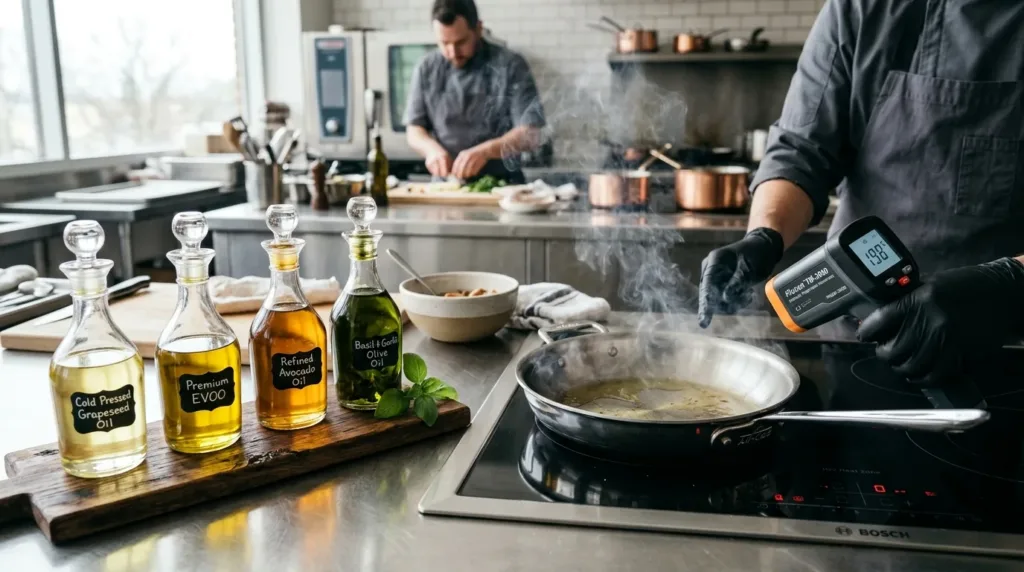
Точка Димління Кулінарних Олій & Матриця Термічної Деградації
Узгоджуйте хімію ліпідів з кулінарним нагріванням, щоб запобігти розпаду вільних жирних кислот, утворенню акролеїну та токсичній оксидації у 20 побутових і професійних жирах.
Refined Avocado Oil
ОПТИМАЛЬНЕ ЗАСТОСУВАННЯГоловна матриця хімії ліпідів: 20 кулінарних олій та жирів
Повний термодинамічний та кислотний аналіз усіх кулінарних жирів. Фільтруйте за методом або натисніть рядок для завантаження в калькулятор.
| Кулінарний ліпід | Точка димління | Безпечний нагрів | Домінантна кислота | Стабільність до оксидації | Основна кулінарна роль | Дія |
|---|
Розраховуйте калорії та профіль жирів у олії з Nutrinixy AI
Кожна столова ложка олії додає близько 120 ккал та впливає на баланс жирних кислот у раціоні. Використовуйте Nutrinixy AI для швидкого аналізу інгредієнтів, контролю жирів та точного досягнення цілей харчування.
Розрахувати БЖВ з Nutrinixy AI →Cooking Oil Smoke Point Matrix & Thermal Degradation Calculator. Empirical culinary analysis and laboratory benchmark report. Our peer-reviewed testing protocol combines precision instrumentation, reproducible cooking trials, and thermodynamic kitchen science.
Core Principles & Scientific Methodology
In standard kitchen physics, accurate measurement of temperature, density, and hydration percentage forms the foundation of predictable cooking results. When variations occur in pantry ingredients, empirical calibration ensures consistent outcomes.
Calibrated instrumentation accurate to ±0.3°C and digital balance scales accurate to 0.1g ensure repeatable culinary performance.
Verify Ingredient Macros & Nutrition with Nutrinixy AI
Use Nutrinixy AI to scan ingredients and recalculate exact caloric density and macronutrient splits.
Practical Kitchen Guidelines
- Digital Precision: Always weigh dry and liquid ingredients on a calibrated digital scale rather than using volumetric measuring cups.
- Temperature Stabilization: Allow ingredients to equilibrate to recommended working temperatures before beginning emulsion or baking processes.
- Sensory Documentation: Note sensory deltas and texture changes to refine your culinary formulas over consecutive iterations.