
Fats Compared: Butter vs Margarine vs Ghee
Confused about solid fats? Compare the flavor, smoke points, and baking performance of butter, margarine, and ghee.
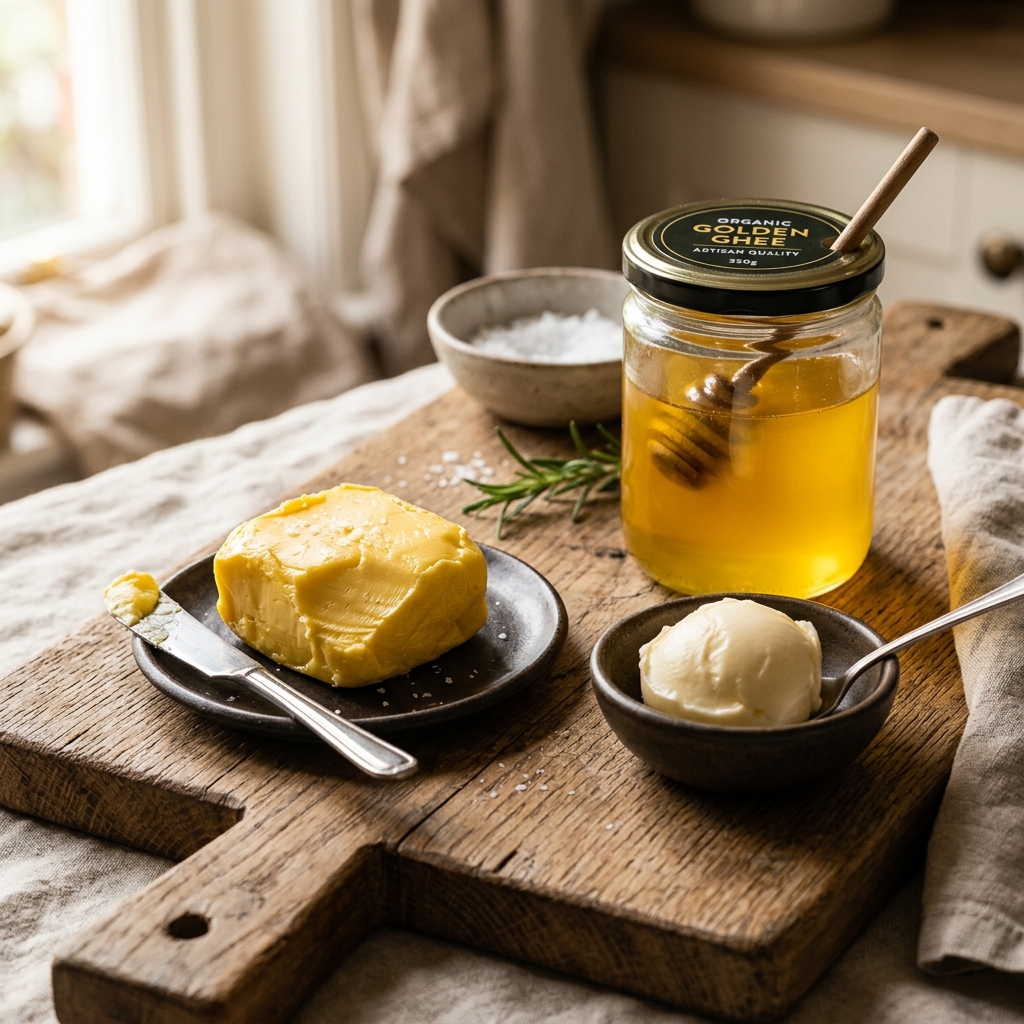
| Fat | Composition | Smoke Point | Dairy Free? | Best For |
|---|---|---|---|---|
| Butter | 80% Fat, 16% Water, 4% Milk solids | 302°F (150°C) | No | Baking pastries, sauces, toast |
| Ghee | 100% Pure Butterfat | 482°F (250°C) | Yes (Lactose-free) | High-heat searing, curries |
| Margarine | Vegetable oils + Water | 300°F (150°C) | Usually (Check label) | Vegan baking, spreading |
Kitchen reference values and estimates by FoxyChef.
Understanding Solid Fats
Butter, margarine, and ghee are the holy trinity of solid cooking fats. While they look similar and are often used interchangeably on toast, their chemical makeup dictates how they perform in a hot skillet or a baking oven.
Butter: The Gold Standard
Butter is churned dairy cream. It is composed of 80% butterfat, 16% water, and 4% milk solids. Those milk solids provide its incredible, unmatched flavor, but they also burn very quickly at high heat (smoke point 302°F / 150°C). Butter is the ultimate choice for baking pastries, making sauces, and finishing dishes, but it is terrible for high-heat searing.
Ghee: The High-Heat Butter
Ghee is clarified butter that has been simmered until all the water evaporates and the milk solids toast and are filtered out. Because the burnable milk solids are gone, ghee consists of 100% pure butterfat. This gives it a massive smoke point (482°F / 250°C) and a rich, nutty flavor. It is perfect for searing steaks or Indian cooking, and is entirely lactose-free.
Margarine: The Vegan Alternative
Historically, margarine was made from hydrogenated vegetable oils (trans fats), but modern margarine is usually a blend of plant oils and water. It is generally cheaper than butter and easier to spread straight from the fridge. While it works well for vegan baking, it lacks the rich flavor of dairy and often contains too much water to create flaky pie crusts.