
Potatoes Compared: Russet vs Yukon Gold vs Red
Stop making gluey mashed potatoes! Compare the starch levels and culinary uses of Russet, Yukon Gold, and Red potatoes.
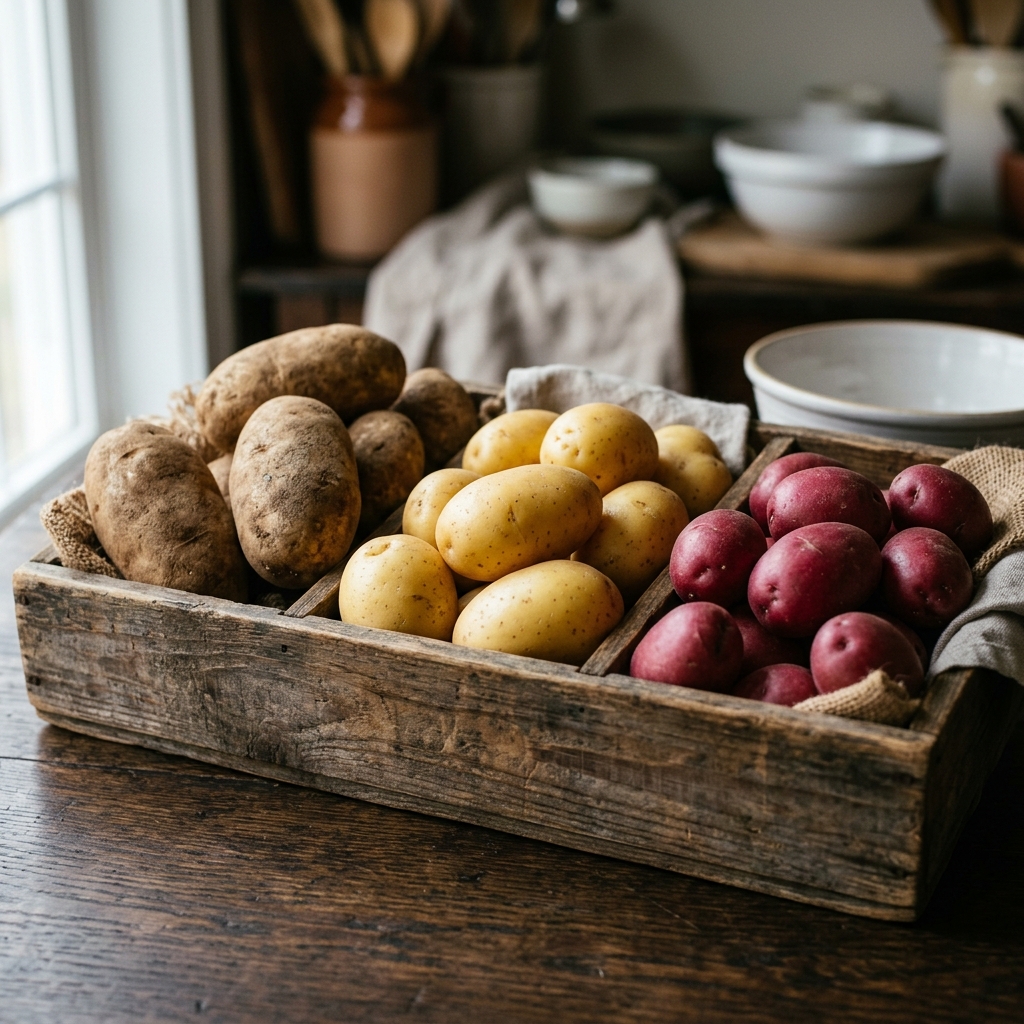
| Potato Type | Starch Level | Texture When Cooked | Best Culinary Use |
|---|---|---|---|
| Russet | High | Fluffy, dry, absorbent | Baking, mashing, french fries |
| Yukon Gold | Medium | Creamy, buttery | Roasting, creamy mash, gratins |
| Red Potatoes | Low (Waxy) | Firm, holds shape | Potato salad, boiling, soups |
Kitchen reference values and estimates by FoxyChef.
The Science of Potato Starch
Potatoes are generally categorized into two camps: starchy and waxy. Using a waxy potato for baking or a starchy potato for boiling will result in culinary disaster. Understanding starch content is the key to perfect potato dishes.
Russet Potatoes: The Starchy Giant
Russets are large, thick-skinned, and have a very high starch content with low moisture. When cooked, their flesh becomes dry, fluffy, and highly absorbent. This makes them the absolute best choice for baking (fluffy centers), frying (crispy exteriors), and classic mashed potatoes (they absorb butter perfectly). Do not use them in soups; they will disintegrate.
Red Potatoes: The Waxy Anchor
Red potatoes have thin skins and a low starch, high moisture content. They are incredibly firm and hold their shape beautifully even after prolonged boiling. This “waxy” texture makes them the undisputed champions of potato salads, stews, and soups. If you try to mash them, they will turn into thick, unappetizing glue.
Yukon Gold: The All-Purpose Middle Ground
Yukon Golds have a medium starch content. They boast a naturally buttery flavor and a creamy texture. Because they sit right in the middle of the spectrum, they can do a bit of everything: they roast beautifully, mash into creamy (not fluffy) purees, and hold together decently well in gratins.