
Spatchcock Smoked Beer Can Chicken with Paprika Herb Rub
Upgrade traditional beer can chicken with the spatchcock technique, paprika herb butter under the skin, and aromatic beer steam over applewood smoke.
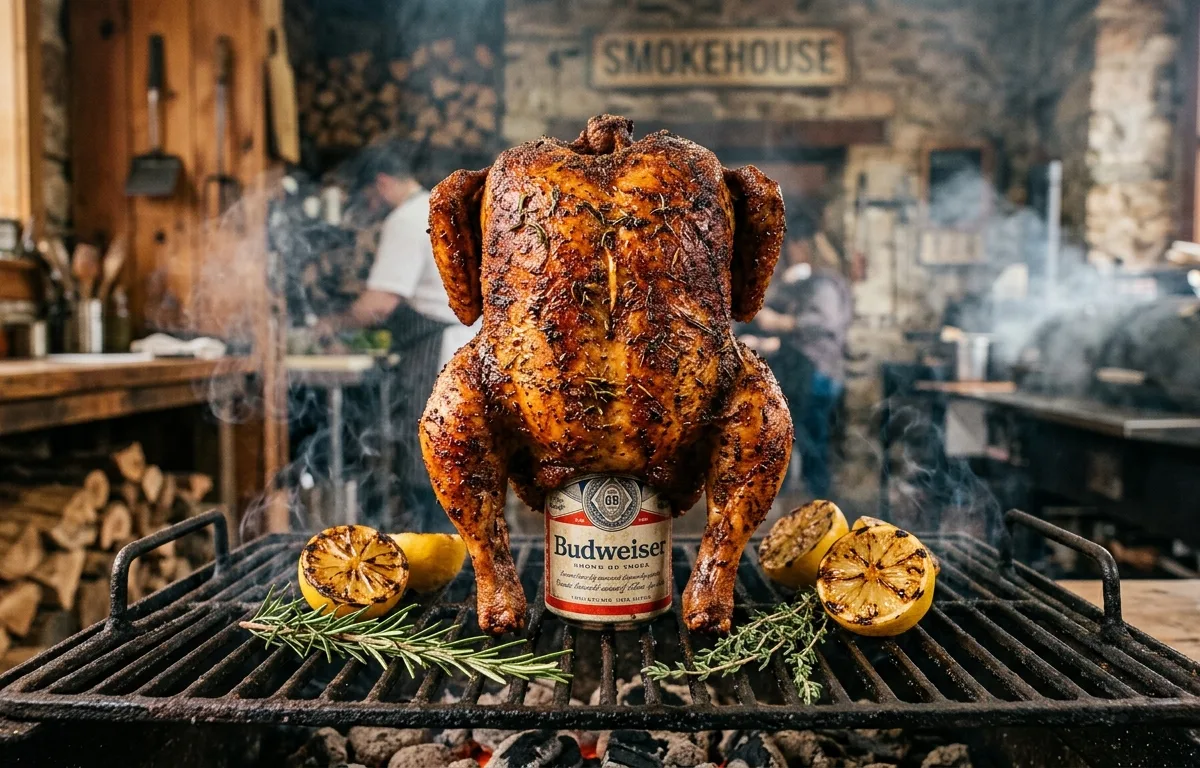
Instructions
Beer can chicken is a classic fixture of backyard barbecue lore, but traditional upright beer can roasting presents real thermodynamic hurdles: the metal can insulates the internal cavity, preventing the thigh meat from cooking evenly with the breast. By taking the flavor foundation of beer can chicken—aromatic malt steam infused with garlic and rosemary—and combining it with the spatchcocking technique over an indirect charcoal smoke, you get the best of both worlds: shatteringly crisp golden skin, deeply seasoned meat, and perfectly balanced cooking in under 60 minutes.
The Physics of Spatchcocking (Butterflying) Poultry
A whole, rounded chicken is an irregular geometric sphere. When placed in a smoker or grill, the delicate white breast meat sits highest where convective heat is hottest, drying out long before the dense leg quarters reach a safe, palatable temperature. Spatchcocking—removing the backbone with heavy-duty poultry shears and flattening the breastbone with the palm of your hand—transforms the bird into a uniform flat plane:
- Uniform Convective Heat Exposure: With all parts level, both breast and dark meat cook at the same rate. The drumsticks and thighs can be oriented toward the hotter side of the coals, absorbing more heat while keeping the tender breast juicy.
- Complete Skin Crispness: On an intact bird, the skin underneath remains pale and soggy. Flattened on the grill, 100% of the skin surface faces upward into the hot convective airflow, allowing subcutaneous poultry fat to render into golden, crispy parchment.
Harnessing the Beer Can Aromatics
To capture that beloved beer can steam without the tippy vertical can, place a shallow stainless steel or disposable pan on the charcoal heat shield directly beneath the grill grates. Fill the pan with half a can of craft German lager or amber ale, crushed garlic cloves, fresh rosemary, citrus peel, and a splash of apple cider vinegar. As charcoal heat rises, the beer gently simmers, sending fragrant malty steam up through the indirect smoke zone to keep the meat extraordinarily succulent.
For backyard grill masters seeking competition poultry rubs, premium wood smoke blends, and pro-grade spatchcock shears, look no further than Grill Masters Club. Their monthly subscription deliveries provide award-winning barbecue rubs, craft marinades, and specialized grilling gear vetted by veteran pitmasters to make poultry cookouts foolproof.
Compound Herb Butter Under the Skin
Seasoning the outside of the skin is only half the battle. Gently separate the skin from the breast and thigh meat using your fingers, taking care not to tear it. Slide tablespoons of a softened compound butter—mixed with smoked sweet paprika, minced thyme, garlic, onion powder, and lemon zest—directly between the skin and meat fibers. As the chicken cooks, the herb butter melts into the breast, self-basting the lean meat from within while the milk solids help the overlying skin brown into a vibrant amber crust.
The 350°F High-Heat Smoke Method
A common pitmaster mistake is smoking whole chicken low-and-slow at 225°F. Unlike tough beef brisket or pork shoulder loaded with collagen, lean poultry does not require prolonged breakdown. Cooking chicken at low temperatures results in rubbery, bite-resistant skin. Instead, fire your smoker or kettle grill to a brisk 325°F–350°F (163°C–177°C) with sweet applewood or pecan wood chunks. This high heat rapidly crisps the skin while the wood smoke imparts a gorgeous mahogany ring in just 45 to 55 minutes.
Step-by-Step Grilling Instructions
- Spatchcocking the Bird: Place a 4-to-5-pound whole roasting chicken breast-side down on a large cutting board. Using heavy-duty kitchen shears, cut along both sides of the backbone from tail to neck and discard (or save for chicken stock). Flip the chicken over. Place the palms of your hands over the center of the breastbone and press down firmly until you hear a distinct crunch and the chicken lies completely flat.
- Drying & Seasoning: Pat the bird completely dry with paper towels. Loosen the skin over the breasts and thighs. Slide spoonfuls of the prepared paprika herb compound butter directly under the skin, spreading it evenly. Dust the exterior skin with kosher salt, coarse black pepper, and poultry dry rub.
- Grill & Beer Steam Setup: Set up your grill for indirect two-zone cooking at 350°F (177°C). Place a drip pan filled with amber lager, smashed garlic, and fresh rosemary sprigs on the indirect side beneath the cooking grate. Add one chunk of applewood to the coals.
- The Smoke Roast: Lay the spatchcocked chicken skin-side up on the grate directly over the beer steam pan, positioning the thighs and legs toward the coal side. Close the grill lid.
- Internal Temperature Monitoring: Roast undisturbed for 40 minutes. Insert a digital probe into the deepest section of the thigh (avoiding bone) and another into the thickest part of the breast. Remove the chicken when the breast hits 160°F (71°C) and the thighs reach 175°F (79°C)—carryover cooking while resting will bring the breast to the FDA-safe 165°F (74°C).
- Rest & Carving: Transfer the chicken to a carving board and let rest uncovered for 10 minutes to allow juices to settle. Carve into drumsticks, wings, thighs, and sliced breast halves. Serve with the reduced beer pan drippings as a savory jus.
Drawbacks, Limitations & Risks (Cons)
- Dedicated hand-washing requirement: To preserve non-stick surface integrity and handle seals, machine dishwasher cycles must be avoided in favor of gentle sponge cleaning.
- Higher upfront equipment investment: Professional multi-clad cookware commands a higher price point than entry-level single-layer aluminum alternatives.
- Substantial piece weight: Tri-ply construction and solid riveted handles bring the average skillet weight to 3.8 to 4.8 lbs, requiring two hands when transferring while full.
Macronutrient Breakdown & Craft Beer Pairings
A generous quarter-chicken serving yields 45 grams of lean protein and 26 grams of healthy fats with just 1 gram of carbohydrates. Pair with the remaining cold amber ale, an aromatic Hazy IPA, or an unoaked Chardonnay whose crisp acidity mirrors the bright lemon herb notes in the butter.