
Out of Baking Powder?
Run out of baking powder mid-recipe? Learn the best substitutes using baking soda, cream of tartar, or buttermilk to keep your cakes fluffy and light.
The Chemistry of Baking Powder
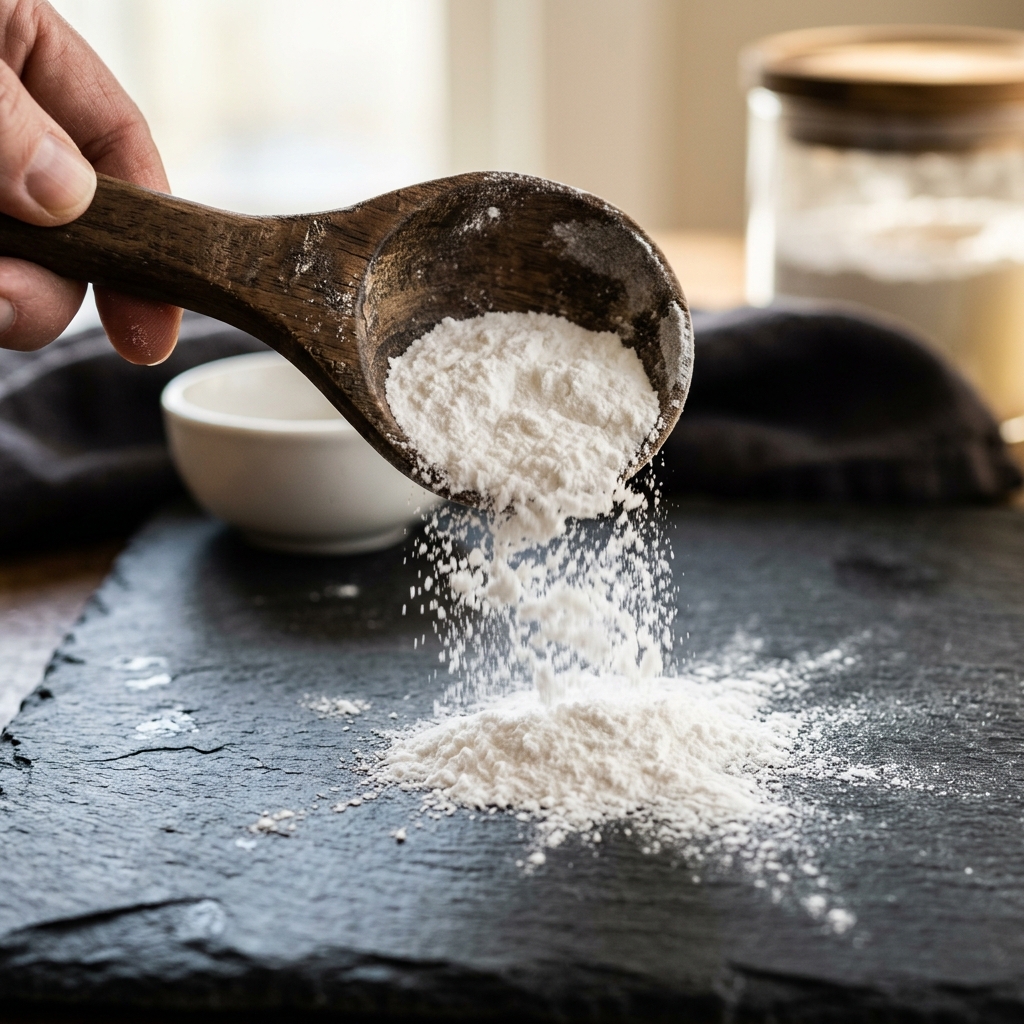
Baking powder is a complete leavening agent. It contains both a base (usually sodium bicarbonate, which is baking soda) and a dry acid (such as cream of tartar or sodium aluminum sulfate), along with a buffer like cornstarch to prevent them from reacting prematurely. When you add liquid to your batter, the base and acid dissolve and react together, producing carbon dioxide gas. This gas gets trapped in the dough or batter, creating tiny bubbles that expand when heated in the oven, resulting in the light, fluffy texture we expect in cakes, muffins, and quick breads.
Most commercial baking powders are ‘double-acting’, meaning they react twice: once when mixed with liquid, and a second time when exposed to the heat of the oven. This dual action gives bakers a reliable, consistent lift, even if the batter sits on the counter for a few minutes before baking.
Why You Can’t Just Use Baking Soda
A common mistake is assuming baking soda and baking powder are interchangeable in equal amounts. If a recipe calls for baking powder and you use only baking soda, you’ll encounter two major problems. First, baking soda is significantly stronger—about three to four times more powerful than baking powder. If you use the same volume, your baked goods will rise too rapidly and then collapse. Second, and more importantly, baking soda requires an acidic ingredient (like lemon juice, vinegar, or buttermilk) to activate it. Without an acid, the baking soda won’t fully neutralize, leaving behind a harsh, metallic, or soapy taste that can ruin your dessert.
The Golden Ratio: Baking Soda + Cream of Tartar
The most reliable substitute for baking powder is a mixture of baking soda and cream of tartar. Cream of tartar is a dry acid—a byproduct of winemaking—that activates the baking soda perfectly without adding excess liquid to your batter. The golden ratio is two parts cream of tartar to one part baking soda. For every 1 teaspoon of baking powder your recipe requires, mix 1/4 teaspoon of baking soda with 1/2 teaspoon of cream of tartar. Because this homemade mixture is single-acting (it reacts immediately upon contact with moisture), you must get your batter into the oven as quickly as possible after mixing.
Alternative: The Buttermilk Swap
If you don’t have cream of tartar, you can leverage liquid acids. Buttermilk, yogurt, or even sour milk can provide the necessary acidity to activate baking soda. To replace 1 teaspoon of baking powder, use 1/4 teaspoon of baking soda and replace 1/2 cup of the liquid in your recipe with buttermilk or yogurt. This swap works exceptionally well in pancakes, waffles, and dense cakes, adding a pleasant tang and tender crumb. However, it requires you to adjust the liquids in your recipe, which can sometimes be tricky for delicate sponge cakes or cookies where moisture balance is critical.
Using Club Soda
For recipes that are very liquid-heavy, such as pancake or waffle batters, you can sometimes use club soda to provide lift. Club soda contains sodium bicarbonate and is carbonated, meaning it already has carbon dioxide gas suspended in it. While it won’t provide the robust, structured rise needed for a heavy pound cake, it can make thin batters wonderfully crisp and airy. Simply substitute any liquid in the recipe (like milk or water) with an equal volume of club soda.
Conclusion
Running out of baking powder doesn’t mean your baking plans are ruined. As long as you understand the fundamental need to pair a base (baking soda) with an acid, you can easily replicate the leavening power of commercial baking powder. Whether you use the dry precision of cream of tartar or the rich acidity of buttermilk, these substitutes will ensure your cakes rise beautifully.