
Cheeses Compared: Cheddar vs Gouda vs Swiss
Upgrade your cheeseboard and sandwiches! Compare the flavor profiles, origins, and melting qualities of Cheddar, Gouda, and Swiss cheese.
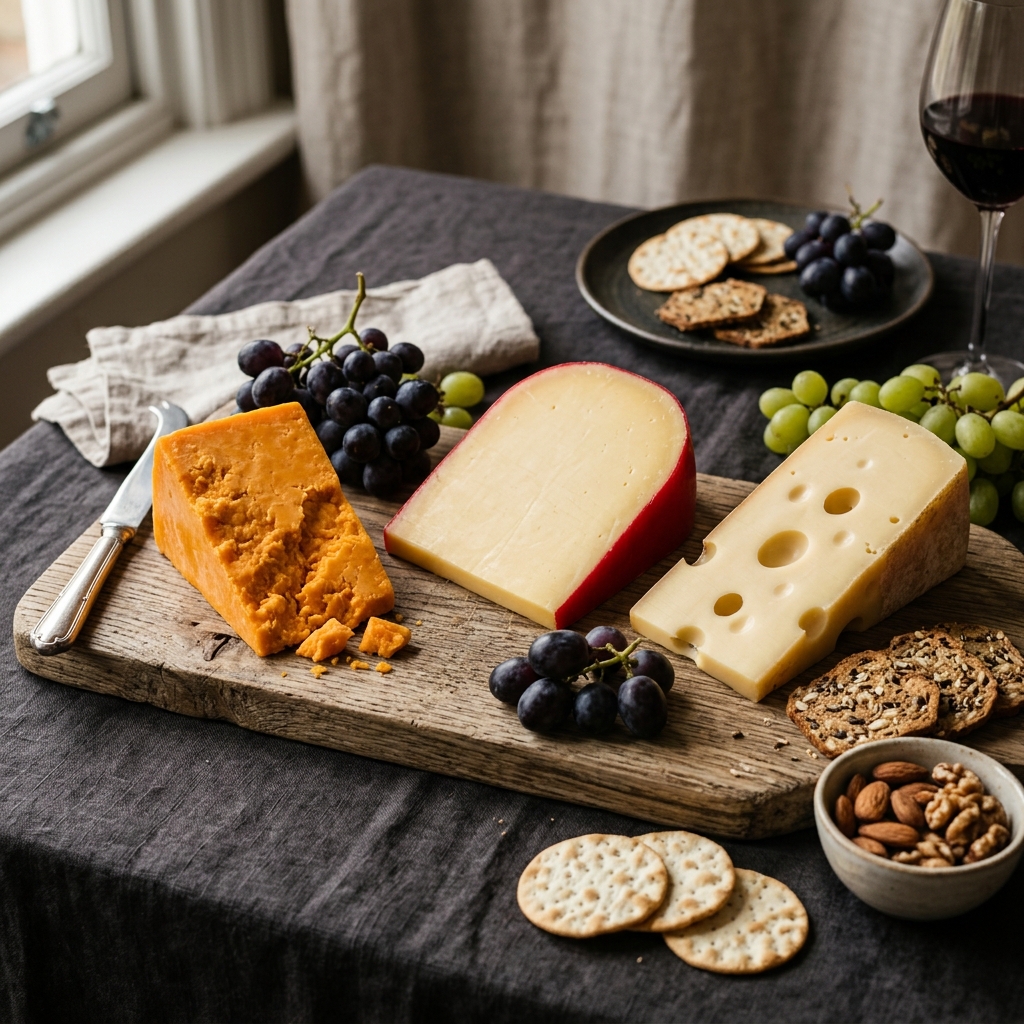
| Cheese | Origin | Flavor Profile | Melting Quality & Uses |
|---|---|---|---|
| Cheddar | England | Sharp, earthy, crumbly (when aged) | Good. Burgers, mac and cheese, snacking |
| Gouda | Netherlands | Sweet, nutty, caramel notes | Excellent. Gourmet grilled cheese, fondues |
| Swiss (Emmental) | Switzerland | Mild, slightly sweet & nutty | Excellent. Sandwiches, gratins, traditional fondue |
Kitchen reference values and estimates by FoxyChef.
Understanding Semi-Hard Cheeses
Cheddar, Gouda, and Swiss are all semi-hard cheeses, making them incredibly versatile. They can be sliced for sandwiches, grated for melting, or cubed for snacking. However, their unique aging processes and bacterial cultures give them distinct personalities.
Cheddar: The Sharp British Classic
Originating in England, cheddar is the world’s most popular cheese. Young cheddar is mild and melts smoothly. However, as it ages (sharp cheddar), it develops a complex, earthy, pungent flavor and a crumbly texture with crunchy calcium lactate crystals. Aged cheddar is fantastic for snacking but can separate and become oily when melted at high heat.
Gouda: The Sweet Dutch Treat
Hailing from the Netherlands, Gouda is known for its smooth, pale yellow interior (often coated in a red wax rind). It has a noticeably sweet, nutty, and almost caramel-like flavor profile compared to cheddar. Because of its higher fat and moisture content, young Gouda is one of the absolute best melting cheeses in the world, perfect for gourmet grilled cheese sandwiches or fondues.
Swiss (Emmental): The Nutty Giant
True Swiss cheese (Emmental) is famous for its iconic holes (eyes), which are created by carbon dioxide gas released by specific bacteria during the aging process. It has a firm texture and a very mild, sweet, and nutty flavor. It melts beautifully, making it the traditional choice for classic fondues, gratins, and pairing with ham in sandwiches.