
Pasta Compared: Regular vs Whole Wheat vs Chickpea
Looking for the healthiest pasta? Compare the protein, fiber, and culinary uses of regular semolina, whole wheat, and chickpea pasta.
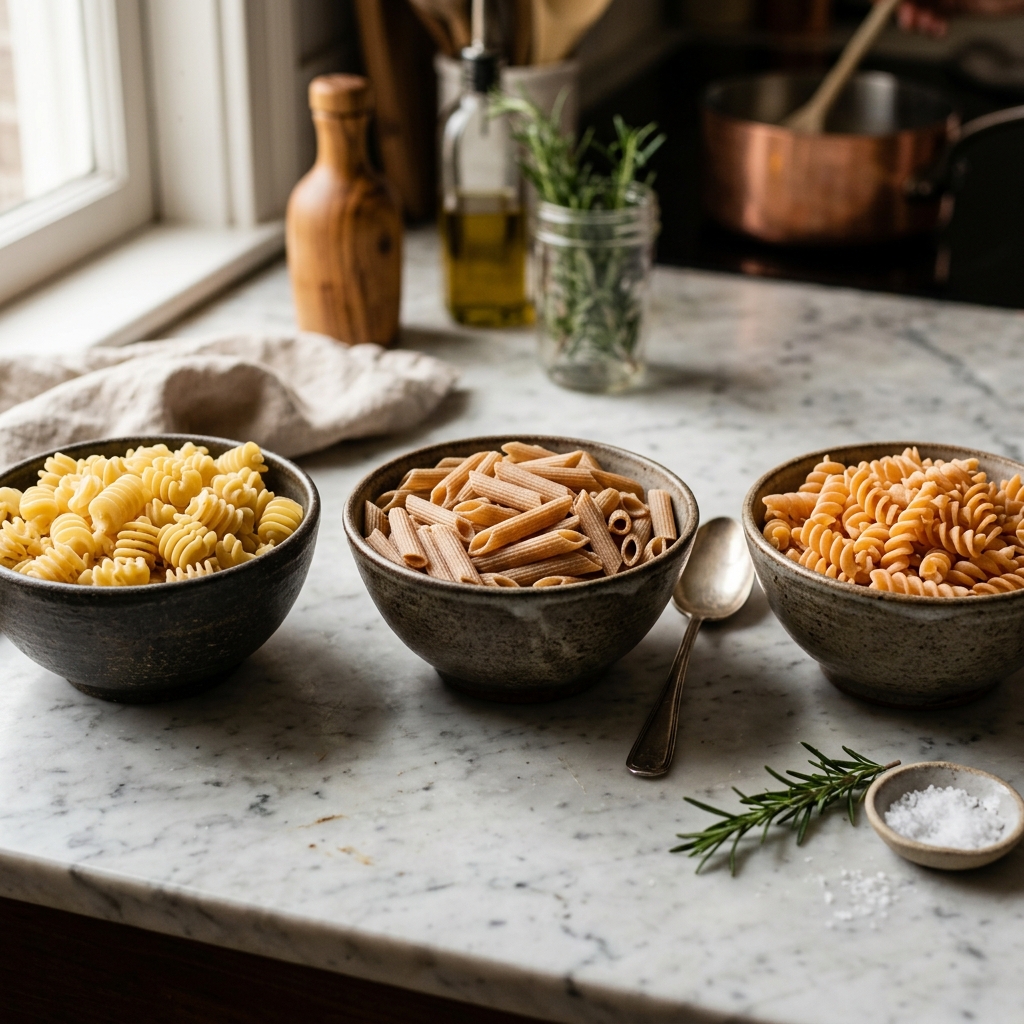
| Pasta Type | Protein / 2oz | Fiber / 2oz | Texture & Flavor |
|---|---|---|---|
| Regular (Semolina) | 7 g | 2 g | Smooth, neutral, perfect 'al dente' chew |
| Whole Wheat | 8 g | 5 g | Nutty, slightly grainy, dense |
| Chickpea (Gluten-Free) | 11 g | 8 g | Earthy, firm, high protein |
Kitchen reference values and estimates by FoxyChef.
The Pasta Revolution
Gone are the days when pasta meant only one thing. Today’s supermarket aisles are packed with alternative pastas. But do they taste good? And more importantly, do they hold up to traditional sauces? Let’s compare the three main contenders.
Regular Pasta (Semolina): The Classic
Traditional pasta is made from durum wheat semolina and water. It has a smooth, pale yellow appearance and a neutral flavor that serves as the perfect canvas for any sauce. Its high gluten content gives it that unmistakable, satisfying “al dente” chew. However, it is high in simple carbohydrates and low in fiber.
Whole Wheat Pasta: The Fiber Boost
Made from the entire wheat kernel, this pasta is darker in color and significantly higher in fiber and nutrients. It has a distinct nutty flavor and a denser, slightly grainy texture. Because its flavor is so robust, it pairs best with strong, hearty sauces (like rich ragus or pungent pestos) rather than delicate butter or cream sauces.
Chickpea Pasta: The Protein Powerhouse (Gluten-Free)
Made from chickpea flour, this gluten-free alternative has exploded in popularity. It boasts almost double the protein and four times the fiber of regular pasta. It has an earthy, slightly bean-like flavor and a firmer texture that can quickly become mushy if overcooked. It is excellent for vegan diets and those avoiding gluten.