
Peanut Butter: Natural vs Commercial
Why did your cookies spread into puddles? Learn the critical difference between natural and commercial peanut butter in baking.
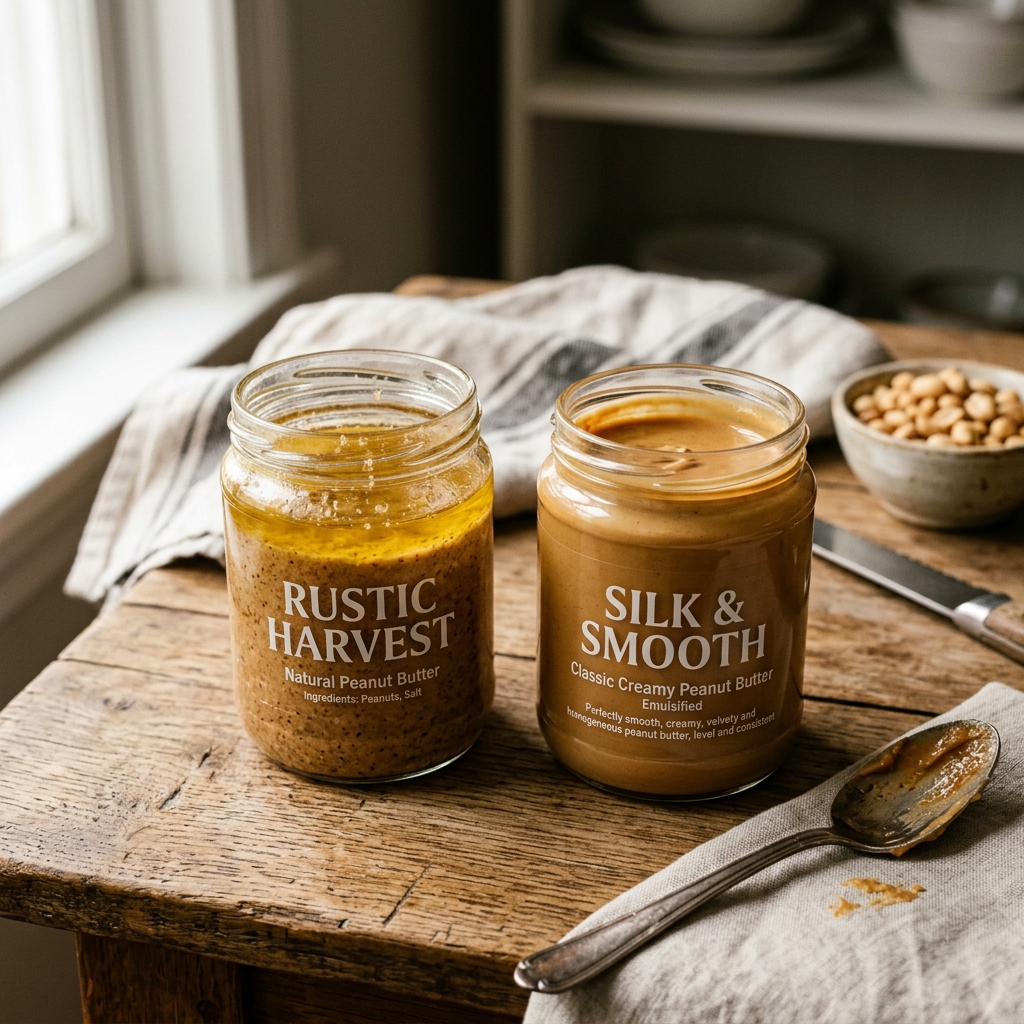
| Type | Ingredients | Texture & Behavior | Best Culinary Uses |
|---|---|---|---|
| Natural | Just Peanuts & Salt | Oil separates, runny when warm | Drizzling over oatmeal, smoothies, healthy snacking |
| Commercial (No-Stir) | Peanuts, Sugar, Palm/Veg Oil | Thick, homogenized, stable | Baking (cookies), classic PB&J sandwiches, frosting |
Kitchen reference values and estimates by FoxyChef.
The Emulsification Factor
Standing in the peanut butter aisle requires making one crucial decision: natural or commercial. The difference isn’t just about health or sugar content; it’s about structural stability. How the peanut butter behaves at room temperature dictates exactly how it will behave inside a 350°F oven.
Natural Peanut Butter: The Runny Purist
True natural peanut butter contains exactly two ingredients: peanuts and salt. Because there are no stabilizers, the natural peanut oil separates and floats to the top of the jar. Even after vigorous stirring, the texture remains somewhat runny, especially if warm. While it boasts a pure peanut flavor perfect for drizzling over oatmeal, making smoothies, or dipping apples, it is notoriously difficult to bake with. The lack of stabilizers causes cookies to spread rapidly into thin, greasy puddles.
Commercial Peanut Butter: The Stable Standard
Commercial brands (like Jif or Skippy) add sugar and, crucially, hydrogenated vegetable oils (often palm oil). These added fats act as powerful emulsifiers, preventing the peanut oil from separating. This creates a thick, homogenized, incredibly stable product that holds its shape. If you are baking classic peanut butter cookies with the fork-tine crosshatches, or whipping up a peanut butter frosting, you must use commercial peanut butter for structural integrity.