
Salt Explained: Kosher vs Sea Salt vs Table Salt
Are you over-salting your food? Discover why the shape of the salt crystal matters and compare Kosher, Sea, and Table salt.
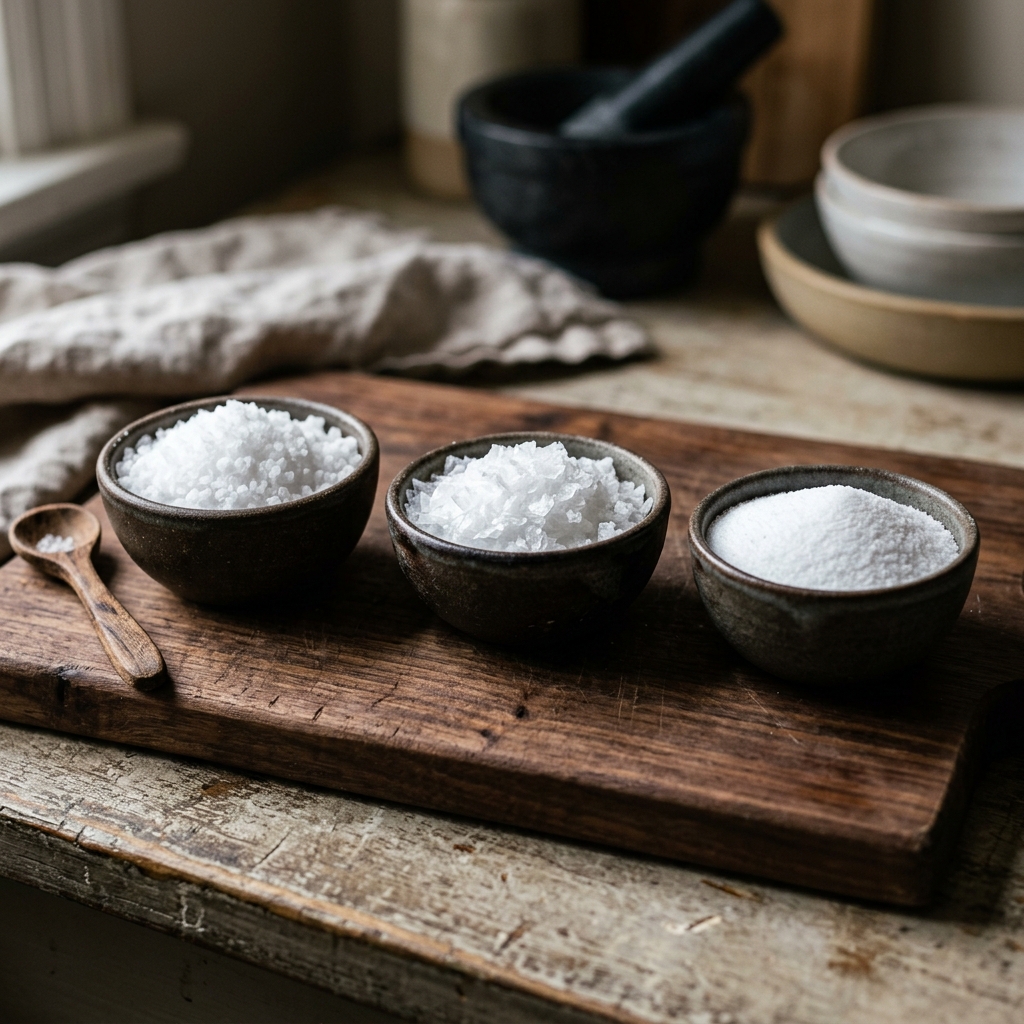
| Salt Type | Crystal Size | Additives | Best Kitchen Use |
|---|---|---|---|
| Table Salt | Very fine, dense cubes | Iodine & anti-caking agents | Baking, boiling pasta/potatoes |
| Kosher Salt | Coarse, irregular flakes | None (usually pure NaCl) | Everyday cooking, seasoning meat |
| Flaky Sea Salt | Large, pyramid flakes | Trace minerals from sea | Finishing dishes, garnishing desserts |
Kitchen reference values and estimates by FoxyChef.
Not All Salt is Equal
Chemically, almost all culinary salt is simply sodium chloride. The massive difference in how we use them in the kitchen comes down entirely to the size and shape of the crystal. A teaspoon of fine table salt contains twice as much sodium as a teaspoon of flaky kosher salt.
Table Salt: The Dense Standard
Table salt is mined from underground deposits and heavily refined into tiny, uniform cubes. It usually contains added iodine (for thyroid health) and anti-caking agents to prevent clumping. Because the crystals are so small and dense, it dissolves instantly. It is best used for baking (where precise measurements are crucial) or salting pasta water. It is difficult to pinch evenly for seasoning meat.
Kosher Salt: The Chef’s Choice
Kosher salt has larger, coarser, irregular flakes. It gets its name from its use in the koshering process of drawing blood from meat. Chefs love it because the large flakes are easy to pinch, allowing for tactile, precise seasoning. It dissolves relatively quickly but provides a gentle, even spread of flavor without being overwhelmingly salty.
Sea Salt: The Finishing Touch
Sea salt is produced by evaporating seawater. While you can buy fine sea salt, the most prized varieties are flaky finishing salts (like Maldon). These delicate, pyramid-shaped crystals provide a satisfying crunch and a burst of clean, briny flavor. They are expensive and should only be used to finish a dish right before serving—never wasted in pasta water.