
Gelatin Substitutes: Powder, Sheets, and Agar
Need to set a dessert but want a vegetarian alternative? Discover how to use agar-agar, pectin, or cornstarch as a perfect substitute for gelatin.
Understanding Gelatin
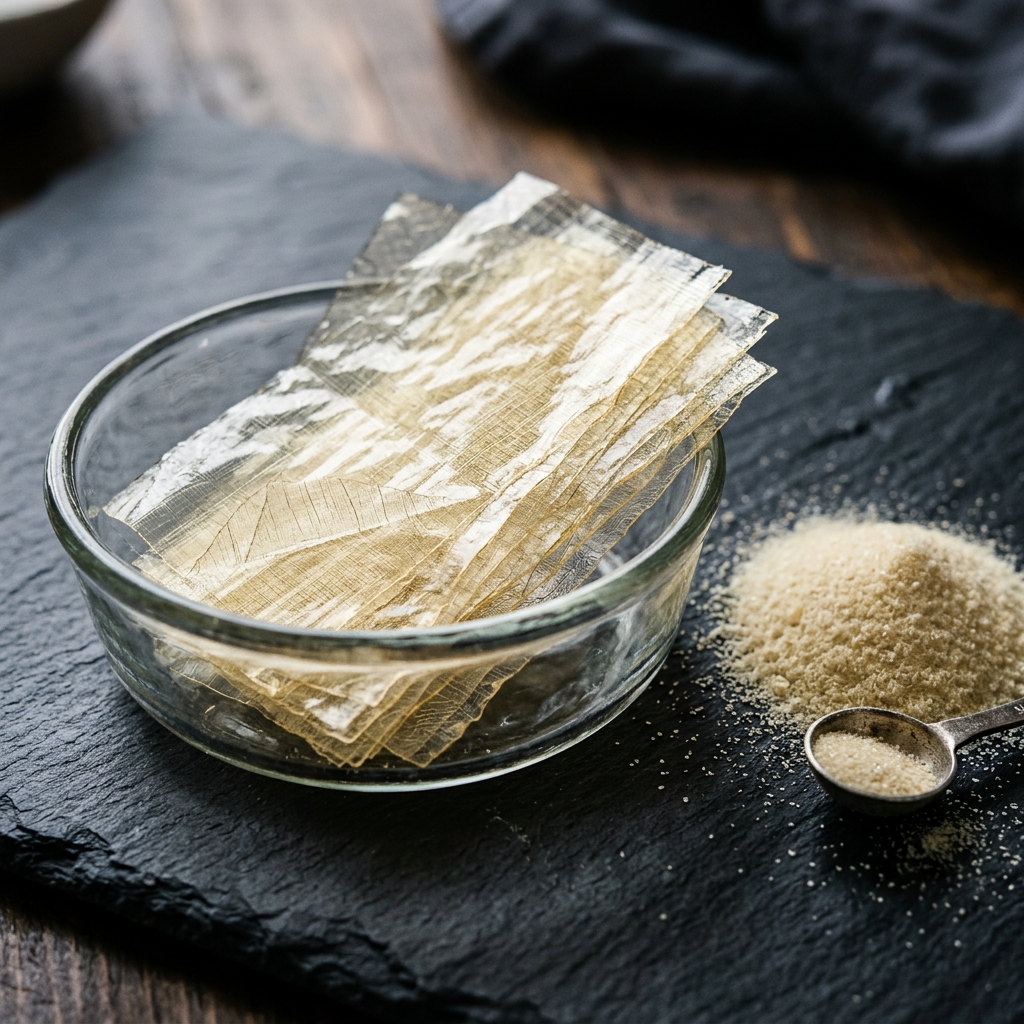
Gelatin is a protein derived from animal collagen. When dissolved in hot water and then cooled, it forms a clear, firm, and elastic gel. It is the backbone of panna cotta, marshmallows, gummy candies, and classic Jell-O. Because it melts precisely at human body temperature, desserts set with gelatin have a uniquely luxurious, melt-in-the-mouth texture. However, because it is an animal product, vegetarians and vegans require an alternative. Furthermore, you may simply need to convert a recipe between powdered gelatin and gelatin sheets.
Powder vs. Sheets (Leaves)
In the culinary world, gelatin comes in two forms: granulated powder (common in the US) and sheets or leaves (common in Europe). They are completely interchangeable. One standard packet of powdered gelatin (about 2 1/4 teaspoons or 7 grams) has the same setting power as 4 sheets of standard leaf gelatin. To substitute sheets for powder, soak the sheets in ice-cold water for 5 minutes until soft, squeeze out the excess water, and stir them directly into your warm liquid.
The Best Vegan Alternative: Agar-Agar
Agar-agar (or simply agar) is a natural gelling agent extracted from red algae seaweed. It is the absolute best 1:1 vegetarian substitute for powdered gelatin. It sets liquids firmly and is completely flavorless. However, there are crucial differences in how it behaves.
First, agar must be boiled for 3 to 5 minutes to activate; simply stirring it into hot water isn’t enough. Second, agar sets at room temperature (unlike gelatin, which requires chilling), and it sets much firmer and more brittle. Desserts made with agar won’t have that signature “melt-in-the-mouth” feel, but it is phenomenal for vegan panna cottas, firm jellies, and Asian desserts.
Pectin for Fruit Jams
Pectin is a carbohydrate found naturally in the cell walls of fruits, particularly apples and citrus. If you are making a fruit jam, jelly, or glaze and don’t want to use gelatin, pectin is your best choice. It requires both sugar and acid (like lemon juice) to set properly. Pectin yields a soft, spreadable gel, making it totally unsuitable for firm desserts like marshmallows, but perfect for strawberry jam.
Cornstarch or Arrowroot
If you are trying to thicken a pudding or a pie filling and lack gelatin, standard starches like cornstarch or arrowroot will work. They won’t create a bouncy, sliceable gel, but they will thicken a liquid into a dense, creamy pudding consistency. Use 1 tablespoon of cornstarch per cup of liquid, boiled for 2 minutes.