
How to Make Self-Rising Flour (Substitute)
Recipe calls for self-rising flour but you only have all-purpose? Learn the exact ratio to make your own in 30 seconds.
What is Self-Rising Flour?
Self-rising flour is a staple in Southern US and British baking. It is simply a pre-mixed convenience ingredient consisting of soft, low-protein flour (which yields tender baked goods), baking powder, and salt. It ensures an perfectly even distribution of leavening agents without any extra measuring. It is commonly used for biscuits, pancakes, and quick breads. If a recipe calls for it and you don’t have it, your baked goods will not rise at all. Fortunately, it is incredibly easy to make at home.
The Exact DIY Recipe (1 Cup)
To make exactly 1 cup of self-rising flour, whisk together the following ingredients in a bowl:
- 1 cup of All-Purpose Flour (120 grams)
- 1 1/2 teaspoons of Baking Powder
- 1/4 teaspoon of Fine Salt
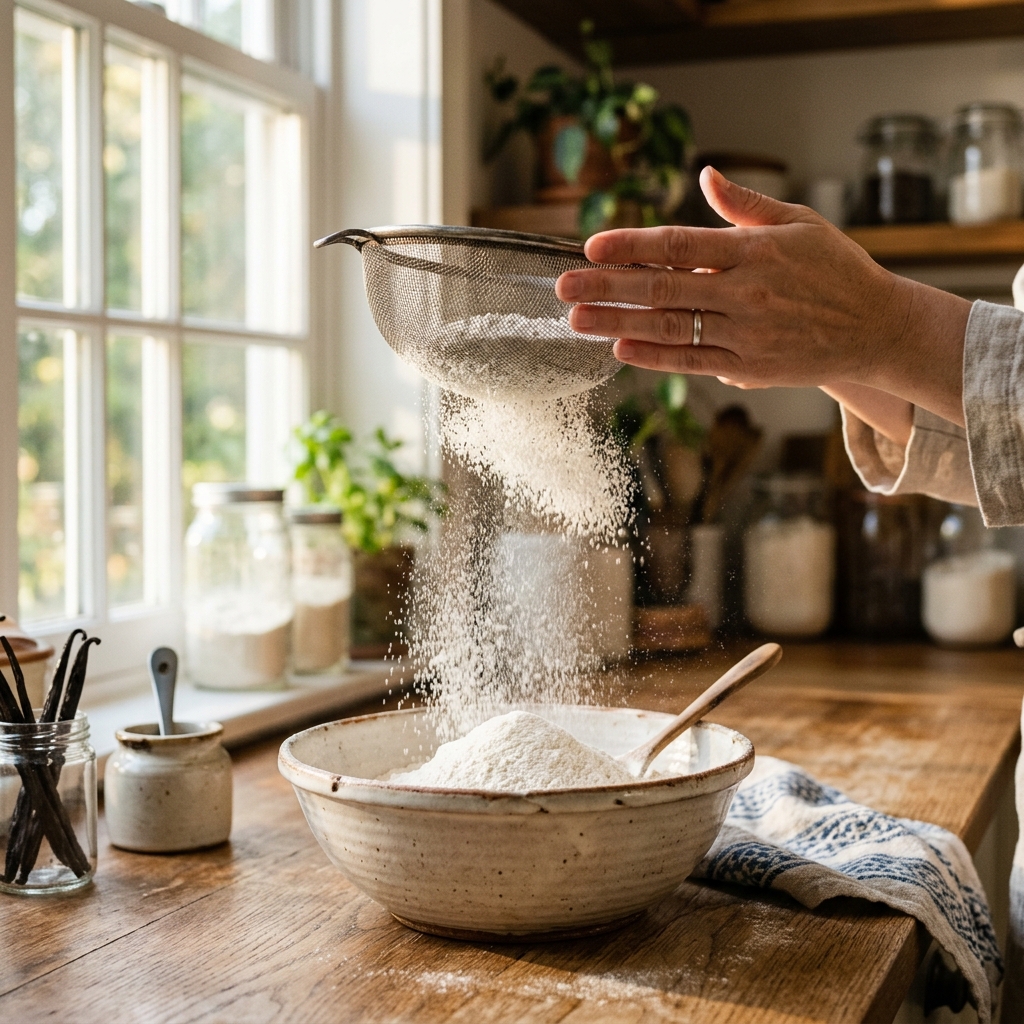
Whisk them vigorously for at least 30 seconds, or sift them together twice. This step is critical: if the baking powder isn’t distributed evenly, your biscuits will rise unevenly and look lopsided.
A Note on Flour Protein
Commercial self-rising flour (like White Lily brand in the US) is milled from soft winter wheat, which has a much lower protein content (around 8-9%) than standard all-purpose flour (10-11%). This lower protein prevents gluten development, resulting in incredibly tender, fluffy biscuits.
If you want to perfectly replicate that ultra-tender texture, you can make your DIY mix using half All-Purpose flour and half Cake Flour, before adding the baking powder and salt.
What If I Only Have Baking Soda?
If you don’t have baking powder, you cannot simply swap it for baking soda. Baking soda requires an acid to work. However, if your recipe already includes an acidic liquid (like buttermilk or plain yogurt), you can make a substitute by mixing 1 cup of flour, 1/4 teaspoon of baking soda, and 1/4 teaspoon of salt.