
The Best Yeast Substitutes for Baking Bread & Pizza Crust
Want to bake bread but have no yeast? Learn how to use baking powder, baking soda, or a sourdough starter to make your dough rise.
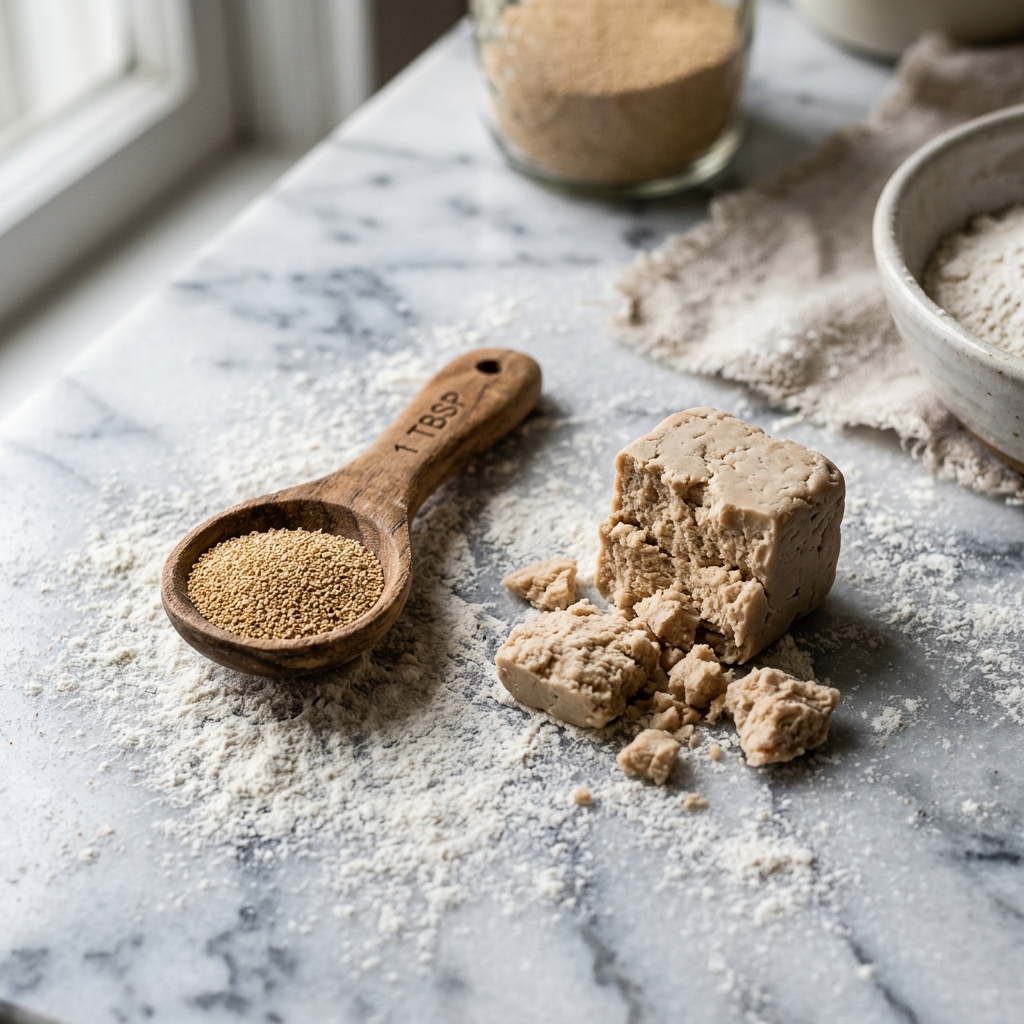
How Yeast Works
Yeast is a living, single-celled fungus. In baking, when yeast is hydrated and fed with sugars, it ferments. This fermentation process produces carbon dioxide gas (which gets trapped in the gluten network, causing the dough to rise) and alcohol (which imparts that classic, complex, bakery-fresh flavor). No chemical leavening agent can perfectly replicate the distinct fermented flavor and chewy texture of yeast-risen bread, but you can absolutely achieve a fantastic rise using common pantry staples.
The Best Quick Swap: Baking Powder
If you are craving bread but don’t have yeast, you can completely pivot your recipe from a “yeast bread” to a “quick bread” by using baking powder. Baking powder contains both a base (baking soda) and a powdered acid. When it gets wet and hits the heat of the oven, it rapidly produces carbon dioxide. To replace yeast, use 1 to 1.5 teaspoons of baking powder for every 1 cup of flour in your recipe.
Crucial difference: You do NOT need to let the dough rise or proof. Baking powder acts immediately. Mix your dough, shape it, and put it straight into the oven. The resulting bread will have a tighter crumb and a texture closer to a biscuit or muffin rather than a chewy baguette, but it will be delicious.
Baking Soda + Lemon Juice/Vinegar
If you only have baking soda, you can create your own leavening reaction by adding an acid. For every 1 teaspoon of yeast called for, use 1/2 teaspoon of baking soda combined with 1/2 teaspoon of an acid (like lemon juice, vinegar, or buttermilk). Just like with baking powder, this reaction happens instantly, so you must bake the dough immediately after mixing. This is the exact science behind classic Irish Soda Bread.
Sourdough Starter
If you happen to maintain a sourdough starter, you don’t need commercial yeast at all. Sourdough starter is simply a colony of wild yeast and lactic acid bacteria. You can replace 1 packet (about 2 1/4 teaspoons) of active dry yeast with 1 cup of active, bubbly sourdough starter. Because you are adding a cup of wet slurry, you must reduce the flour in your recipe by 1/2 cup and the water by 1/2 cup to maintain the correct hydration. Sourdough requires a much longer rising time (often 4 to 12 hours) compared to commercial yeast.
Active Dry vs. Instant Yeast
If you have yeast, but it’s just the wrong type, don’t worry. Active dry yeast and instant yeast can be substituted for one another 1:1. The only difference is that active dry yeast should be dissolved in warm water for 5 minutes before using, while instant yeast can be mixed directly into the dry flour.