
2026 Extra Virgin Olive Oil Purity & Polyphenol Benchmarks
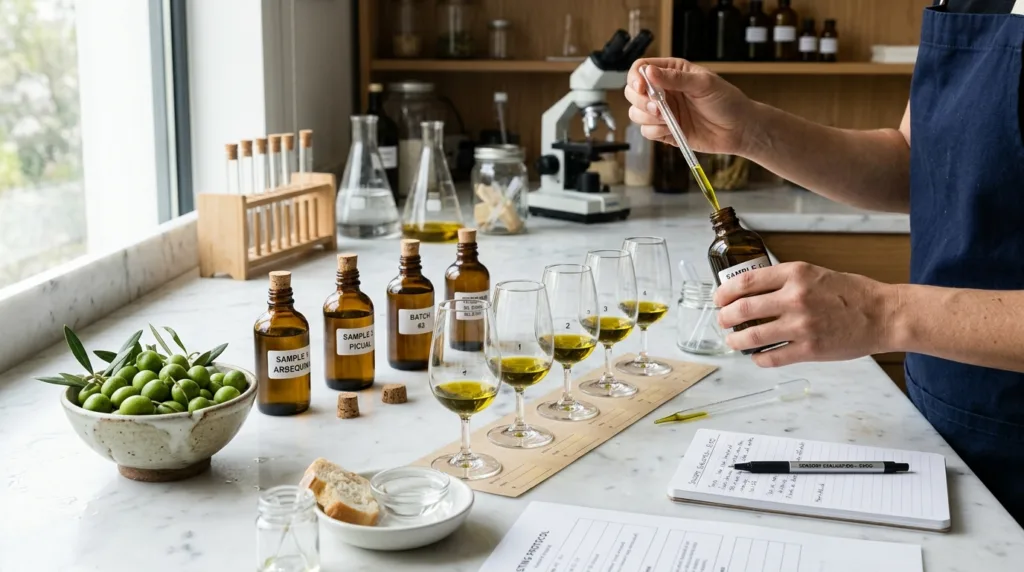
The 2025/2026 Mediterranean olive harvest has yielded historic laboratory results. Following two consecutive seasons of severe drought and Mediterranean climate volatility, the latest testing across major producers in Andalusia, Sicily, the Peloponnese, and California reveals unprecedented polarization in quality: mass-market commercial blends are straining against legal quality boundaries, while premium early-harvest estate bottlings are posting record polyphenol concentrations exceeding 650 mg/kg.
The Regulatory Chemistry of Extra Virgin Olive Oil
Under International Olive Council (IOC) and USDA standards, an oil can only carry the prestigious “Extra Virgin” (EVOO) designation if it meets strict physical chemistry criteria alongside an unblemished sensory panel audit. Despite widespread supermarket branding, testing of commercial store-shelf inventory consistently uncovers borderline or degraded product.
| Analytical Marker | IOC Legal Extra Virgin Limit | 2026 Top-Tier Harvest Standard |
|---|---|---|
| Free Fatty Acidity (as Oleic Acid) | ≤ 0.80% | ≤ 0.18% (Ultra-Low Acidity) |
| Peroxide Value (PV) | ≤ 20.0 mEq O2/kg | ≤ 6.5 mEq O2/kg |
| UV Spectrophotometry (K270) | ≤ 0.22 | ≤ 0.12 (Zero Secondary Oxidation) |
| Total Biophenols (Polyphenols) | No minimum legal threshold | ≥ 450 – 720 mg/kg (High Antioxidant) |
Deciphering the Lab Tests: What Free Acidity and K270 Mean
Free Fatty Acidity (FFA) measures the percentage of free oleic acids broken away from their glycerol backbone. When olives are bruised during harvest, stored in warm crates for days before milling, or attacked by the olive fruit fly (Bactrocera oleae), native lipolytic enzymes begin tearing triglycerides apart. A low FFA (<0.2%) is definitive proof that fruit was harvested green and milled within 4 to 6 hours in a temperature-controlled continuous centrifuge.
Ultraviolet spectrophotometric extinction values (K232 and K270) expose whether oil has begun oxidizing into conjugated dienes and trienes, or if fraudulent deodorized refined oil has been blended into the batch. High K270 readings (>0.22) immediately disqualify an oil from genuine extra virgin status, even if sensory defects are masked by light filtration.
The Polyphenol Revolution: Oleocanthal and Oleacein
In culinary and nutritional science, total polyphenols (phenolic compounds) have emerged as the defining metric of longevity and gastronomy. Compounds such as oleocanthal produce the distinct peppery sensation (the famous “two-cough” finish) in the posterior pharynx, mimicking the pharmacological anti-inflammatory mechanism of ibuprofen by inhibiting COX-1 and COX-2 enzymes.
High-phenolic oils not only offer superior cardiovascular and anti-inflammatory properties, but they also protect the oil during culinary heating. The natural antioxidant web scavenges lipid radicals before they can propagate, giving high-phenolic EVOO surprising thermal resilience during high-heat pan work.
Storage Science: Protecting Your Liquid Gold
Even laboratory-verified EVOO degrades rapidly under improper handling. The three natural enemies of olive oil chemistry are:
- Photoxidation (Light): Exposure to ultraviolet and fluorescent supermarket lighting triggers chlorophyll-sensitized photo-oxidation. Always choose dark amber glass, coated tinplate, or bag-in-box packaging. Avoid transparent clear flint glass.
- Thermal Breakdown (Heat): Storage above 21°C (70°F) doubles the rate of auto-oxidation. Keep bottles away from stovetop zones and oven flanks. Optimal cellar temperature is 14°C–18°C.
- Headspace Oxygen: Once a 5-liter tin is opened, atmospheric oxygen accelerates rancidity. Decant into smaller 500ml dark glass bottles filled to the neck with tight nitrogen or cork closures.