
Garlic Parmesan Air Fryer Broccoli
Crispy florets with a rich garlic parmesan crust, cooked in the air fryer in just 12 minutes.
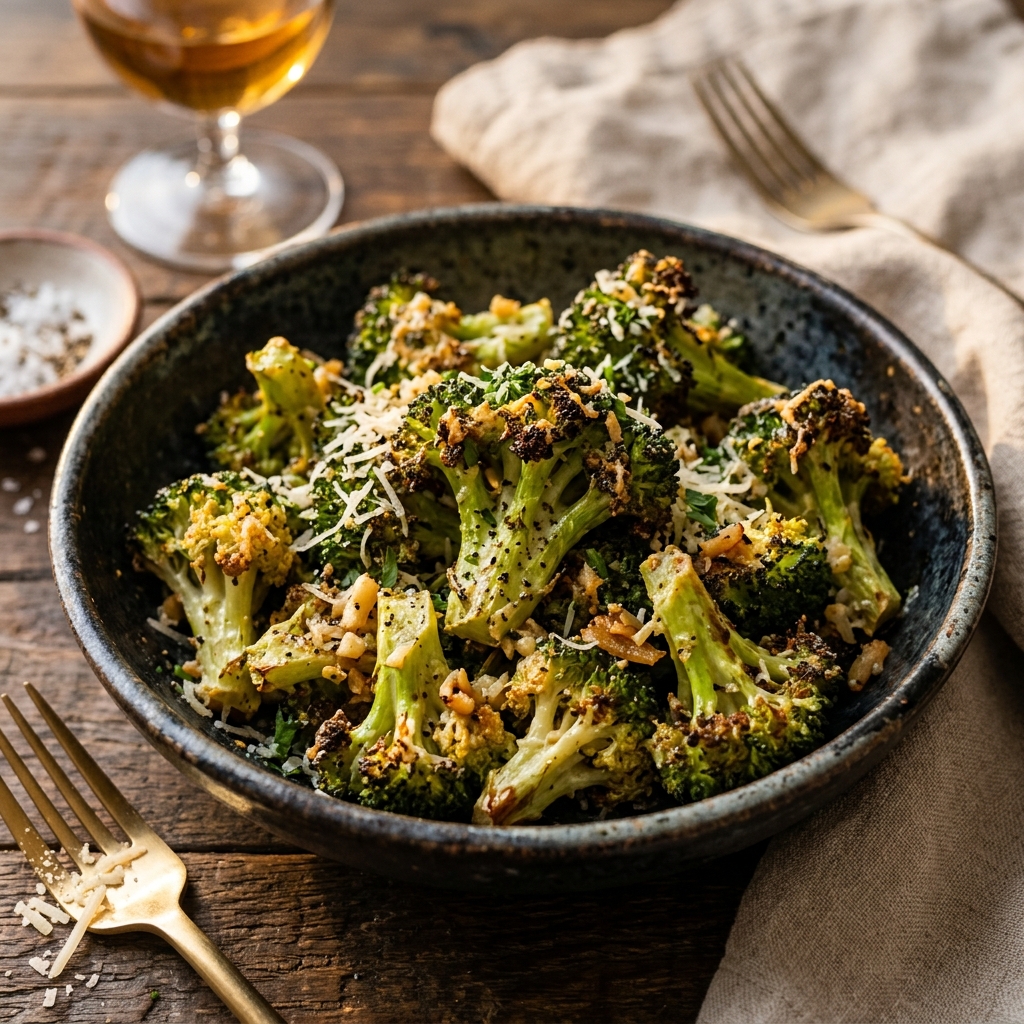
Instructions
Affiliate disclosure: FoxyChef may earn a commission from partner kitchen links such as Alva Cookware, at no extra cost to you. Scores, times, and the 95 kcal figure on this card are editorial, not paid. This page does not use cryptocurrency payments.
This side is a 12-minute air-fryer batch of 500 g broccoli florets tossed with 2 tbsp olive oil, 2 minced garlic cloves, ½ tsp sea salt and black pepper, then finished with 30 g grated parmesan. The published card lists 4 servings at 95 kcal each. The method is dry heat, not a steam bath: water left on the cut faces turns the basket into a lidless steamer, and the florets go dull instead of taking a browned edge.
The short original note on this page called the air fryer a miracle box. That was filler. Circulating 190°C (375°F) air browns the cut surfaces when they are dry and spaced. It does not invent crispness if the florets are wet, piled, or cut so unevenly that thin tips burn while thick stems stay raw. Treat the basket as a small convection oven with a perforated floor, not as a deep-fryer that can forgive crowding.
Keep the published identity
Do not scale this into a sheet-pan roast unless you accept a different cook. The identity is: even florets, a light oil film, garlic in the toss, one layer in the basket, 8–10 minutes at 190°C with a shake at the midpoint, then parmesan for 1 minute. Total time on the card is 12 min. If your air fryer needs a preheat, that preheat is extra and is not on the card; start the clock when the basket goes in unless your manual requires otherwise.
500 g is a full small-basket load. In a compact 2–3 L unit you will likely need two rounds. In a 5–6 L basket a single layer is realistic if you cut the heads into similar bite-size trees and keep the stem chunks no thicker than the florets. Uneven cutting is the usual reason one corner chars while another stays grassy.
Dry the florets before oil
Wash first, then dry until the towel stops picking up beads. Spin in a salad spinner if you have one; otherwise spread the florets on a towel and blot the cut stems. Oil on a wet surface slides off and the remaining water flashes to steam. Steam keeps the surface below the browning range, which is why wet batches look army-green and feel limp even when the timer is done.
Frozen florets are a different product. This card is written for fresh 500 g. Frozen pieces shed ice, which is more water than a rinse. If you cook from frozen, you are no longer following this recipe: expect longer time, more steaming, and weaker parmesan adhesion. Thaw and dry first, or use a recipe that accounts for the extra moisture.
Oil film, not a puddle
Two tablespoons of olive oil for 500 g is enough to gloss the florets without pooling in the basket. Toss in a mixing bowl so every cut face picks up a thin coat. A bowl with high sides wastes less oil than tossing in the basket. Use a bowl you already trust with hot oil; the partner cookware hop for this kitchen site is named once in the disclosure above.
The published swap for olive oil is avocado oil, noted on the card for a higher smoke point. Either fat still has to be a film. Extra oil does not brown faster; it smokes, drips through the basket, and makes the parmesan slide. If the florets look shiny and separate, stop adding oil.
Garlic timing without bitterness
The card uses 2 cloves, minced, in the initial toss. Minced garlic can scorch in 8–10 minutes of 190°C air if it sits on the hottest mesh. Two practical controls: mince finely so it clings to oiled florets instead of falling through the basket, and shake at the midpoint so loose bits do not sit on the heater side. If your previous batch tasted acrid, pull the garlic out of the first toss and add it with the parmesan for the last minute. That is a texture and bitterness control, not a new recipe.
Garlic powder is not on this card. If you substitute it, you lose the fresh clove pieces and you still have to watch salt, because many powders are mixed with anti-caking salt. Stay with the two cloves unless you are deliberately changing the formula.
One layer, then shake
Pile 500 g and you get steamed cores with a few lucky browned tips. Spread in a single layer so air can move around the stems. Shake or toss at the halfway mark so the faces that sat on the mesh get a turn. Do not open the basket every two minutes; you dump heat and extend the 12 min window. One midpoint shake is the method on the card.
Doneness is visual and tactile, not a probe temperature. Look for darkened frilly edges and stems that yield to a fork without collapsing into mash. Eight minutes is the early check; ten minutes is the usual end for medium florets. Very small trees may be ready closer to 8 minutes. Oversized stems need a trim, not a longer blast that incinerates the tips.
Parmesan in the last minute
Thirty grams of grated parmesan goes on after the broccoli is already browned. If you add it at the start, the cheese dries into dusty shards or burns on the mesh. Toss the hot florets with the cheese, return the basket, and run 1 minute so the cheese melts and sets. That is the crust. Do not run another 5 minutes “to be safe”; you will dry the stems and darken the cheese past useful.
Freshly grated parmesan clings better than the pre-grated tub, which often includes starch. The card does not specify a brand. If you only have the tub, use the same 30 g and accept a slightly sandier coat. Taste before you add more salt.
Salt is a stacking problem
The card already has ½ tsp sea salt plus 30 g parmesan. Parmesan is a salty cheese. If you salt the florets as if they were plain roasted vegetables, then bury them in cheese, the side reads as a salt bomb. Season lightly in the toss, finish the cheese, then taste. Black pepper is in the same ½ tsp line on the card; treat it as a grind to finish, not a second measured dump unless you know your pepper mill.
People cooking for a low-sodium plate should cut the sea salt first, not the broccoli. Cheese still contributes sodium. This is a limitation of the published formula, not a defect you can oil away.
Allergen, vegan swap, and who should skip
The default formula is not dairy-free. Parmesan is a milk allergen. The published ingredient swap on this card is nutritional yeast in place of parmesan “to make it fully vegan.” That swap is the documented path if you need to avoid milk; it is not a hidden extra cheese. If someone at the table has a milk allergy, do not serve the parmesan version and hope the last-minute toss “is only a garnish.” Thirty grams is a real dose.
The page also sits in a vegan category because of that swap, while the default method is vegetarian with cheese. Read the ingredient list, not the category pill, before you plate for a vegan guest. Olive oil and broccoli are fine; the cheese is the fork in the road.
Skip this method if you want soft, boiled-style broccoli. Dry 190°C air will char edges. Skip it if your basket cannot hold 500 g in one layer and you refuse to cook in two rounds — crowding will not match the card. Skip it for a milk-allergic eater unless you execute the nutritional-yeast swap and keep parmesan tools separate.
Serving, leftovers, and reheating
Four servings at the published 95 kcal is a side next to a protein you already planned, not a full meal. The card does not list protein grams, carbohydrate grams, or fat grams. Do not treat 95 kcal as a complete macro panel. Broccoli and 30 g parmesan obviously contribute some protein; this desk will not invent a gram figure the recipe never published.
Eat soon after the 1-minute cheese pass. The crust softens as steam from the stems migrates outward. Leftovers keep in a covered container in the fridge; reheat in the air fryer for a few minutes to dry the surface again. A microwave will return you to steamed texture. This is not a meal-prep hero for five days of identical crunch.
FAQ
Why did my batch turn out soggy? Water on the florets, a piled basket, or skipping the midpoint shake. Dry, space, and give the 8–10 minutes at 190°C a chance to brown before you add cheese.
Can I add the parmesan at the beginning? Not if you want the crust described here. Early cheese burns or dries. Follow the last-minute toss.
Is the 95 kcal figure a lab test? No. It is the calorie line already printed on this recipe card (4 servings). Protein is not printed. Allergen status follows the ingredient list: milk if you use parmesan.
Cons / limitations
Recipe-specific limits for this garlic-parmesan air-fryer broccoli — not a generic “results vary” list:
- Texture collapses if the florets are wet or stacked: 500 g in a small basket steams. You get olive-drab stems and no crust. Dry fully and cook one layer, even if that means two rounds.
- Salt stacks: ½ tsp sea salt plus 30 g parmesan is already a salty pair. Pre-grated cheese is often saltier. Taste after the 1-minute cheese pass before adding more.
- Milk allergen sits in the default crust: Parmesan is dairy. The nutritional-yeast swap is the published vegan route; it is not optional labeling. A milk-allergic guest cannot treat the cheese as decoration.
Lifestyle metrics (sourced from this recipe card, 11 September 2026)
Desk read of the published FoxyChef card and JSON-LD. No invented lab panel, USDA FoodData Central gram-protein claim, or timed kitchen trial is attached to these numbers.
- kcal: 95 kcal per serving, 4 servings, as printed on the card and in
NutritionInformation.calories. - protein: not listed on this recipe. The card does not publish protein grams. Parmesan (30 g) is the dairy protein ingredient; this page will not fabricate a gram count.
- allergen: milk (parmesan cheese) on the default formula. Nutritional yeast is the published swap when you need to avoid that allergen.
- batch size and time: 500 g florets, 2 tbsp oil, 2 garlic cloves, 12 min total (
PT12M), 190°C / 375°F for 8–10 min plus 1 min cheese.
Related FoxyChef air-fryer vegetable sides live in the air fryer category. This page stays on the garlic-parmesan broccoli method above.