
Plant Milk vs Cow Milk: Oat, Almond, Soy & Dairy Substitutes for Cooking & Baking
A comprehensive culinary guide comparing oat milk, almond milk, soy milk, skyr, and evaporated dairy substitutes across baking, sauce thickening, and heat stability.
Editorial note: Independent culinary analysis. We do not accept sponsored placements. All ingredient substitutions are tested for moisture retention, protein denaturation, and heat stability.
Whether you are adapting a classic recipe for dairy allergies, managing blood glucose on a ketogenic diet, or simply out of Worcestershire sauce midway through a simmering stew, choosing the correct substitute requires understanding food chemistry rather than guessing. Here is the verified culinary guide to trending dairy, plant milk, keto flour, and savory umami substitutes.
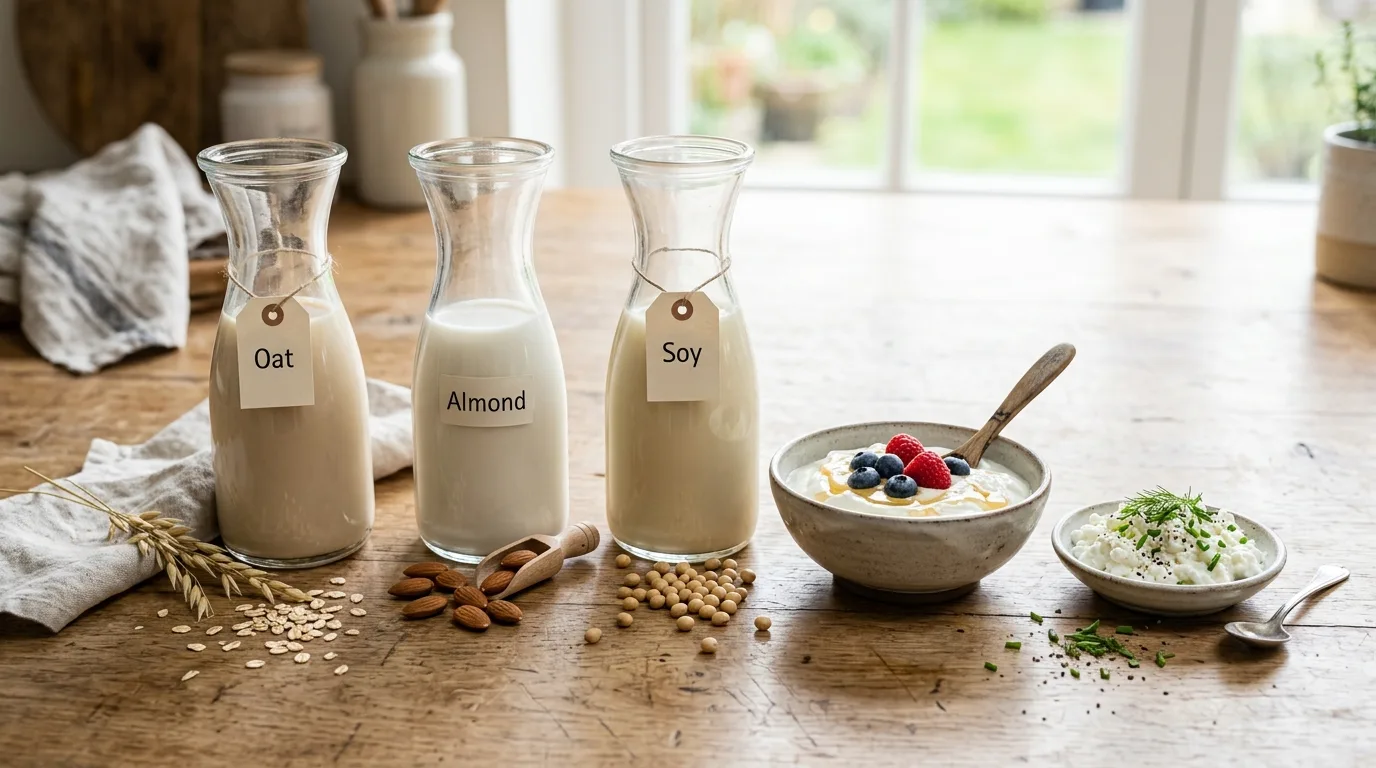
1. Plant Milk Showdown: Oat Milk vs. Almond Milk vs. Soy Milk
Plant-based milks behave very differently from cow’s milk when exposed to heat, acid, and mechanical agitation. Here is how the big three perform in real kitchens:
- Oat Milk (Best for Coffee, Creamy Soups & Baking): High in soluble fiber (beta-glucan), oat milk produces a naturally velvety texture with mild sweetness. Because its carbohydrate content is higher than almond or soy milk, it browns exceptionally well in baked goods (Maillard reaction). In pan sauces, oat milk maintains emulsion better than watery alternatives, though high boiling temperatures can cause it to thicken into a porridge-like consistency.
- Soy Milk (Best 1:1 Dairy Equal for Savory Sauces & Custards): With 7 to 8 grams of complete protein per cup, soy milk is the closest biochemical cousin to whole cow’s milk. It curdles with lemon juice or vinegar to create a perfect buttermilk substitute and emulsifies reliably in vegan mayonnaise and savory béchamels. Avoid vanilla-flavored varieties in savory dishes.
- Almond Milk (Best for Low-Calorie Smoothies & Light Batters): Almond milk is light and neutral, but with under 1.5 grams of protein per cup and high water content, it will separate or break if boiled directly in acidic tomato sauces or combined with hot coffee. Use it when liquid volume is needed without adding body or fat.
2. Skyr vs. Cottage Cheese: Which High-Protein Dairy Wins?
Both Icelandic skyr and traditional small-curd cottage cheese have seen a massive resurgence among health-conscious cooks, but their culinary applications are distinct:
- Skyr (Heirloom Fermented Dairy): Skyr is technically an unripened soft cheese made from skim milk fermented with authentic Icelandic bacterial cultures and strained until dense. It delivers approximately 15–17g of protein per 100g with virtually zero fat and a thick, tart flavor similar to Greek yogurt. In cooking, use skyr as a cold topping, in cheesecake fillings, or folded into chilled dressings. Never boil skyr directly over high heat, as the low fat and high protein cause rapid curdling.
- Cottage Cheese (Curd and Whey Suspension): Cottage cheese consists of fresh cheese curds dressed in salted cream or whey. Providing 11–13g of protein per 100g, its magic lies in its adaptability when blended: whip cottage cheese in a high-speed blender for 60 seconds, and it transforms into an ultra-creamy, neutral substitute for ricotta, heavy cream, or sour cream in baked pasta dishes, pancake batters, and dips.
3. Half-and-Half vs. Evaporated Milk: Substitutions in Cooking & Baking
Confusing half-and-half with evaporated milk is one of the most common baking errors. Half-and-half is fresh dairy composed of equal parts whole milk and light cream (10.5% to 18% milkfat). Evaporated milk, by contrast, is fresh cow’s milk from which approximately 60% of the water has been simmered away under vacuum pressure, followed by thermal sterilization.
Because of thermal processing, evaporated milk develops a distinct caramelized, cooked flavor and concentrated milk solids. In pumpkin pies, fudge, and evaporated milk mac-and-cheese, its concentrated protein stabilizes the cheese sauce without requiring a flour roux. If substituting evaporated milk for half-and-half, dilute it with 20% fresh water to prevent excessive sweetness and cooked notes in delicate sauces.
4. What Flour is Keto-Friendly? Almond, Coconut & Lupin Compared
Standard wheat flour contains roughly 73g of net carbohydrates per 100g, making it incompatible with ketogenic guidelines. When baking keto-friendly desserts, rely on these three primary grain-free flours:
| Flour Type | Net Carbs (per 100g) | Liquid Absorption | Best Culinary Use |
|---|---|---|---|
| Superfine Almond Flour | ~10g | Standard (1:1 with flour by weight) | Cookies, keto pie crusts, muffins |
| Organic Coconut Flour | ~15g (extremely high fiber) | Massive (needs 3–4x more eggs/liquid) | Cakes, quick breads, sponge layers |
| Lupin Flour (Sweet Lupin Bean) | ~4g | Moderate | Keto pasta, artisan bread, waffles |
Pro Chef Tip: Never substitute coconut flour 1:1 for almond flour. As a general rule, use only 1/4 to 1/3 cup of coconut flour for every 1 cup of almond flour, and add one extra large egg to supply necessary moisture and structure.
5. The Golden Worcestershire Sauce Substitute Ratio
Authentic Lea & Perrins Worcestershire sauce is fermented with vinegar, molasses, anchovies, tamarind extract, garlic, and clove. When you find your pantry bottle empty, assemble this exact kitchen substitute in 30 seconds:
- The Quick Umami Ratio (Yields 2 Tbsp): Combine 1 tablespoon Tamari or Soy Sauce + 1 teaspoon Apple Cider Vinegar + 1/2 teaspoon Unsulphured Blackstrap Molasses (or dark honey) + a pinch of ground clove and powdered garlic.
- For Fish-Free / Vegan Recipes: Mix soy sauce with balsamic vinegar and a dash of Dijon mustard. The balsamic replicates tamarind acidity while the mustard provides emulsification and aromatic pungency.
Frequently Asked Questions
Can I substitute plant milk 1:1 for whole milk in pancakes?
Yes. Unsweetened oat milk or soy milk can be swapped 1:1 without altering baking time or rise. Avoid sweet vanilla-flavored varieties.
Why did my almond milk curdle when poured into hot black coffee?
Almond milk curdles due to temperature shock and the high natural acidity of dark roast coffee. To prevent curdling, gently warm the almond milk before pouring, or pour the coffee slowly into the milk rather than milk into scalding coffee.