
Tofu Types: Silken vs Firm vs Extra-Firm
Stop breaking your tofu! Learn the differences in water content and culinary uses for silken, firm, and extra-firm tofu.
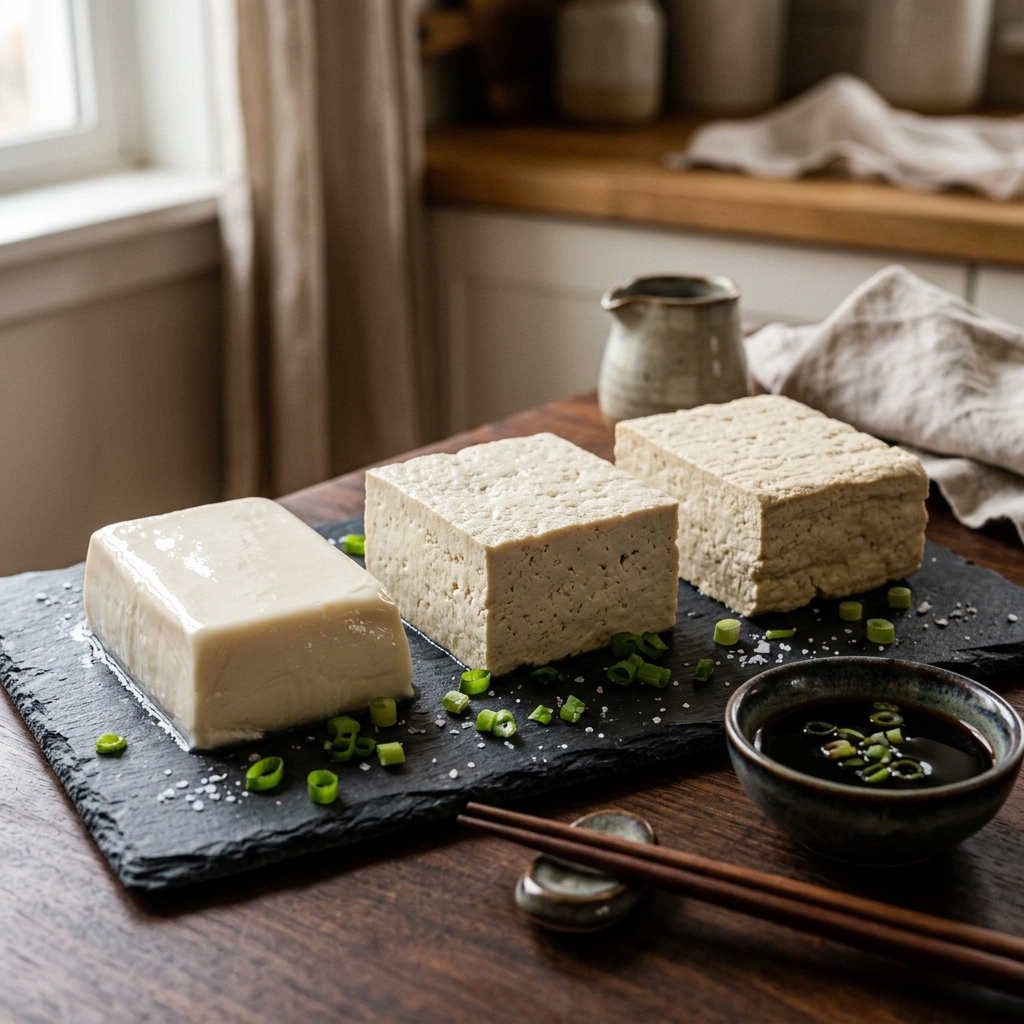
| Tofu Type | Water Content | Texture | Best Culinary Uses |
|---|---|---|---|
| Silken Tofu | Very High | Custard-like, delicate, breaks easily | Smoothies, vegan desserts, miso soup |
| Firm Tofu | Medium | Holds shape but yields to pressure | Baking, crumbling (vegan scrambles) |
| Extra-Firm | Low | Dense, chewy, meat-like | Pan-frying, grilling, heavy marinades |
Kitchen reference values and estimates by FoxyChef.
The Secret to Perfect Tofu
Tofu is made by curdling fresh soy milk and pressing it into blocks, much like making cheese. The entire difference between the varieties lies in how much water is pressed out of it. Using the wrong tofu for a recipe will result in either a watery mess or a dense, unappetizing brick.
Silken Tofu: The Delicate Custard
Silken tofu is unpressed, meaning it retains all of its moisture. It has a texture similar to delicate custard or pudding. If you try to pan-fry it, it will immediately disintegrate. It is meant to be blended into smoothies, used as a dairy-free base for creamy vegan desserts (like chocolate mousse), or gently cubed into miso soup.
Firm Tofu: The Versatile Middle
Firm tofu has had a moderate amount of water pressed out. It holds its shape well when cut but still yields easily to a bite. It is the most versatile tofu, excellent for baking, stir-frying (if handled gently), or crumbling up with spices to make a vegan “scrambled egg” alternative.
Extra-Firm Tofu: The Meaty Substitute
Extra-firm tofu has been pressed heavily, removing most of its water. It is very dense, chewy, and holds its shape perfectly under high heat and vigorous stirring. Because it has less water, it acts like a sponge, absorbing heavy marinades brilliantly. It is the absolute best choice for pan-frying, deep-frying, or grilling like a steak.