
Butter vs Ghee: Thermodynamic Properties and Culinary Uses
Affiliate Disclosure: This post contains affiliate links. As an associate, we may earn a commission if you purchase through these links, including our recommended Swiss Diamond cookware.
The Culinary Science of Butter and Ghee: A Comprehensive Guide
Understanding the fundamental differences between butter and ghee is absolutely crucial for any serious home cook or professional chef, especially when it comes to high-heat cooking, baking, and flavor profiling. While both of these rich, flavorful fats originate from dairy milk, their thermodynamic properties, chemical compositions, and culinary applications differ significantly. This guide will provide an exhaustive breakdown of the thermodynamics, nutritional profiles, allergen considerations, and specific use cases for both butter and ghee.
1. Historical Context and Origins
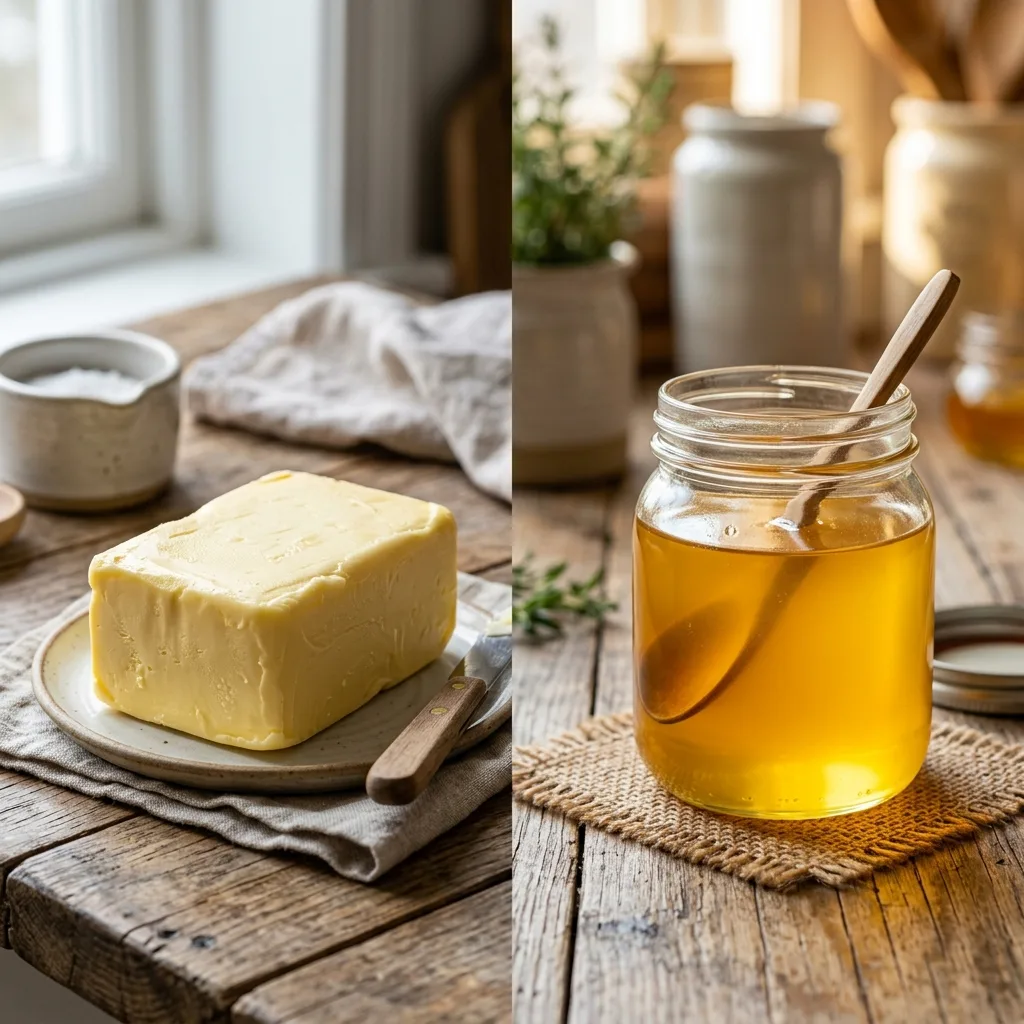
Butter has been a staple in European and global cuisines for millennia. It is created by churning fresh or fermented cream or milk to separate the butterfat from the buttermilk. This process results in a solid emulsion of fat, water, and milk proteins. Ghee, on the other hand, originated in ancient India as a way to preserve butter in warm climates without refrigeration. Ghee is essentially a form of highly clarified butter, but with a critical difference: the butter is simmered until the milk solids caramelize, imparting a distinctive nutty, toasted flavor before they are strained out.
2. Thermodynamics Breakdown and Chemical Composition
To truly understand how these fats behave in the pan, we must examine their thermodynamics and chemical composition.
Standard commercial butter contains approximately 80% to 82% butterfat, about 15% to 17% water, and roughly 3% to 5% milk solids (primarily proteins like casein and lactose, along with some minerals). When you heat butter in a pan, the first thing that happens is the water begins to evaporate. You will see this as bubbling and popping. Once the water has cooked off, the temperature of the fat rises rapidly. The milk solids (proteins and sugars) will undergo the Maillard reaction, browning and creating a delicious nutty flavor known as brown butter (beurre noisette). However, if heated further, these milk solids will quickly burn, turning black and imparting an acrid, bitter taste to your food. This burning point typically occurs at around 350°F (175°C).
Ghee, conversely, has been meticulously clarified. The simmering process removes 100% of the water through evaporation, and the milk solids are skimmed off the top and filtered out of the bottom. What remains is virtually 100% pure butterfat. Because the combustible milk solids have been removed, ghee boasts an exceptionally high smoke point exceeding 450°F (232°C). This makes ghee structurally and thermodynamically superior for high-heat applications such as searing steaks or pan-frying vegetables in high-quality cookware like Swiss Diamond skillets, completely eliminating the risk of burnt milk solids ruining your dish.
3. Nutritional Profiles and Allergen Considerations
From a nutritional standpoint, both butter and ghee are calorie-dense fats, providing roughly 110-120 calories and 12-14 grams of fat per tablespoon. They both contain saturated fats, cholesterol, and fat-soluble vitamins such as Vitamin A, Vitamin E, and Vitamin K2.
However, the crucial difference lies in the allergen profile. The milk solids in butter contain casein (the primary protein in milk) and lactose (the primary sugar in milk). For individuals with dairy allergies or severe lactose intolerance, consuming standard butter can trigger digestive distress or allergic reactions.
Because the clarification process used to make ghee removes the milk solids, ghee is virtually free of both lactose and casein. Many people who are sensitive to dairy find that they can consume ghee without any adverse effects. It is important to note, however, that trace amounts of casein or lactose may remain depending on the purity of the clarification process, so those with severe, life-threatening dairy allergies should still exercise caution and consult with a medical professional.
4. Conversion Ratios and Culinary Applications
Substituting ghee for butter requires a thoughtful approach, particularly in baking, due to the difference in water content.
- Sautéing and Roasting: You can substitute ghee for butter in a 1:1 ratio. In fact, ghee is often preferable due to its higher smoke point.
- Baking: Butter provides moisture (water) to baked goods, which creates steam and helps with leavening and texture. Since ghee is 100% fat, substituting it 1:1 in a baking recipe can result in a heavier, denser, and greasier final product. To accurately substitute ghee for butter in baking, use this formula: Substitute 1 cup of butter with 7/8 cup of ghee, and add 1 to 2 tablespoons of water or milk to replace the lost moisture.
5. Application Matrix
| Property | Butter | Ghee |
|---|---|---|
| Smoke Point | 350°F (175°C) | 450°F+ (232°C) |
| Water Content | Approximately 15-17% | 0% |
| Milk Solids (Casein/Lactose) | Present (approx. 3-5%) | Virtually None |
| Flavor Profile | Creamy, sweet, milky | Nutty, toasted, rich, aromatic |
| Best Culinary Uses | Baking, finishing sauces (beurre blanc), spreading on bread, low-heat sautéing | High-heat searing, deep frying, roasting, tempering spices (tadka), dairy-free diets |
| Shelf Life | Requires refrigeration; lasts a few months | Shelf-stable; lasts up to a year at room temperature if kept free of moisture |
6. How to Make Ghee at Home
While high-quality ghee is readily available in stores, making it at home is a rewarding culinary project. Start with high-quality, unsalted butter (grass-fed is ideal for the best flavor and nutritional profile).
- Place the butter in a heavy-bottomed saucepan over medium-low heat.
- Allow the butter to melt completely without stirring.
- Once melted, the butter will begin to bubble and sputter as the water evaporates. A white foam will form on the surface.
- Continue to simmer gently. The bubbling will subside, and the milk solids will begin to fall to the bottom of the pan.
- Watch carefully. The milk solids at the bottom will begin to turn a light golden brown. This is the crucial step that differentiates ghee from simple clarified butter. The caramelization of these solids imparts the signature nutty flavor.
- Once the solids are golden brown and the liquid is clear and fragrant, immediately remove the pan from the heat to prevent burning.
- Let it cool slightly, then strain the golden liquid through a fine-mesh sieve lined with cheesecloth into a clean, dry glass jar. Discard the browned solids.
- Allow the ghee to cool completely at room temperature before sealing the jar.
7. Final Verdict
Both butter and ghee deserve a place in a well-stocked kitchen. Butter is unmatched for its fresh, creamy flavor in baked goods and finishing sauces. Ghee, however, is the undisputed champion for high-heat cooking, offering superior thermodynamic stability, a longer shelf life, and a complex, nutty flavor profile that elevates roasted meats and vegetables, all while being a safer option for those with dairy sensitivities.